

The denial letter usually lands after months of waiting, pain, paperwork, and hope. If you're in your 50s or early 60s, used to working through back pain, knee damage, neck problems, heart symptoms, or the aftereffects of cancer treatment, that letter can feel less like a legal decision and more like a judgment on your life.
Wondering what your claim could be worth? Try our free SSDI benefits calculator.
It isn't.
A denial in social security ssdi often means the record wasn't built the right way yet, or the agency applied rules that don't fully reflect what happens to older workers with physical limitations. For people between 50 and 64, age matters in a very specific way. The law recognizes that a worker in that age range may have a much harder time shifting into a new job after years of physical work, especially when the medical evidence shows real functional limits.
Your SSDI Claim Was Denied Now What
A common story goes like this. A worker in his late 50s spends years in construction, warehouse work, driving, nursing, manufacturing, or another physically demanding job. Then the spine worsens. The knee gives out. The neck pain starts radiating into the arm. Medication helps a little, but not enough to get through a full workday. He applies for SSDI, expecting the file will speak for itself. Then the denial arrives.
That moment is brutal. It also isn't unusual.

Many people read the denial as proof that Social Security thinks they can work full time. Often, that's not what the file really says. It usually means one of two things. Either Social Security says you didn't meet a technical rule, or it says the medical record didn't prove your limitations clearly enough.
For older workers, one fact matters right away. The rules can become more favorable after age 50. The Social Security Administration explains that applicants over 50 may benefit from grid rules, and hearing win rates for that group often exceed 60% under those guidelines when age, limitations, and work history line up, as noted in Social Security's disability qualification guidance.
Practical rule: A denial is a decision on the file that was submitted, not a final statement about your value, your work ethic, or whether your case can be won.
A denial is not the end of your claim.
Talk to a disability attorney now. Free consultation. No fees unless you win.
Call (617) 683-1983
If you're holding a denial letter now, the next move isn't panic. It's diagnosis. Find out why Social Security denied the claim, what evidence was missing, whether your work history triggers favorable age-based rules, and whether your doctors have documented the limitations that stop you from doing sustained work.
Understanding SSDI as Your Earned Insurance Benefit
Many people talk about SSDI as if it were public assistance. That framing causes real damage. It makes workers feel like they're asking for charity when they're not.
SSDI is an earned insurance benefit. You paid into it while working. The better analogy is a long-term disability policy attached to your payroll taxes. If you've worked long enough and recently enough, you may be insured for SSDI just as a policyholder is insured under a private disability plan.
What work credits really mean
Social Security uses work credits to decide whether you're insured. For 2024, you earn one credit for every $1,730 in earnings, up to four credits per year. To qualify, 40 credits are typically needed, and 20 of those usually must have been earned in the 10 years before disability began, according to Quikaid's explanation of SSDI technical denials.
That rule matters most for people in their 50s who had a strong work history but stopped working after health problems built up. If the onset date is chosen poorly, or if your earnings record isn't complete, a case can fail before Social Security even reviews the medical evidence.
SSDI is different from SSI
SSDI and SSI get mixed together constantly. They are not the same.
- SSDI depends on work history. You qualify because you paid into the system through covered work.
- SSI is needs-based. It's tied to financial eligibility rather than insured status.
- A technical denial can happen first. If Social Security says you aren't insured, it may never reach the medical question.
That last point catches many workers off guard. They assume their MRI, surgery records, or oncology notes will decide the case. Sometimes the agency denies the claim before any doctor at Social Security evaluates the condition at all.
If you've worked for decades, your first question after a denial shouldn't be "How sick do they think I am?" It should also be "Did they correctly calculate that I'm insured?"
What this means in practice
For a claimant between 50 and 64, the work-credit issue is usually fixable only if someone checks the earnings record carefully and ties the disability onset date to the actual timeline of the condition. That can matter in cases involving degenerative disc disease, heart disease, or cancer treatment where symptoms worsened over time rather than after one dramatic event.
Workers often undersell their own history. They say, "I was just doing my job." In SSDI terms, that work history is the foundation of the claim. You're not asking Social Security to give you something extra. You're claiming coverage you earned.
How the SSA Decides Your Claim The Rules for Ages 50-64
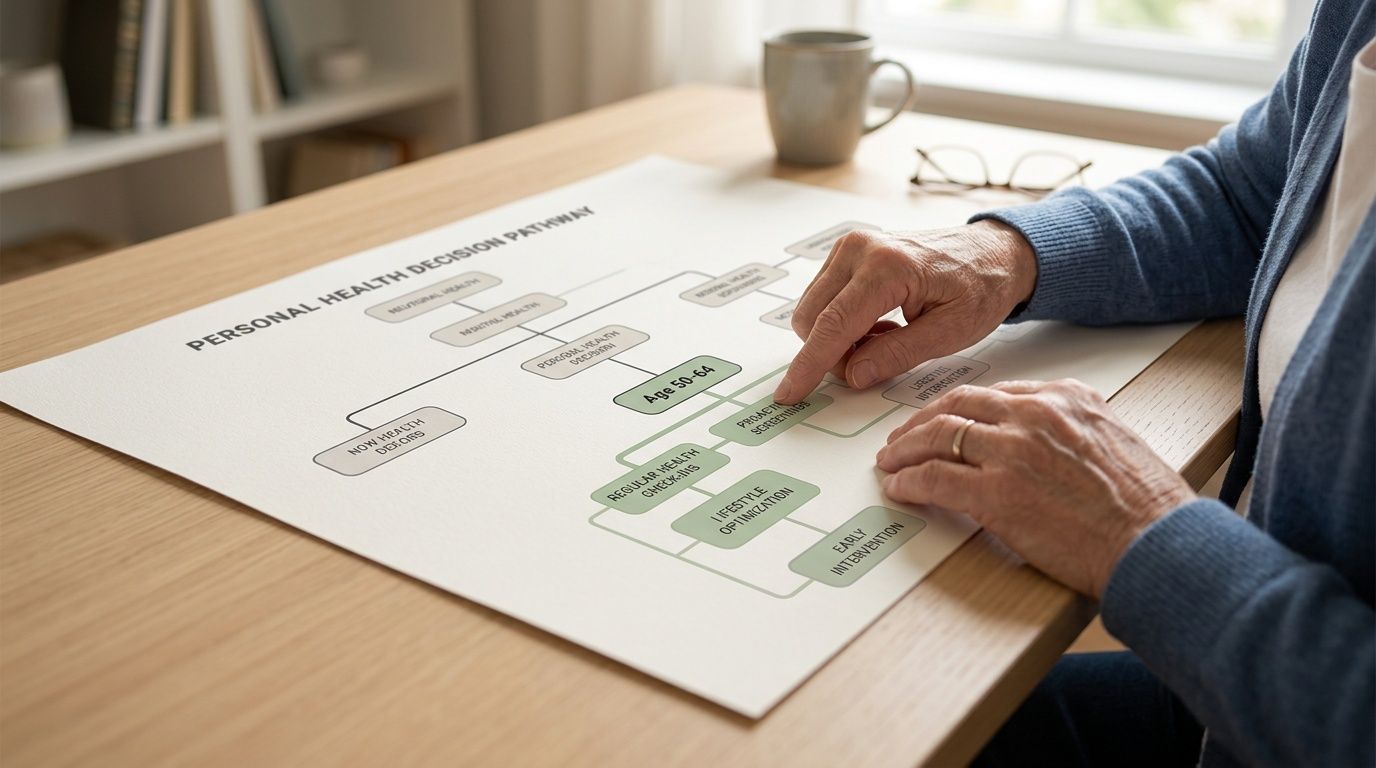
Social Security decides disability claims through a structured sequence. For workers over 50, the most important part often comes near the end, when age, education, past work, and physical limitations all intersect.
The five-step framework
At a high level, Social Security asks:
Are you working too much?
If your earnings are above the agency's work limit, the claim may fail at the start.Do you have a severe impairment?
The condition must significantly limit basic work activity.Does your condition meet a listed impairment?
Some cases are approved here, especially with very strong objective findings.Can you still do your past work?
Job demands are a key consideration. Heavy, medium, or skilled work history can shape the outcome.Can you adjust to other work?
Age matters most, especially from 50 to 64.Not sure if you qualify?
Get a free case review from a New England disability team. You only pay if we win.
Call (617) 683-1983
The final step is where the medical-vocational guidelines, often called the grid rules, come into play. These rules don't just ask whether some theoretical job exists. They ask whether a person of your age, educational background, work history, and residual functional capacity can realistically adapt to other work.
Why age changes the analysis
A younger worker with a sedentary restriction may be told to do a desk job. A worker in his late 50s who spent decades doing physical labor is in a different legal category. Social Security recognizes that changing careers gets harder with age, especially when the body no longer tolerates sitting, standing, walking, lifting, reaching, or using the hands consistently.
The age bands matter:
- Ages 50 to 54
- Ages 55 to 59
- Ages 60 to 64
As age rises, the rules become more favorable if your limitations keep you from returning to past work and your skills don't transfer cleanly to easier jobs.
Physical cases where the grid rules matter most
At this point, many older workers finally understand why their case wasn't just about diagnosis.
Consider examples like these:
- A worker with degenerative disc disease and chronic neck pain who can no longer lift, turn the head repeatedly, or sit long enough for a full desk job.
- A warehouse employee with knee damage who can't stand or walk enough for light work.
- A machine operator with heart disease who fatigue-limits quickly and can't sustain exertion safely.
- A delivery driver with neuropathy or another neurological condition who has balance, hand-use, or endurance problems.
In each of those cases, Social Security may decide the claim based less on the name of the diagnosis and more on the worker's Residual Functional Capacity, usually called RFC. RFC is the agency's assessment of what you can still do despite the impairment.
Older workers often lose because Social Security classifies them as able to do "light" or "sedentary" work on paper, even though their actual records show they can't sustain those demands day after day.
What can help or hurt at Step 5
A favorable grid outcome often turns on a few practical details:
| Factor | Helps your case | Hurts your case |
|---|---|---|
| Age | Being in an older age category | Being treated as a younger claimant |
| Past work | Long history of physical work with limited transferable skills | Work history that suggests direct transfer to easier jobs |
| RFC | Clear restriction to less demanding work | Vague records that make you look more functional than you are |
| Education | Limited education can support a grid finding in some cases | Higher education may lead SSA to assume easier adjustment |
The phrase "transferable skills" causes a lot of confusion. Social Security may argue that a person who supervised others, completed paperwork, or used certain systems can shift into other jobs. That's often overstated. Someone may have done those tasks inside a physically demanding job without having a realistic path into sustained office work.
For claimants over 50, the legal strategy isn't just "show you're sick." It's "show exactly why your age, physical limitations, and real work background leave no practical path back into substantial work."
Common Reasons Your SSDI Claim Was Denied
Most denials fall into two buckets. Technical denials and medical denials. The fix depends on which one you got.
Social Security's own snapshot shows that overall approval rates hover around 38.5%, and musculoskeletal disorders account for over 30% of disabled beneficiaries, according to the SSA statistical snapshot. That tells you two things at once. Physical conditions are common in SSDI claims, and many valid claims still get denied.
Technical denials happen before the real medical fight
A technical denial means Social Security says you failed a non-medical rule. That can include earnings issues, work credits, or status problems. In plain English, the agency may say, "We aren't reaching the medical part."
Common technical problems include:
- Too much work activity: If the agency thinks you're working above the allowed level, it may find you not disabled without reviewing the file in depth.
- Insured status problems: A strong work history doesn't help if the earnings record is incomplete or the onset date falls after coverage expired.
- Application errors: Missing information, inconsistent work dates, or unclear reporting can trigger avoidable denials.
These cases frustrate people because the denial says nothing meaningful about the spine condition, heart disease, or neurological issue they live with.
Medical denials usually come down to proof of limitations
A medical denial often doesn't mean Social Security doubts your diagnosis. It means the agency thinks you can still do some work.
That's the gap. Many records prove treatment, pain, and diagnosis. They don't prove function.
A file may show degenerative disc disease, arthritis, knee degeneration, cancer treatment, or cardiac disease. But if the notes don't explain how long you can sit, stand, walk, lift, carry, reach, use your hands, stay on task, or keep attendance, Social Security may fill in the blanks against you.
Worried a misstep could cost you benefits?
A short, free consultation now can prevent an expensive mistake later. No upfront fees.
Call (617) 683-1983What older workers often miss
Physical cases for people over 50 tend to fail for predictable reasons:
- Doctors record symptoms, not work limits. "Patient reports pain" is not the same as "patient can't stand for prolonged periods."
- Imaging looks serious, but the chart is thin. MRI and X-ray findings help, but Social Security still wants functional impact.
- Good days get overemphasized. One note saying you're "doing better" can be used against months of serious restriction.
- Past work gets described too vaguely. If the agency doesn't understand how demanding your prior job was, it may wrongly decide you can return to it.
- The claim doesn't fit the grid rules clearly enough. A case can be stronger under the age-based rules than the initial filing ever shows.
What doesn't work: Sending a stack of records and assuming Social Security will connect the dots.
What works: Showing how the condition stops specific work functions on a sustained basis.
For example, a neck disorder matters legally when it limits head movement, arm use, and sustained sitting. A knee condition matters when it restricts standing, walking, climbing, and balance. Heart disease matters when exertion, fatigue, or symptoms cut off consistent work activity. Cancer matters when treatment side effects, weakness, and recovery demands make regular attendance unrealistic.
Navigating the SSDI Appeals Process Step by Step
A denial starts the appeal process. It doesn't end the case. In many claims, the appeal is where the complete record finally gets built.
The most important document right after a denial is the Technical Rationale. As explained in this breakdown of the SSA Technical Rationale document, it identifies the evidence Social Security used and the reasoning behind the denial. That's where you often find the opening for appeal. Maybe the agency understated lifting limits, ignored the physical demands of past work, or relied on a thin consultative exam over the treating record.
The four appeal levels
| Appeal Level | What It Is | Typical Wait Time | Key Success Factor |
|---|---|---|---|
| Reconsideration | A new review by Social Security after the first denial | Varies by case and location | Correcting technical errors and adding missing records |
| Administrative Law Judge hearing | A formal hearing where you testify and the judge reviews the case directly | Varies by hearing office | Strong testimony, updated medical proof, and accurate job analysis |
| Appeals Council | Review of whether the hearing decision followed the law | Often lengthy | Identifying legal or procedural mistakes |
| Federal Court | A civil action challenging the agency's final decision | Often lengthy | A focused legal argument based on the record |
"Typical wait time" stays broad here because timing changes by office, backlog, and case specifics. What matters more is knowing where most cases are won.
Reconsideration is often a repair stage
At reconsideration, Social Security reviews the file again. This stage is usually about fixing what was missing the first time.
That can mean:
- getting updated records from an orthopedist, cardiologist, neurologist, or oncologist
- clarifying the physical demands of past work
- correcting an onset date
- responding to a technical issue before it hardens into a bigger problem
Reconsideration isn't where many claimants feel heard, but it matters because it builds the file for the next level.
The hearing is where the case becomes human
The Administrative Law Judge hearing is usually the most important stage. You're no longer just a file moving across a desk. The judge hears from you directly.
Preparation holds significant importance in this process. The judge may ask about your past jobs, why you stopped working, what happens when you try to sit, stand, walk, lift, focus, or use your arms and hands, and how often symptoms interrupt ordinary tasks. A vocational expert may testify about your past work and possible other work.
The hearing isn't about sounding dramatic. It's about being precise, credible, and consistent with the medical record.
For workers over 50, the hearing is often the first place where the grid rules are argued clearly. The judge can look at the demands of the prior work, the actual medical restrictions, and whether those restrictions leave any realistic adjustment to other work.
Backpay matters
If you win on appeal, you may receive backpay, meaning payment for past months covered by the favorable decision. That lump sum can be critical for people who spent the waiting period draining savings, borrowing from family, or falling behind on basic bills.
A good appeal strategy keeps two ideas in view at once. First, win the monthly benefit. Second, protect the earliest supportable onset date so backpay isn't lost unnecessarily.
What to do right after a denial
Use the first days after a denial carefully:
- Read the reason for denial closely.
- Request and review the file if needed.
- Identify whether the issue is technical, medical, or both.
- Get updated treatment records quickly.
- Prepare the case as if it may go to hearing, even if you're still at reconsideration.
People lose time when they treat the appeal like a formality. It's not. It's the stage where the case should finally be built on purpose.
How to Build a Winning Case with Strong Medical Evidence
A 58-year-old warehouse worker with lumbar stenosis, bad knees, and shortness of breath may have more than enough wrong medically, yet still lose if the file never shows the actual work limits. Social Security does not award SSDI because a diagnosis sounds serious. It decides cases based on functional loss, and for workers over 50, that point often drives whether the grid rules help or do not help.
Want a straight answer about your claim?
Free consultation with an experienced SSDI team. No fees unless you win.
Call (617) 683-1983
The strongest records answer practical questions tied to work. How long can you stand before you have to sit? How long can you sit before pain forces a position change? How much can you lift, how often, and with what effect afterward? If your claim involves heart disease, the record should describe exertional limits, fatigue, dizziness, chest symptoms, and how activity affects recovery time. If it involves orthopedic problems, the chart should show reduced range of motion, gait problems, weakness, balance issues, and failed treatment.
The records that usually matter most
Certain records carry more weight because they connect the condition to work capacity:
- Treating doctor notes: Ongoing symptoms, exam findings, medication response, and failed conservative care or surgery.
- Specialist records: Orthopedists, cardiologists, neurologists, pain management doctors, and similar specialists often document the limits in greater detail.
- Imaging and testing: MRIs, X-rays, stress tests, echocardiograms, catheterization reports, EMGs, and surgical records help support the underlying condition.
- Medication history: Side effects such as drowsiness, slowed concentration, dizziness, or GI problems can matter if they affect reliable work attendance and pace.
- Function-based medical opinions: A good opinion states what you can still do, for how long, and how often.
For workers between 50 and 64, function matters even more because the medical-vocational rules turn on exertional capacity and past work. A doctor who explains that a former construction worker is limited to sedentary work, or that a delivery driver cannot stand and walk enough for light work, may be supplying the exact evidence that makes the grid rules relevant.
Diagnosis is only the starting point
I have seen many files with impressive diagnoses and weak proof. Degenerative disc disease, severe knee arthritis, coronary artery disease, rotator cuff tears, and neuropathy can all support SSDI. They do not win by name alone.
What wins cases is detail.
A useful medical opinion does more than say "disabled." It addresses sitting, standing, walking, lifting, carrying, reaching, climbing, stooping, hand use, pace, breaks, and absences. It should also explain whether those limits have lasted, or are expected to last, at least 12 months.
Evidence test: If a judge read only your medical file, would the judge understand why you could not sustain your past work or any realistic full-time work five days a week?
What a persuasive file looks like
Strong evidence usually lines up in a clear pattern:
| Evidence type | Why it helps |
|---|---|
| Specialist findings | Shows the condition has been evaluated and followed by the right medical source |
| Objective tests | Supports the diagnosis and can confirm worsening or failed treatment |
| RFC opinion | Converts medical problems into specific work limits that Social Security can apply |
| Treatment history | Shows the problem continued despite medication, therapy, injections, surgery, or cardiac care |
| Symptom tracking | Helps show frequency, duration, triggers, and the need for rest or position changes |
That last point is often underestimated. A simple symptom log can help when pain flares three days a week, swelling increases by afternoon, or shortness of breath appears after mild exertion. Those patterns matter because they show whether full-time work is realistic.
The National Council on Aging article on Social Security disability also notes that Social Security relies heavily on medical evidence. When formal treatment records are thinner than they should be, third-party statements and consistent daily documentation can help fill part of the gap.
If your care has been inconsistent
Treatment gaps do not automatically sink a case. Older workers often miss care because they lost insurance, could not afford co-pays, had no transportation, or stopped pursuing treatment after repeated failure. Those facts should be explained directly in the record.
Use practical supplementation:
- Ask family or friends for detailed statements describing what they see, such as falls, swelling, trouble dressing, limited walking, naps, or needing help with shopping and chores.
- Keep a daily log of pain levels, fatigue, dizziness, side effects, position changes, and activities you could not finish.
- Return to the most relevant specialist if possible so the file reflects your current limits, not just older visits.
- Request a targeted RFC form or narrative letter from a treating provider who knows your condition well.
For claimants over 50, the goal is not to pile up paper. The goal is to build a record that shows a believable, medically supported level of work restriction. If the evidence proves you can no longer do your past physically demanding job, and your remaining capacity falls into the right exertional category, the grid rules may do a great deal of the legal work for you.
Exaggeration hurts. Specific, repeated, medically supported limitations win.
When and How to Hire an SSDI Lawyer
You can handle an SSDI claim without a lawyer. Some people do. The better question is whether you should handle your particular case alone.
For workers between 50 and 64 with physical impairments, legal help becomes especially useful when the case depends on the grid rules, disputed job demands, or a hearing-level argument about residual functional capacity. Those aren't impossible issues to present alone, but they are easy to present poorly.
When legal help makes the most difference
Certain moments usually justify getting counsel sooner rather than later:
- After a denial that doesn't make sense: Especially if the letter ignores obvious work limitations or misstates your past work.
- When the file is medically thin: A lawyer can identify missing specialist records, functional opinions, and treatment gaps.
- Before a hearing: This is usually the stage where preparation changes outcomes most.
- When Social Security says skills transfer: That issue can decide a case for an older worker.
A lawyer should do more than file forms. In a serious SSDI case, representation should include record review, job-history development, hearing preparation, and a plan for how your testimony will line up with the medical evidence.
How the fee structure usually works
Most SSDI lawyers work on a contingent fee. That means you don't pay upfront legal fees for representation in the ordinary way. If the case is won, the fee is generally paid from the backpay awarded under Social Security's fee process.
That arrangement matters because most disability claimants are already under financial strain. It also aligns the lawyer's work with the outcome of the case.
What to ask before hiring anyone
Don't focus only on whether someone "takes SSDI cases." Ask narrower questions.
- Who prepares the hearing theory?
- Who reviews the medical evidence for functional gaps?
- Who gets the treating doctor opinion if one is needed?
- Who prepares you to answer the judge clearly and truthfully?
- Who handles the case day to day?
A good SSDI lawyer doesn't just tell your story. They shape the record so your story fits the rules the judge has to apply.
For older claimants with orthopedic problems, spinal disorders, neurological disease, heart conditions, or cancer-related limitations, the right representation often turns a vague case into a legally focused one. That's the difference between "my client has pain" and "the medical record supports a restriction that, under the age-based vocational rules, directs a finding of disabled."
Your Path to Securing the SSDI Benefits You Earned
A worker in his late fifties hurts his back, tries to keep going, then realizes he cannot stand long enough, sit long enough, or lift what the job still demands. He files for SSDI and gets denied. I have seen that pattern many times. The denial often reflects how the claim was presented, not whether the person is unable to work.
For people between 50 and 64, Social Security does not look at the case the same way it looks at a younger worker's case. The medical-vocational rules, often called the grid rules, can make age, work history, and physical limits decisive. That is especially true in claims involving orthopedic conditions, heart disease, neuropathy, balance problems, and other impairments that reduce a person's ability to do full-time work on a sustained basis.
The cases that win are built around function. A diagnosis matters, but the deciding question is usually more specific. How long can you sit before you must change position? How often do you need to raise a leg, rest, or miss work? Can you still use your hands, reach overhead, climb, bend, or keep pace through a full workday? For a claimant over 50, those details can be the difference between a denial and a finding of disabled under the grid rules.
That is why timing matters.
If you are denied, review the decision closely, identify what Social Security says you can still do, and compare that finding to your actual medical record and work history. Many older workers were denied because the file never clearly showed whether their past jobs were skilled, how physically demanding those jobs really were, or why their current limits prevent a realistic transition to lighter work.
SSDI is an insurance benefit you earned through work. If your body has reached the point where steady work is no longer possible, the next step is to build the case around the rules Social Security uses.
If you want a clear assessment of your SSDI options after 50, contact Melanson Law Group for a free, no-obligation consultation. The firm helps workers and families evaluate denials, prepare appeals, and build cases around the medical and vocational proof Social Security considers.

