
If you're between 50 and 64, the SSDI process often lands at the worst possible time. Your back may no longer tolerate lifting. Your knees may give out after a short walk. A heart condition, cancer treatment, neck problem, or neurological illness may have turned a job you did for years into something you can't do safely anymore. Then the paperwork starts, the denial letter arrives, and you're expected to prove a life-changing reality to a government system that speaks in forms, records, and technical rules.
Wondering what your claim could be worth? Try our free SSDI benefits calculator.
Choosing a disability lawyer matters in every case, but it matters differently for older workers. For many claimants in this age range, Social Security doesn't just look at diagnosis. It also looks at age, work history, education, and whether you can realistically move into other work. Those medical-vocational rules, often called the grid rules, can be especially important when you've spent decades in physically demanding jobs and your body won't cooperate anymore.
That means your first consultation shouldn't be a vague conversation about whether a lawyer is "experienced." It should be a focused discussion about strategy. You want to know whether the lawyer understands how to present a claim for a 58-year-old warehouse worker with severe degenerative disc disease, or a 61-year-old nurse's aide with knee and shoulder problems, not just how to file forms.
These are the questions to ask a disability lawyer if you want more than reassurance. You want clear answers, honest judgment, and a plan.
1. Do you have specific experience with claimants over 50 and my type of physical condition?

Start here, because this question gets past marketing language fast. A lawyer may handle disability cases every day and still not be the right fit for a claimant who's 55, 59, or 63 and dealing with a physical condition tied to a long work history. Age matters in SSDI. So does the kind of work you've done, especially if you've spent years in construction, manufacturing, driving, nursing support, cleaning, warehouse work, food service, or other jobs that require standing, lifting, climbing, bending, or repetitive use of your hands and shoulders.
A useful answer should sound specific. If you have degenerative disc disease, severe knee arthritis, cervical spine problems, neuropathy, heart disease, cancer-related fatigue, or another physical condition, the lawyer should be able to explain how those impairments are usually documented and argued. For people over 50, the right lawyer should also understand how to frame the case around whether you can return to past work or realistically adjust to something else.
What a strong answer sounds like
Ask it this way: “Given that I'm 58 and have severe degenerative disc disease, how would you approach my case differently than a case for a 40-year-old?”
A denial is not the end of your claim.
Talk to a disability attorney now. Free consultation. No fees unless you win.
Call (617) 683-1983That question forces the lawyer to talk strategy, not slogans. You're listening for whether they understand that an older claimant's case may turn on limits like reduced standing, walking, lifting, reaching, or sitting tolerance, combined with a work history that's hard to transfer to lighter jobs.
Practical rule: General SSDI experience is helpful. Experience with your age group and your kind of impairment is more useful.
You should also ask for an example of a similar case they handled successfully. Not a dramatic war story. Just a grounded explanation of why the case worked. Maybe the key issue was proving that a former laborer couldn't sustain even sedentary work because sitting increased back pain. Maybe it was showing that a claimant with heart disease couldn't safely meet the pace or attendance demands of full-time work.
A lawyer doesn't need to promise a result. In fact, a promise is a warning sign. Social Security denies about 70% of initial claims, according to The Lobb Law Firm's discussion of disability-lawyer screening questions. Given those odds, what you want is a lawyer who can explain where your case fits, what facts matter most, and what will need work before a hearing.
Red flags to notice
A consultation should leave you with more clarity, not more fog. Be cautious if you hear any of these:
- Vague volume talk: “We handle lots of disability cases” tells you very little about age-specific strategy.
- Diagnosis-only analysis: Your diagnosis matters, but SSDI cases are often won or lost on function, work history, and credibility.
- Unrealistic confidence: If someone guarantees approval, they're selling certainty they don't control.
For older claimants, this first question often tells you whether the lawyer sees your case as a file or as a fact pattern.
2. Who will be my primary point of contact, and who will represent me at my hearing?
A lot of people hire a lawyer after one reassuring phone call, then spend months speaking only with staff they never met. That doesn't automatically mean the representation is poor. Good paralegals and case managers are often essential. But you need to know who owns your case, who answers urgent questions, and who will stand next to you if your claim reaches a hearing.
This matters even more if your condition changes from month to month. A claimant with spinal stenosis, worsening knee damage, heart failure symptoms, or treatment-related fatigue may have updates that need to reach the file quickly. If communication is disorganized, evidence gets submitted late, hearing preparation gets rushed, and your story can become fragmented.
Ask for names, not job titles
A direct question works best: “Who will I talk to most often, and who will represent me before the judge?”
Then pause. Let the lawyer answer fully. You want to know:
- Who handles day-to-day contact: A named paralegal or case manager is fine if the process is clear.
- Who makes strategy decisions: That should be identified plainly.
- Who appears at the hearing: The person preparing you should not be a mystery until the last minute.
A consistent point of contact can make a real difference. If you've had a fall, a new MRI, a medication change, or a cardiology workup, you need to know exactly where that information goes. You also want confidence that the lawyer who appears at the hearing isn't reading your file for the first time the night before.
At some firms, the consultation lawyer isn't the hearing lawyer. That isn't always a deal-breaker, but if that's the setup, ask how the handoff works. Ask whether the hearing lawyer reviews the records personally, whether you'll have a prep meeting with that lawyer, and how far in advance that happens.
You shouldn't have to wonder who is steering your case once you sign the fee agreement.
Why this question is more than customer service
This isn't just about convenience. It's about whether your representative knows your limitations in practical terms. A strong hearing presentation depends on details like these: how long you can stand before you need to sit, whether sitting causes increased back pain, whether reaching overhead triggers neck symptoms, whether medication causes grogginess, and whether you need unscheduled rest during the day.
Those details rarely show up clearly in raw medical records unless someone is paying attention. The lawyer or staff member preparing your file needs to know them well enough to connect them to the medical evidence. If the relationship feels impersonal from the start, that's usually a sign to keep interviewing.
Not sure if you qualify?
Get a free case review from a New England disability team. You only pay if we win.
Call (617) 683-19833. What is your strategy for developing my medical evidence?
Many claimants think SSDI cases are won by sending "all the records." Records matter, of course, but volume isn't the same as strategy. A stack of orthopedic notes, ER records, imaging reports, and medication lists can still leave the judge with one unanswered question: what can this person still do, and for how long?
That's why one of the most important questions to ask a disability lawyer is how they build the medical proof. For a claimant in their 50s or early 60s with a physical impairment, the strongest files usually connect diagnosis to function. They show how the condition affects standing, walking, lifting, carrying, pushing, pulling, reaching, handling, sitting, attendance, pace, and recovery.
Raw records aren't enough
If your doctor's notes are brief, say that directly. Then ask, “How would you help me get the kind of detailed opinion Social Security needs?”
A good answer should include more than “we'll request your records.” It should address whether the lawyer seeks targeted statements from treating doctors, whether they look for function-by-function opinions, and whether they identify gaps before the hearing. That's especially important with conditions like degenerative disc disease, knee deterioration, shoulder injuries, neuropathy, cardiac limitations, or treatment side effects from cancer care.
According to Levine Benjamin's discussion of disability hearings, a 2023 NASI study found that claimants represented by lawyers who actively managed and explained medical evidence, rather than submitting raw records, had higher appearance of credibility and a greater likelihood of a fully favorable decision. That's the difference between a document dump and a developed case.
What medical-evidence strategy should cover
A lawyer doesn't control your doctors, but they should know how to organize the file around the issues that matter. Ask whether they plan to focus on:
- Treating-source opinions: Statements from doctors who know your condition over time.
- Functional limits: How long you can sit, stand, walk, lift, reach, or use your hands.
- Consistency across records: Whether imaging, exam findings, symptoms, and daily limits line up.
- Specialist support: Orthopedists, neurologists, cardiologists, oncologists, pain doctors, or physical therapists when relevant.

For example, a claimant with severe knee problems may have MRI findings and repeated injections, but the key issue may be whether they can stay on their feet long enough for full-time work. A claimant with a heart condition may have test results, but the critical question may be whether shortness of breath, chest symptoms, or fatigue would interfere with regular attendance and sustained activity.
Bring your provider list to the consultation. Names, specialties, hospitals, clinics, and approximate treatment dates. That alone helps you judge whether the lawyer thinks in terms of evidence strategy or just intake paperwork.
4. How do you prepare clients for the administrative hearing?
A hearing often feels like the first time someone at Social Security will listen. For a 58-year-old former warehouse worker with degenerative disc disease or a 62-year-old machine operator with heart problems, that matters. The file may contain years of treatment records, but the judge still needs to hear how pain, shortness of breath, fatigue, limited standing, or missed activity show up in daily life and on a work schedule.
Ask this question because hearing preparation is not just a scheduling call. It should be a working session that connects your medical limits, your past jobs, and the rules that often matter most for claimants between 50 and 64. At those ages, the grid rules can change the case. A lawyer should be ready to explain how your age category, exertional limits, and job skills fit together, especially if your past work was physical and your body will not tolerate a full range of lighter work.
Good preparation is specific. The lawyer should review the judge's likely questions, go through your work history job by job, and help you describe your limits in practical terms. If you have a knee injury, the testimony may need to focus on how long you can stand and walk before you need to sit down. If you have cervical or lumbar disc disease, the hearing may turn on sitting tolerance, reaching, lifting, and how often pain pulls you off task. If you have a heart condition, the key issue may be whether exertion, dizziness, or fatigue would make regular attendance unrealistic.
The goal is accuracy, not performance.
A prepared claimant can explain the difference between doing something once and doing it reliably, eight hours a day, five days a week. That distinction matters for older workers because many judges and vocational experts will focus on whether any past skills transfer to easier work. A lawyer who represents people in your age group should prepare you for those questions in plain English.
What a useful answer sounds like
Listen for details like these:
- How far in advance do you meet with clients before the hearing? A brief call the night before is rarely enough.
- Do you practice testimony with me? You should have help answering clearly without overstating or downplaying symptoms.
- Will you explain the grid rules and whether they may help in my age category? Claimants over 50 should ask this directly.
- How do you prepare me for questions about my past work? Job duties, lifting, standing, and skill level often matter as much as diagnosis.
- Do you submit a pre-hearing brief or theory of the case? Many lawyers do, and it can help focus the judge on the right legal issues.
- How do you handle vocational expert testimony? That is often where cases for workers ages 50 to 64 are won or lost.

It also helps to ask how the lawyer prepares clients to talk about bad days, good days, and pacing. Judges hear vague statements like "I can't do much" every day. Strong testimony is more concrete. "I can stand at the counter for about 10 minutes, then I have to sit." "If I drive to a cardiology appointment, I usually need to lie down afterward." "I used to lift 50 pounds at work, now a bag of groceries flares my back for the rest of the day."
Worried a misstep could cost you benefits?
A short, free consultation now can prevent an expensive mistake later. No upfront fees.
Call (617) 683-1983Local hearing experience still matters, but ask about it in a practical way. A lawyer cannot choose your judge. They can know how hearings in that office are usually run, how much detail a judge expects, and whether vocational testimony tends to be a major issue. That kind of familiarity helps shape preparation without promising a result.
For claimants ages 50 to 64, the best hearing prep ties everything together. Age. Physical limits. Past work. Transferable skills, or the lack of them. If a lawyer answers this question with a clear process instead of general reassurance, that is a good sign.
5. How does your fee structure work, and what costs am I responsible for?
Money is usually tight by the time someone starts interviewing disability lawyers. Savings may be gone. Credit cards may be carrying basic household expenses. That's why fee questions shouldn't feel awkward. A reputable lawyer expects them.
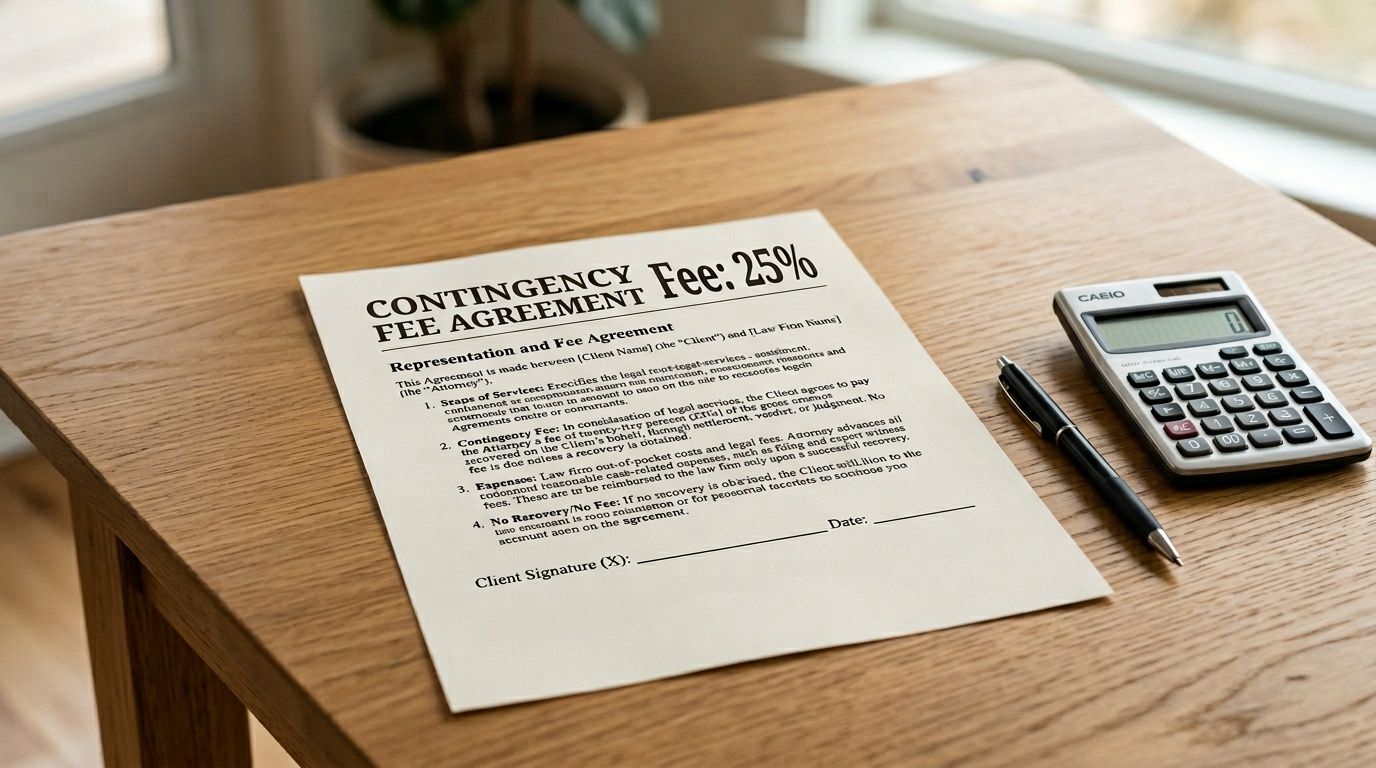
At the basic level, SSDI representation is usually contingency-based. That means the fee comes out of past-due benefits if you win. According to The Good Law Group's explanation of disability-attorney fees, Social Security permits attorneys to charge 25% of backpay or $6,000, whichever is less. The same discussion explains that initial consultations should be free.
Ask two separate questions
People often ask only, “How much do you charge?” That's too narrow. Ask:
- What is your attorney fee if I win?
- What case costs might I still owe, even if the fee is contingent?
Those are different things. The attorney fee is one piece. Out-of-pocket costs can include charges for medical records, copy fees, or specialized reports. Some firms advance those costs and recover them later. Others bill them differently. Get that explained in plain English and get it in writing before signing anything.

You should also ask whether the representation agreement covers only the administrative process or whether later appeals are handled separately. That's not a trick question. It's basic planning. If the lawyer is vague about fees, future steps, or expenses, that usually means the relationship will only get harder once the case is underway.
What transparency looks like
A clear fee conversation should include these points:
- No upfront attorney fee for standard SSDI representation: You shouldn't be paying a retainer for ordinary contingency-based work.
- Written agreement: You need to see the terms before moving forward.
- Specific cost policy: Ask who pays for records and when.
- Clear scope of representation: Make sure you know what stages of the claim are included.
This question also reveals something about temperament. Lawyers who explain fees calmly and directly usually explain cases the same way. That's what you want when your future income depends on understanding a complicated process.
6. Based on my age and condition, what are the strengths and weaknesses of my case?
You are 58, your back gives out after 20 minutes on your feet, and you have spent decades doing physical work. The question is not merely whether you are sick enough. The question is how your age, job history, medical records, and current limits fit the Social Security rules that apply to claimants over 50.
A good disability lawyer should be able to answer that directly.
For claimants between 50 and 64, case strength often turns on details that younger applicants can overlook. Social Security's grid rules can help older workers who can no longer return to past physical jobs and do not have skills that transfer easily to lighter work. That matters if you are 55, worked in construction, warehouse work, manufacturing, trucking, or similar jobs, and now have degenerative disc disease, serious joint problems, a heart condition, or another physical impairment that limits standing, lifting, walking, bending, or using your hands.
Age helps in some cases. It does not fix weak proof.
A lawyer who knows this area should be able to explain both sides at once. For example, a 61-year-old claimant with a long history of heavy work and limited computer skills may have a stronger vocational argument than a younger office worker with the same MRI findings. But if that older claimant has large treatment gaps, sparse specialist records, or notes saying symptoms improved more than they really did, those problems can still sink the case.
Ask for a grid-rule analysis, not a guess
This is one of the most useful questions in the consultation because it shows whether the lawyer is evaluating your file or just trying to sign you up.
Want a straight answer about your claim?
Free consultation with an experienced SSDI team. No fees unless you win.
Call (617) 683-1983A careful answer might sound like this: your age category may help, your past work was physically demanding, and your records support limits on lifting and prolonged standing. Your weak spot is that your doctor has not clearly described how long you can sit, whether you need to change positions, or how often symptoms would interrupt a full workday. That answer gives you something concrete to work on.
For physical conditions common in this age group, the missing piece is often function. An MRI can show degenerative disc disease. A cardiac workup can confirm heart disease. Knee or shoulder imaging can document damage. What Social Security also needs is evidence about what those conditions stop you from doing, day after day, in work terms.
What a strong answer should cover
Ask the lawyer to walk through these points:
- Does my age category help under the grid rules?
- Does my past work count as heavy, medium, skilled, or unskilled?
- Do I have skills Social Security may say transfer to lighter work?
- What medical records best support my physical limits?
- What part of my file is weakest right now?
- What could the judge or SSA reviewer use against me?
Those questions are especially important for people with orthopedic injuries, spine disorders, arthritis, or heart conditions. A claimant with severe lumbar pain may look strong on imaging but weak on function if the records do not explain limits on sitting, standing, attendance, or pace. A claimant with heart disease may have solid cardiology records but still need clearer proof about fatigue, shortness of breath, and how far they can walk or how long they can sustain activity.
Watch how specific the lawyer gets. If the answer stays vague, that usually means the case review is shallow.
The right consultation leaves you with a realistic picture of the case. You should know where your age works in your favor, where your medical proof is thin, and what needs to happen next to improve the odds. That is the kind of judgment worth paying for.
7. What is the typical timeline, and how is your firm positioned to handle SSA delays?
You need an honest timeline because SSDI cases don't move at the speed most families need. A lawyer can't make Social Security act quickly, but they should be able to tell you what usually happens at each stage, where delays are common, and how their office keeps cases from stalling on their side.
This question matters for emotional reasons and practical ones. If you're 62, out of work, behind on bills, and deciding whether to keep draining retirement funds, the difference between “we'll see” and a real explanation is enormous. It also tells you whether the firm has a system for deadlines, medical updates, hearing preparation, and appeals.
Ask about both SSA delays and law-firm delays
Some delays are built into the system. Others happen because records aren't requested promptly, forms aren't updated, or the office handling your case is overloaded. The lawyer should be willing to explain the distinction.
According to the same McCroskey Law discussion of Appeals Council outcomes and timing, the average processing time for an Appeals Council Request for Review is 364 days. That figure won't apply to every claimant, and it doesn't tell you how long earlier stages will take, but it shows why realistic planning matters. If your case may need more than one level of review, you want a firm that treats waiting periods as working time, not dead time.
What a prepared firm should be able to tell you
Listen for specifics about process, not just sympathy.
- How they track deadlines: Missed appeal deadlines can be devastating.
- How often they check for medical updates: Ongoing treatment can strengthen the file.
- How they keep the case hearing-ready: Waiting time should be used to improve the evidence.
- Whether they screen for faster review options: Some severe conditions may qualify for expedited handling.
For example, a claimant undergoing cancer treatment may need the firm to evaluate right away whether the diagnosis fits a faster review pathway. A claimant with worsening neurological symptoms may need updated specialist records requested before the hearing notice even arrives.
One more practical point: ask about caseload. As noted earlier, overly high volume can affect attention. If a lawyer seems rushed in the consultation, that usually doesn't improve after you sign.
8. What specific documents should I start gathering right now?
The best consultations end with a to-do list. Not because the lawyer is shifting work onto you, but because strong SSDI cases are built faster and more accurately when the client helps organize the raw facts early.
This is especially true for claimants over 50 with long work histories. Social Security will want a detailed picture of the jobs you've done, the physical demands of those jobs, when your conditions worsened, where you've treated, and what changed in your day-to-day functioning. If you wait until forms arrive to start reconstructing that history, important details get lost.
The right answer should be specific
Ask, “If I hire you today, what should I start gathering this week?”
A useful response usually includes medical provider information, prior denial notices, employment history, medication lists, imaging reports you already have, and contact information for clinics or therapists you might otherwise forget. For older claimants with orthopedic or cardiac problems, even a rough timeline of surgeries, injections, hospitalizations, physical therapy, and job changes can save weeks later.
According to Portland Disability Law's discussion of hearing expectations and related SSDI issues, public guidance often overlooks how overlapping benefits can complicate disability claims, especially for veterans and people dealing with SSDI alongside VA disability, SSI, or private disability benefits. If any of that applies to you, tell the lawyer early and ask what extra records they want. Coordination issues are easier to address at the front end than after conflicting paperwork appears in the file.
A smart starter file often includes
- Provider list: Names, addresses, phone numbers, specialties, and treatment dates.
- Work history notes: Job titles, duties, lifting demands, time on your feet, and why you stopped.
- Important letters: Denial notices, SSA correspondence, and benefit paperwork from other programs.
- Personal symptom notes: A short daily journal about pain, fatigue, mobility, side effects, and tasks you can no longer do.
A daily journal doesn't replace medical evidence, but it helps you remember patterns. Maybe your back pain worsens after fifteen minutes of sitting. Maybe your knee swells every afternoon. Maybe your heart medications leave you exhausted by midday. Those details can help you describe your limitations consistently later.
Start a folder. Paper, digital, or both. The lawyer you hire should make that process easier, not more confusing.
8-Point Comparison: Questions to Ask a Disability Lawyer
| Question / Topic | 🔄 Implementation complexity | ⚡ Resource requirements | 📊 Expected outcomes (⭐) | Ideal use cases | 💡 Key advantages |
|---|---|---|---|---|---|
| Do you have specific experience with claimants over 50 and my type of physical condition? | Medium, specialized legal/medical knowledge required | Low–Medium, case file review, prior-case knowledge | High 📊 ⭐⭐⭐⭐, tailored grid-rule arguments improve approval odds | Claimants age 50–64 with orthopedic, cardiac, oncological, or neurological conditions | Leverages SSA grid rules; age & condition framed as strengths |
| Who will be my primary point of contact, and who will represent me at my hearing? | Low, organizational clarity and staffing | Low, assignment of attorney/paralegal and communication protocol | Medium–High 📊 ⭐⭐⭐, continuity improves case handling and credibility | Clients needing consistent representation or complex narratives | Direct access to lead attorney; reduced miscommunication |
| What is your strategy for developing my medical evidence? | High, proactive evidence collection and physician coordination | High, medical record retrieval, RFC forms, physician letters, experts | High 📊 ⭐⭐⭐⭐, strong, specific medical evidence is decisive | Cases with sparse records or functional limitations (RFC needed) | Custom RFCs, targeted physician outreach, fills evidentiary gaps |
| How do you prepare clients for the administrative hearing? | High, mock hearings, briefs, expert witness planning | Medium–High, prep sessions, hearing brief, possible experts | High 📊 ⭐⭐⭐⭐, prepared testimony and experts often sway ALJs | Hearing stage cases or credibility-sensitive claims | Mock prep builds credible testimony; strategic briefs and experts |
| How does your fee structure work, and what costs am I responsible for? | Low, standard contingency framework (legal cap applies) | Low, written fee agreement and cost disclosures | Clear expectations 📊 ⭐⭐⭐, prevents financial surprises | Any claimant evaluating representation | No upfront fee; contingency capped by SSA; transparency on costs |
| Based on my age and condition, what are the strengths and weaknesses of my case? | Medium, analytical case assessment using grid rules | Medium, review of work history and medical treatment gaps | Realistic appraisal 📊 ⭐⭐⭐, identifies obstacles and remedies | Initial consultations for strategy and expectation-setting | Honest risk assessment; actionable plan to mitigate weaknesses |
| What is the typical timeline, and how is your firm positioned to handle SSA delays? | Medium, monitoring SSA backlogs and internal workflows | Medium, case management systems and local office knowledge | Moderate 📊 ⭐⭐–⭐⭐⭐, firm can't speed SSA but can prevent firm-side delays | Clients planning finances or with urgent medical situations | Accurate timelines, deadline tracking, potential expedited flags (CAL) |
| What specific documents should I start gathering right now? | Low, straightforward checklist and guidance | Low, client-supplied records, work history, pay stubs, journals | Faster case-building 📊 ⭐⭐⭐, early organization accelerates evidence assembly | Early-stage claims and proactive clients | Clear to-do list; organized evidence speeds preparation and filing |
Your Next Step Securing the Right Legal Partner for Your Future
You are 58, your back gives out halfway through the grocery store, and your denial letter says you can still do other work. That is the moment the right questions start to matter.
For SSDI claimants between 50 and 64, a lawyer should be assessing more than a diagnosis. Age, past work, transferable skills, and medical restrictions can change the outcome under Social Security's grid rules. That is especially true in cases involving degenerative disc disease, knee and shoulder injuries, cardiac problems, and other physical conditions that limit standing, lifting, walking, or sustained activity. A lawyer who regularly handles cases for older workers will usually spot issues that a general practice firm may miss.
Good consultations give you useful answers, not sales talk. You should come away knowing who will handle your file, how the firm plans to develop your medical evidence, whether hearing preparation is hands-on, what delays to expect, and where your case is strong or vulnerable. If a lawyer avoids the hard parts of your claim, that is information too.
Hearing preparation often separates adequate representation from effective representation. Judges need a clear record. They also need clear testimony. In practice, that means connecting your medical records to what happens in daily life and on the job. A construction worker with lumbar disc disease may have imaging that looks serious, but the file still needs treating notes that explain why bending, standing, or lifting are no longer reliable over a full workday. A claimant with heart disease may need records showing exertional limits, symptoms despite treatment, and why even lighter work is not realistic.
That kind of preparation is not about dramatizing your condition. It is about accuracy. Social Security decides cases based on legal standards and documented functional limits, not sympathy.
Interview more than one firm if you can. Listen for specifics. Does the lawyer speak comfortably about claimants over 50? Do they understand how a long work history in physical jobs can affect a grid rule analysis? Do they explain weaknesses plainly, such as treatment gaps, inconsistent activity reports, or medical records that describe you as doing better than you feel? Clear answers usually signal careful case handling.
For claimants in Massachusetts and nearby areas, Melanson Law Group is one option to consider. The firm focuses on SSDI claims and appeals, offers free consultations, and its father-son team includes Jack Melanson, a retired Social Security judge, and Ned Melanson, a former corporate litigator. For older claimants who want direct discussion about hearing strategy and case development, that background may be relevant.
The next step is simple. Schedule a consultation, bring your denial letter, provider list, work history, and the questions from this guide. Then choose the lawyer who gives you a clear explanation of your case, a realistic plan, and confidence that your age, work history, and physical limits will be presented the right way.

