You may be in your late 50s, looking at a stack of medical records, and wondering how your life changed so sharply after one accident, one fall, one assault, or one bad moment at work. Before the injury, you handled your job, your bills, and your routines. Now you forget appointments, lose your train of thought, snap at people you love, wake up exhausted, and still have to deal with the back pain, knee damage, neck problems, or heart symptoms that make a full workday feel impossible.
Wondering what your claim could be worth? Try our free SSDI benefits calculator.
That combination is common in disability cases, and it's often misunderstood. A person can have real cognitive problems from a traumatic brain injury, real trauma symptoms from PTSD, and real physical restrictions from orthopedic or neurological conditions, all at the same time. Social Security doesn't always see that clearly on the first review.
For people between 50 and 64, that matters even more. At this stage of life, the question usually isn't whether you can force yourself through one more bad day. It's whether you can reliably perform work, five days a week, on a sustained basis, with the limits you now live with. That's a different question, and it's where many valid claims are won.
Your Guide to SSDI with Traumatic Brain Injury and PTSD
A lot of older claimants describe the same pattern. They were hurt in a car crash or work accident. They expected the broken bones, the neck pain, or the back injury to be the main problem. Instead, the harder part became the invisible one. They couldn't focus. They got overwhelmed by noise. They forgot simple instructions. Driving made them panic. Sleep got worse, and so did pain.

That's where many SSDI claims start to drift off course. The claimant talks mostly about headaches or memory loss. Social Security focuses mostly on an MRI, a CT scan, or a short office note. The full picture never gets built. If you're over 50 and dealing with traumatic brain injury and PTSD along with degenerative disc disease, knee arthritis, shoulder damage, neuropathy, cancer treatment effects, or cardiac symptoms, your case has to be presented as a whole person case.
A denial is not the end of your claim.
Talk to a disability attorney now. Free consultation. No fees unless you win.
Call (617) 683-1983What usually goes wrong
Older workers often have strong work histories. That can help your credibility, but it can also create a trap. Adjudicators may assume that because you worked for decades, you should be able to shift into something lighter or simpler. In real life, that isn't how these cases work.
A person with chronic lumbar pain may not tolerate standing or lifting. A person with TBI and PTSD may not tolerate pace, multitasking, reminders, criticism, or ordinary workplace stress. Put those together and the available jobs narrow quickly.
The strongest claims don't rely on one dramatic diagnosis. They show why the claimant can't do past work and can't adjust to new work either.
What this guide is meant to do
This guide is built for the practical problems older claimants face:
- You were denied once already. That doesn't mean your case lacks merit.
- Your scans don't tell the whole story. Mild brain injury can still leave serious functional limits.
- Your symptoms overlap. Memory trouble, irritability, poor sleep, and concentration problems can come from more than one condition.
- You also have physical impairments. Those physical problems can become the key to fitting your case within Social Security's rules for workers over 50.
If you understand how these pieces fit together, you can stop thinking of your case as confusing and start treating it as something that can be documented.
The Double Diagnosis Understanding TBI and PTSD
A traumatic brain injury, or TBI, is a physical injury to the brain. PTSD is a trauma-related mental health condition that can develop after terrifying or violent events. They are different conditions, but they often arise from the same event. A severe crash, a fall, an assault, combat exposure, or a blast injury can injure the brain and overwhelm the nervous system at the same time.

One simple way to think about it is this. TBI is a hardware problem. PTSD is a software problem. That analogy isn't perfect, but it helps people understand why both can exist together, and why one doesn't cancel out the other.
Why the overlap is so common
The U.S. National Center for PTSD explains that the same traumatic events commonly cause both conditions, and the symptoms often overlap. In a high-exposure veteran population, 58.9% of women veterans in one study reported a lifetime TBI and 53.3% had a current PTSD diagnosis, with both conditions significantly associated with worse physical health burden, including poorer sleep and pain outcomes, according to the National Center for PTSD overview of TBI and PTSD.
That overlap isn't just academic. It affects treatment, work function, and disability proof.
Memory lapses, irritability, sleep disruption, anxiety, and poor concentration can look like one condition when they're actually the combined effect of two.
Why diagnosis gets messy
A claimant may say, “I can't think straight anymore.” That statement can be true in several ways. TBI may slow processing speed or affect attention. PTSD may cause hypervigilance, avoidance, panic, and poor sleep that wreck concentration the next day. Chronic pain can intensify both.
Common symptom areas include:
- Sleep problems that leave you drained before the workday starts
- Irritability and mood changes that make supervision and coworker contact harder
- Memory and concentration problems that interfere with instructions and task completion
- Anxiety and avoidance that can make travel, public contact, or routine workplace stress hard to tolerate
If you're trying to make sense of your symptoms or help a family member do the same, a practical symptom overview like these signs of PTSD in adults can be useful because it puts everyday experiences into plain language.
Not sure if you qualify?
Get a free case review from a New England disability team. You only pay if we win.
Call (617) 683-1983Why SSDI claims need both conditions named
Some people only pursue the brain injury diagnosis because it feels more “objective.” Others focus only on PTSD because that's what they're actively treating. Both approaches can weaken a claim. If both conditions are present, both should usually be documented.
Social Security doesn't decide cases based on labels alone. It decides them based on functional limitations. With traumatic brain injury and PTSD, the overlap is exactly why careful records matter.
Why These Conditions Are Disabling Especially After 50
For claimants between 50 and 64, these cases are often stronger than they first appear. The reason isn't sympathy. It's how work capacity changes when Social Security looks at your age, your past work, your transferable skills, and your remaining ability to function.
What non-exertional limitations really mean
Many older workers understand physical limits right away. They know they can't lift, stand, bend, kneel, climb, or sit for long. But TBI and PTSD usually create non-exertional limitations, and those are just as important.
These are the limits that affect the mental and emotional side of work:
| Limitation area | How it shows up at work |
|---|---|
| Concentration | losing track of steps, slower task completion, mistakes |
| Memory | forgetting instructions, appointments, or safety procedures |
| Pace and persistence | starting tasks but not finishing them reliably |
| Social functioning | conflict with supervisors, withdrawal, irritability |
| Adaptation | trouble handling schedule changes, noise, stress, or criticism |
A person may look physically able to sit at a desk and still be unable to sustain even simple work if attention, pace, memory, and stress tolerance are impaired.
How the grid rules help older claimants
Social Security's grid rules can be favorable for people over 50, especially if they can't return to past work and don't have an easy path into new work. The older you are, the less Social Security expects you to adapt to a new vocational setting, particularly when your background is in physical or skilled work that doesn't transfer neatly to simpler sedentary jobs.
That doesn't mean age alone wins the case. It means age can matter a great deal once your restrictions are documented correctly.
Practical rule: For many claimants over 50, the case turns on two linked questions. Can you still do your past work? If not, do your physical and mental limitations leave any realistic new work you can sustain?
Why the physical and mental combination matters most
In these circumstances, older claims become strategically powerful. A claimant with degenerative disc disease, bad knees, cervical radiculopathy, neuropathy, heart disease, or cancer-related fatigue may already be limited to reduced exertional work. If that same person also has TBI-related cognitive slowing, PTSD-related hypervigilance, or poor tolerance for supervision and changes, sedentary work may not be a realistic fallback.
That's often the core issue in traumatic brain injury and PTSD claims after 50. Social Security may assume, “You can't do heavy work, but maybe you can do office work.” Many claimants can't. They may not handle screens well, can't maintain attention, can't stay organized, can't cope with deadlines, or become overwhelmed by ordinary workplace interaction.
What older workers should focus on
If you're in this age group, don't describe your case only in medical terms. Describe it in work terms:
- Past job demands: lifting, pace, public contact, multitasking, driving, paperwork
- Current failures: forgetting steps, missing appointments, panic in traffic, needing extra rest
- Why retraining isn't realistic: pain, fatigue, slower learning, poor focus, limited tolerance for change
Those details often matter more than broad statements like “I have PTSD” or “I had a concussion.” The legal question is whether you can still function in competitive work, consistently and safely.
Building Your Medical Evidence to Document TBI and PTSD
A strong claim needs more than a diagnosis list. It needs records that show what your conditions do to you, over time, in ways Social Security can follow. With traumatic brain injury and PTSD, this is especially important because symptoms can be real, serious, and still easy for a paper reviewer to underestimate.
Worried a misstep could cost you benefits?
A short, free consultation now can prevent an expensive mistake later. No upfront fees.
Call (617) 683-1983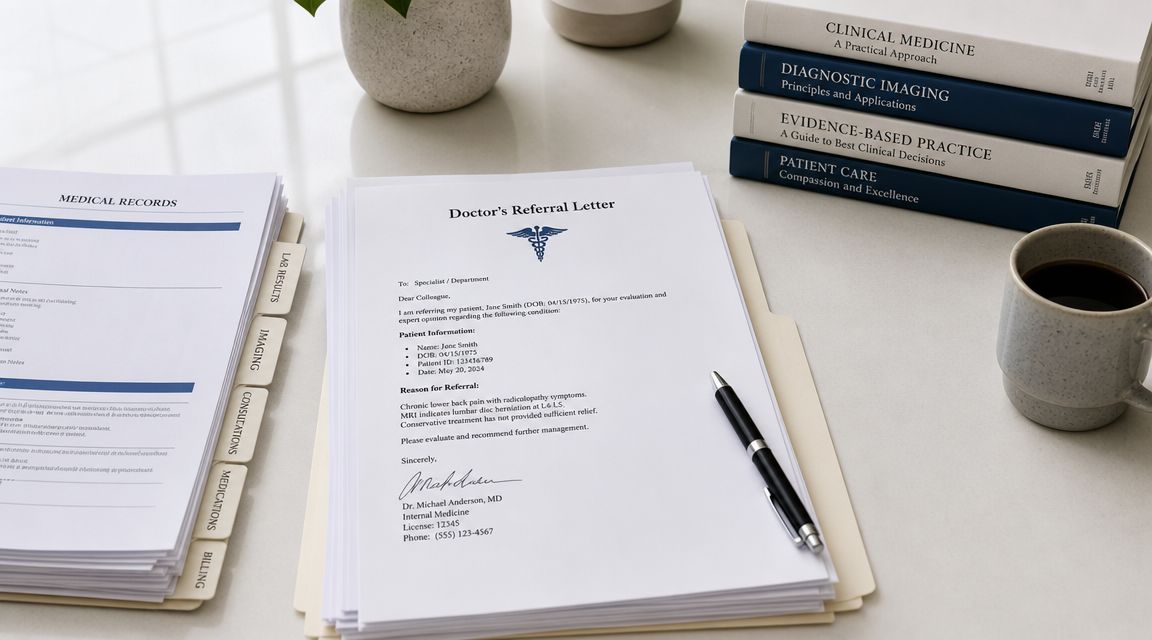
The records that usually carry the most weight
Not every medical record helps equally. A short note saying “patient reports memory issues” is better than nothing, but it usually won't carry a difficult case by itself.
The more persuasive evidence often includes:
- Neurology records that describe headaches, dizziness, cognitive complaints, balance issues, or post-concussive symptoms
- Psychiatric or psychological records that document trauma symptoms, panic, avoidance, nightmares, mood changes, and treatment response
- Primary care records that show the symptoms are persistent enough to be reported repeatedly across visits
- Rehabilitation records such as occupational, physical, or speech therapy notes when those services are involved
- Medication history showing what has been tried and whether side effects add fatigue, slowing, or instability
Why neuropsychological testing can be so important
The VA notes that because TBI and PTSD share symptoms such as insomnia, fatigue, and memory deficits, clinicians often need structured neuropsychological testing to separate persistent post-concussive symptoms from PTSD-driven symptoms, and standard imaging like CT scans may be normal in mild TBI, as explained in the VA clinician guidance on co-occurring TBI and PTSD.
That matters in SSDI cases because many people assume a normal scan means a weak claim. It doesn't. Mild TBI often doesn't announce itself on routine imaging in a way that resolves the disability question.
If you want a patient-friendly overview before talking with your doctor, this detailed explanation of neuropsych testing gives a useful sense of what those evaluations look for.
A normal CT scan doesn't prove normal functioning. Social Security needs evidence of how you perform, not just what an image does or doesn't show.
Evidence from people who see you every day
Family statements can help when they are specific. So can reports from former coworkers, supervisors, or friends. The key is detail.
Useful examples include:
- Before-and-after changes: “He handled schedules and bills before the accident. Now he forgets payments and repeats questions.”
- Worklike failures at home: “She starts tasks and abandons them halfway through.”
- Stress response: “Crowds, noise, or last-minute changes cause shutdowns or anger.”
- Safety concerns: “He gets lost driving familiar routes” or “she leaves the stove on”
Treatment consistency matters
Social Security often looks for gaps in treatment. Sometimes there are good reasons for those gaps. Transportation problems, fear, cognitive disorganization, cost, medication side effects, or the conditions themselves can interfere with regular care. Still, when possible, consistent treatment helps build a cleaner record.
A practical evidence file often includes these categories:
| Evidence type | Why it helps |
|---|---|
| Specialist records | connects diagnosis to observed limitations |
| Testing results | gives objective support for cognitive deficits |
| Therapy notes | shows ongoing trauma symptoms and coping limits |
| Third-party reports | illustrates daily functional decline |
| Work history details | ties symptoms to failed job performance |
Good claims are built from repetition and consistency. The same limits should show up across doctors, time, and settings.
Proving Your Case by Combining All Your Impairments
Many SSDI claims are lost because the claimant presents each problem as a separate box. Back injury in one box. Knee arthritis in another. PTSD in another. Concussion history in another. Social Security is supposed to look at the combined effect of all impairments, and that's exactly how these cases should be argued.

Want a straight answer about your claim?
Free consultation with an experienced SSDI team. No fees unless you win.
Call (617) 683-1983The legal mistake to avoid
If you say only, “My back prevents heavy work,” Social Security may answer, “Then do light or sedentary work.” If you say only, “My PTSD makes me anxious,” Social Security may answer, “Then do simple work with limited contact.” Those partial arguments leave room for denial.
A stronger argument is integrated. Your lumbar disease, knee damage, or heart symptoms may eliminate physically demanding jobs. Your traumatic brain injury and PTSD may eliminate the desk jobs that remain.
A realistic example of how this works
Take a claimant in his late 50s who spent years in warehouse, driving, maintenance, or machine work. After an accident, he has chronic neck and back pain, can't stand long, can't lift much, and needs position changes. That alone may rule out his past work.
But sedentary work still isn't automatic. He also forgets instructions, becomes irritable under pressure, sleeps poorly, and loses focus after short periods. He avoids traffic and crowds. He gets overwhelmed by changes in routine. On paper, someone might call that “capable of simple work.” In practice, employers still expect reliability, pace, attendance, and basic adaptation.
A large civilian study summarized by NIH found that patients with a history of mild TBI were 2.8 times more likely to develop a psychiatric disorder, and a military survey found that 44% of service members with mTBI screened positive for PTSD, as discussed in this NIH review of mild TBI and PTSD. That supports what many claimants already know from experience. A physical brain injury can be the starting point for a later disabling mental health condition.
How to present the combined-impact story
This isn't about exaggerating. It's about connecting the limits accurately and clearly.
Use this framework when thinking about your own case:
- Start with past work. List the actual demands, not just the job title.
- Add the physical restrictions. Standing, walking, lifting, sitting tolerance, use of hands, neck movement, or need to lie down.
- Layer in the mental restrictions. Focus, memory, pace, supervision, public interaction, and stress tolerance.
- Show why one problem worsens the other. Poor sleep increases pain. Pain reduces concentration. Hypervigilance drains stamina. Fatigue lowers frustration tolerance.
The winning theory is often simple. Your body rules out the jobs you used to do, and your cognitive and emotional symptoms rule out the jobs Social Security assumes are left.
Why this matters so much after 50
For older claimants, this combined approach often lines up with the practical realities of work transition. Retraining is harder when pain limits sitting and standing, memory is weaker, sleep is poor, and stress tolerance is low. If your record reflects that total picture, your case becomes much more persuasive.
The SSDI Process and Why You Should Not Give Up
Individuals do not typically file for disability because they want to. They file because work stopped being sustainable, and the bills didn't stop with it. Then the denial arrives, often with language that barely resembles the life the claimant is living.
That happens in serious TBI cases too. In the United States, an estimated 5.3 million Americans live with a permanent TBI-related disability, and early CDC reports estimated 90,000 new cases of long-term disability from TBI each year, according to the NCBI overview of TBI burden and disability. Long-term brain injury limits are real, but they still have to be translated into a disability record Social Security can act on.
What the process usually feels like
The first application is often heavy on forms and light on nuance. Reconsideration can feel even more mechanical. Many strong cases don't get the careful attention they need until the hearing stage before an administrative law judge.
That's especially true when the case involves both physical and non-exertional limits. Paper reviewers may reduce a complicated file to a few phrases like “normal imaging,” “cooperative on exam,” or “can perform simple tasks.” Those snippets can miss the actual issue, which is whether you can sustain competitive work day after day.
Why the hearing often matters most
At hearing, the case becomes more human and more specific. Your work history gets examined. Your daily function matters. The judge can look at how all impairments fit together instead of reviewing them as isolated notes.
A vocational expert may testify about whether a person with your restrictions could perform past work or other work. That part is often decisive. If the hypothetical limitations presented to the vocational expert are incomplete, the answer may sound unfavorable. If the full limitations are included, especially the combined effect of pain, fatigue, concentration problems, memory limits, and stress intolerance, the job picture can change sharply.
Why persistence matters
A denial doesn't mean Social Security proved you can work. It often means the file wasn't developed enough, the functional limits weren't framed correctly, or the case didn't reach the stage where its full complexity could be heard.
Older claimants often get discouraged because they think they should have explained themselves better the first time. Usually, the problem isn't effort. It's structure. SSDI is a medical-legal system. Good claims are built, not merely submitted.
Get Help with Your TBI and PTSD Disability Claim
If you're over 50 and dealing with traumatic brain injury and PTSD, your case may be stronger than it looks on paper. That's especially true when those conditions sit on top of degenerative disc disease, knee damage, neck problems, neurological disease, heart conditions, cancer treatment effects, or other serious physical impairments. The key is to document how all of those limitations work together.

A practical next step is to gather your treatment timeline, list every doctor and therapist, write down failed work attempts or daily function problems, and ask whether your records describe your limitations in work terms. If they don't, that gap can often be addressed.
It also helps to review trusted educational resources while your claim moves forward. The Brain Injury Association of America offers support and information for people living with brain injury, and the National Center for PTSD provides clear guidance on trauma symptoms, treatment, and related conditions.
When a case involves older age rules, physical restrictions, and non-exertional limits from TBI and PTSD, strategy matters. So does persistence. The right record can show not only that you're injured, but that there isn't realistic work you can sustain anymore.
If you need help with an SSDI claim or appeal, Melanson Law Group can review your case, explain how the rules apply to your age and work history, and help build the medical and vocational record needed for a stronger claim.

