

A lot of Massachusetts disability clients reach out at the same point. They're in their late 50s or early 60s. They worked steadily for decades. Then a back problem gets worse, a knee gives out, a heart condition sidelines them, or cancer treatment leaves them unable to keep up with a job they used to handle without thinking.
What makes this period so hard is that life doesn't pause when your body does. Mortgage payments still come due. Rent still has to be paid. Insurance premiums, prescriptions, groceries, and heating bills don't care that you had to stop working before you were ready. And if you're too young for full retirement, it can feel like you've been pushed into a gap with no obvious way through.
Social Security Disability Insurance, or SSDI, is often the benefit that fills that gap. It's not charity. It's an earned benefit tied to your work history. If you paid into the system and your medical condition now keeps you from sustaining work under Social Security's rules, you may qualify.
For people between 50 and 64, the analysis is often very different from what you'll read in generic disability articles. Age matters. Prior work matters. Transferable job skills matter. If your background is in physical work and your condition now limits standing, walking, lifting, reaching, or even sitting for long periods, the rules can become more favorable than many people realize.
Your Work Stopped but Your Bills Did Not
A typical call starts like this. Someone in Worcester, Lowell, Springfield, Cambridge, or the South Shore spent years doing work that required them to be on their feet, use their hands, lift, bend, climb, drive, or stay productive through pain. Then degenerative disc disease, severe knee arthritis, cervical problems, neuropathy, heart disease, or another physical condition reached the point where regular work was no longer realistic.
They didn't stop because they wanted to. They stopped because getting through a shift became a daily negotiation with pain, fatigue, shortness of breath, weakness, balance problems, treatment schedules, or medication side effects.

What many workers over 50 are facing
For this age group, the hardest part usually isn't understanding that they're hurt. It's accepting that the kind of work they've always done may no longer be possible. A machinist with lumbar stenosis may not be able to stand and bend all day. A nurse with neck and shoulder problems may not be able to lift patients. A delivery driver with a bad knee and heart condition may not be able to climb in and out of a truck on a schedule that leaves no room for bad days.
The legal system asks a different question than your employer or your family doctor does. Social Security wants to know whether your condition prevents sustained work under its rules, not whether you've been a hard worker or whether your condition is real. That distinction frustrates people, but it's where strategy matters.
Most strong SSDI claims for workers over 50 are built around function, not just diagnosis. The issue is what your body can still do reliably, day after day, in a work setting.
Why this guide matters in Massachusetts
Massachusetts claimants deal with the same federal disability rules as everyone else, but the practical path still has local pressure points. Filing deadlines, medical record collection, appeal timing, and hearing preparation all matter. So does understanding when an SSDI attorney in Massachusetts adds the most value.
If you're in your 50s or early 60s, this process should be approached with a plan. The right claim doesn't just say, “I'm disabled.” It shows why your age, work history, physical limitations, and medical evidence fit Social Security's framework.
Understanding SSDI and Your Over-50 Advantage
A lot of Massachusetts workers in their 50s come into my office assuming SSDI is mainly about proving they are sick enough. That is only part of the case. For this age group, the better question is often whether Social Security's rules recognize that a worker with physical limits, a long history of demanding jobs, and few transferable skills is no longer a realistic fit for other work.
SSDI has two basic requirements. You must be medically disabled under Social Security's definition, and you must have enough work credits to be insured for benefits. For people between 50 and 64, the second issue is often easier because they have usually spent decades working and paying into the system. The harder part is proving what their medical conditions now prevent them from doing, eight hours a day, five days a week, on a sustained basis.
The Social Security Administration explains that disability is evaluated through a five-step process that looks at work activity, medical severity, past work, and whether other work exists under the agency's rules, as described in the SSA's disability evaluation process overview.
What Social Security means by disabled
Social Security does not decide cases based on diagnosis alone. A bad MRI helps, but it does not end the analysis. Neither does a note from a doctor saying you should stay out of work.
The agency looks at function. How long can you stand? How much can you lift? Can you sit long enough to stay on task? Do you need extra breaks, miss work frequently, or have trouble using your hands? Those details often decide cases involving back problems, joint damage, heart disease, neuropathy, and other common conditions for workers in their 50s and early 60s.
That is why two people with the same condition can get different results. One may still meet the demands of full-time work under SSA rules. The other may not, because the medical record and treating notes show limits that make regular work unrealistic.
Why age matters so much after 50
Once you reach 50, the rules can become more favorable. Social Security uses medical-vocational guidelines, usually called the grid rules, to decide some cases. These rules matter most when a person cannot return to past work and the dispute is about whether lighter work is still possible.
For a 33-year-old, Social Security may expect adjustment to a new job more readily. For a 53-year-old warehouse worker, truck driver, CNA, machine operator, maintenance worker, or factory employee with the same physical restrictions, that expectation is often less realistic. Age, education, the physical demands of past work, and whether any skills transfer to easier jobs all start to matter more.
This is one of the biggest points generic SSDI articles miss.
For Massachusetts residents between 50 and 64, the grid rules can turn a difficult case into a winnable one. That usually happens when the evidence supports a limited range of light work or sedentary work, but the person's background does not support a realistic shift into new jobs. If your career has been built on lifting, carrying, standing, climbing, driving, or patient care, Social Security may be required to look more carefully at whether any real vocational adjustment exists.
Where over-50 claims are won or lost
These cases are rarely won by saying, "I hurt too much to work." They are won by matching the medical evidence to the correct legal framework.
A strong over-50 claim usually proves four things:
- Your past work was more demanding than your job title suggests. "Machine operator" or "driver" is too vague. Social Security needs to see the actual lifting, standing, bending, reaching, and pace requirements.
- Your current limits are specific. Records should show how long you can sit, stand, and walk, how much you can lift, and whether pain, medication, or fatigue interfere with attendance and concentration.
- Your old skills do not transfer cleanly to easier work. Years of hard work do not automatically create skills for desk jobs or lighter positions.
- Your age makes adjustment harder under SSA rules. That is not a sympathy argument. It is built into the regulations.
The grid rules do not help in every case. If Social Security believes you can still perform your past work, or if it classifies your old work and skills in a way that makes transition to other jobs seem easy, the claim gets harder. That is why the details of your work history matter so much. A poorly described job can cost a claimant the benefit of the over-50 rules.
Why this section matters for Massachusetts claimants
Massachusetts workers often have long employment records in health care support, transportation, construction, manufacturing, facilities work, food service, and other physically demanding fields. Those backgrounds can fit the grid rules well, but only if the claim is presented correctly. The file has to show both sides of the case. What your body cannot do now, and why your work history does not leave you with a realistic path to other jobs.
At the hearing level, that issue often becomes sharper because the judge and vocational expert focus on whether any jobs remain once your age, restrictions, and work background are considered. A lawyer who understands over-50 SSDI claims does not just submit records. The lawyer frames the case so Social Security applies the right rule to the right facts.
Navigating the SSDI Claim Process in Massachusetts
You stop working because your body will not let you keep up. A few weeks later, the mail brings a denial notice filled with deadlines and unfamiliar terms. That is a common Massachusetts SSDI timeline, especially for workers in their 50s who assumed their medical records would speak for themselves.
The process has three main stages, and each stage asks for different kinds of proof. For claimants between 50 and 64, the strategic question is not just whether you are disabled. It is whether the file is being built in a way that gives the Social Security Administration a fair reason to apply the over-50 rules correctly if the case reaches the later stages.
The basic path
In Massachusetts, an SSDI claim usually moves through these steps:
Initial application
Social Security collects your medical providers, medications, testing, and work history. Many cases are weakened here because the work history is too vague or the treatment record does not describe specific limits.Reconsideration
If the claim is denied, the next appeal is reconsideration. Another reviewer looks at the file, but the decision is still made mostly on paperwork.Administrative Law Judge hearing
If reconsideration is denied, you can ask for a hearing before an Administrative Law Judge. This is often the first point where the case can be explained in a fuller, more realistic way, including how your age, past work, and current limits fit together.
What changes from stage to stage
The early stages are document driven. Social Security is looking at medical records, forms, and short written statements. If those records say you have back pain, knee arthritis, or heart disease but do not explain how long you can sit, stand, lift, walk, use your hands, or stay on task, the agency may conclude you can still do some type of work.
That problem shows up often with Massachusetts workers in their 50s and early 60s. A nurse aide, driver, machine operator, warehouse worker, maintenance worker, or cook may clearly be unable to return to the old job. Social Security may still deny the claim if the file leaves room to argue for lighter work. For this age group, that is a costly mistake because the grid rules can become favorable, but only if the medical and vocational facts are developed with care.
A practical stage-by-stage view
| Stage | What usually matters most | Common risk |
|---|---|---|
| Initial Application | Complete treatment sources, accurate work history, function details | Claim is framed too generally, and prior jobs are described too lightly |
| Reconsideration | Updated records, corrected forms, added medical support | Denial is repeated because the same weak file goes back for review |
| Administrative Law Judge Hearing | Testimony, vocational issues, medical limits tied to work ability | Earlier errors in the record still shape how the judge sees the case |
The hearing level matters for another reason. It is often the first setting where the over-50 argument can be presented clearly. That includes the physical demands of your past work, whether any skills transfer, and whether full-time work at a lighter exertional level is realistic.
What usually goes wrong early
Early denials often come from avoidable problems in the record:
- Treatment notes list diagnoses but not limitations. Social Security needs to see how your condition affects standing, walking, lifting, reaching, using your hands, concentration, pace, and attendance.
- Job descriptions are incomplete. If a past job is described in a few vague words, the agency may classify it as easier than it really was.
- The timeline is unclear. Gaps in treatment, failed work attempts, or a sudden stop in earnings need an explanation.
- Symptoms are described broadly. “Pain” or “fatigue” is not enough. The file should show what those symptoms stop you from doing during a normal workday.
I often tell clients that the claim needs to answer two questions at the same time. What can your body no longer do. Why does your work background, especially at age 50 or older, not leave you with a realistic path to other full-time work.
The deadline that causes avoidable damage
After a denial, the appeal deadline is usually 60 days from the date you receive the notice. Social Security explains the appeals process and deadlines on its SSA appeals information page.
Missing that deadline can force you to start over. That can affect back pay, delay a hearing request, and create new arguments about the correct disability onset date.
A simple rule helps. Open every letter from Social Security the day it arrives, and respond as if the clock is already running.
For Massachusetts claimants between 50 and 64, speed matters, but accuracy matters just as much. A fast appeal that repeats the same weak record usually leads to another denial. A well-prepared appeal gives the agency, and later the judge, a clearer basis to evaluate the medical evidence and the over-50 rules the right way.
Why Claims for Physical Conditions Are Challenging to Win
A physical claim often fails for a simple reason. The diagnosis is clear, but the work limits are not.
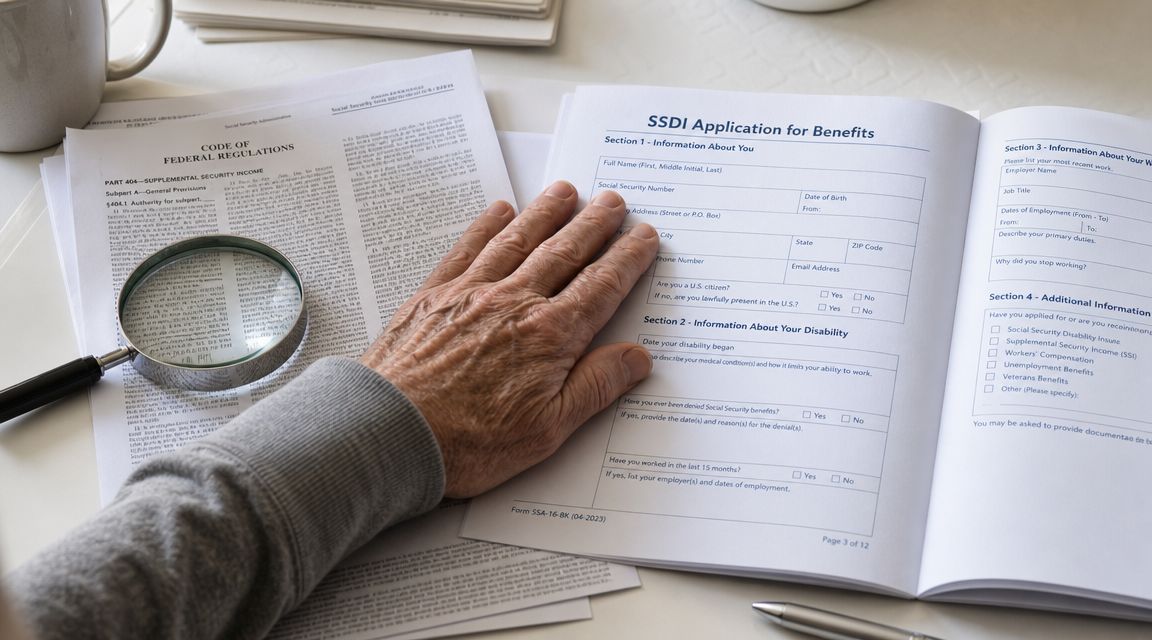
Social Security does not award SSDI because an MRI looks bad or because your doctor agrees you should not go back to your old job. The agency decides cases based on residual functional capacity, or RFC. That is a legal and medical judgment about what you can still do, eight hours a day, five days a week, despite your condition. For Massachusetts workers in their 50s and early 60s, that point matters because the over-50 grid rules can help, but only if the record accurately shows you are limited to the right level of work.
Why common physical conditions get underestimated
Many serious physical conditions are easy to recognize and hard to prove in SSDI terms.
- Degenerative disc disease and neck problems: Scans may confirm damage, but the claim still needs evidence about sitting, standing, bending, reaching, turning the neck, using the hands, and the need to change positions during the day.
- Knee injuries and orthopedic conditions: A person may clearly be unable to return to construction, warehouse work, nursing, or delivery work. Social Security may still say lighter work is possible unless the record spells out limits on walking, standing, climbing, balance, and pace.
- Heart disease: Cardiology records may establish the diagnosis, but the harder question is functional capacity. How far can you walk. How often do you need rest. Can you keep a regular schedule without shortness of breath, chest symptoms, or fatigue interfering.
- Cancer and treatment effects: The issue is often not the diagnosis itself. The issue is whether fatigue, neuropathy, nausea, weakness, and treatment absences would keep you from maintaining full-time work.
- Neurological conditions: Neuropathy and similar disorders can fluctuate. That fluctuation is real, but the file needs consistent documentation showing how often symptoms interfere with safe and reliable work activity.
Pain has to be converted into work restrictions
Pain cases are frequently undervalued because pain is not measured neatly by one test. A treatment note that says "chronic back pain" does not tell Social Security whether you can sit for six hours, use your hands all day, stay on task, or show up reliably.
That gap is where many physical claims are lost.
Strong records translate symptoms into concrete limits. How long can you sit before you need to stand. How long can you stand before you need to sit. Do you need to lie down during the day. Do pain medication and muscle relaxers slow you down. Do flare-ups knock out two or three days at a time. Those details matter far more than broad statements that you are hurting.
For claimants between 50 and 64, this can directly affect whether the grid rules help. If the record supports a restriction to sedentary work, or shows that even sedentary work is not realistic, the outcome can change. If the file is vague, Social Security often assumes more capacity than the claimant has.
Sedentary work is often the real fight
In many physical-condition cases, the dispute centers on sedentary work. Social Security may agree that you cannot return to heavy or medium work and still deny the claim by saying you can do a seated job.
That sounds reasonable until you look closely. Sedentary work still usually requires sitting for much of the day, using the hands consistently, maintaining attention, getting to work regularly, and staying productive. Many older workers with spinal stenosis, bad knees, shoulder problems, neuropathy, or heart disease cannot do that on a sustained basis.
I see this often with workers who spent decades doing physical jobs. They can no longer do the work they know. Social Security then shifts the case to whether they could perform some other less demanding job. For people in Massachusetts who are 50 or older, that is exactly where work history, transferable skills, and the grid rules become strategically important. A file that proves you are limited to sedentary or less than sedentary functioning can put you in a much stronger legal position than a generic SSDI guide would suggest.
Denials usually reflect an incomplete record, not a weak diagnosis
A denial in a physical case often means the file did not explain the daily consequences well enough. The agency may have the imaging, procedure notes, and diagnoses, but still lack a clear medical opinion or treatment record describing what happens when you try to sit, stand, walk, lift, reach, concentrate, or keep a regular schedule.
If you are denied, the appeal deadline is generally 60 days from receipt of the notice, as Social Security explains on its SSA appeals information page. Missing that deadline can force a new application and create problems with timing, back pay, and the disability onset date.
The better response is focused and practical. Review why the claim was denied, identify the missing functional evidence, and correct the record before the next decision.
The Decisive Impact of an Experienced SSDI Attorney
The best reason to hire an SSDI attorney in Massachusetts isn't convenience. It's outcome and timing.
A National Bureau of Economic Research study found that representation increased the probability of an initial allowance by 23 percentage points, relative to a mean initial allowance rate of 32%. The same study found that represented claimants who were initially denied were 60 percentage points less likely to appeal to the hearing level, and that representation at the initial stage reduced total SSDI processing time by 316 days. It also estimated that the 15% representation rate at the initial claims stage in 2014 produced a 13% reduction in SSDI processing costs versus a no-representation counterfactual, according to the National Bureau of Economic Research summary of legal representation in SSDI claims.
Those numbers match what experienced practitioners see. The file is stronger when somebody is managing the theory of the case from the beginning.

What representation actually changes
A lawyer doesn't win your case by repeating that you're disabled. The work is more technical than that.
Here's what tends to help most:
- Framing past work correctly: Your old jobs need to be described by the tasks you performed, not by a simplified title.
- Targeting missing evidence: The file may need records from orthopedics, neurology, pain management, cardiology, oncology, physical therapy, or imaging providers.
- Developing function, not just diagnosis: The question is whether your record supports limits in sitting, standing, walking, lifting, reaching, using your hands, maintaining pace, and attending work consistently.
- Preparing for hearing testimony: If your case reaches a judge, how you explain your daily limitations matters. So does how vocational evidence is handled.
A good lawyer also keeps the process moving. Claims often stall because no one is tracking records, following up on missing treatment notes, or spotting a bad vocational assumption before it hardens into a denial.
Early help is often better than late help
Many people wait until after a denial to call a lawyer. That's understandable, but it's not always ideal. The earlier the claim is shaped, the easier it is to avoid weak descriptions of past work, thin medical submissions, and missed appeal windows.
For claimants over 50, that early strategy can be especially important because the case may turn on subtle vocational issues. If your case fits the grid rules, the record should be developed with that in mind from the start.
Cost concerns are usually more manageable than people think
Most SSDI lawyers work on a contingency basis. That means you don't pay upfront to start the case, and the fee is generally tied to a successful outcome under Social Security's fee system. The practical point for most clients is simple: representation is usually structured so that people who are already out of work can still get help.
If you're hesitating because you think hiring counsel is unaffordable, ask how fees are handled before you decide against representation. In most SSDI cases, the barrier is lower than people expect.
How the Melanson Law Group Builds a Winning Claim
A winning SSDI claim is built before Social Security makes up its mind about your file. For Massachusetts workers between 50 and 64, that often means shaping the record around two questions early. What can you still do physically, and does your work history leave you with any realistic adjustment to other work under the grid rules?
Melanson Law Group is a Cambridge firm focused on Social Security Disability cases. The firm highlights a perspective many claimants find useful. Its founder, Jack Melanson, is a retired Social Security judge, and the practice centers on applications, reconsiderations, hearings, and developing the medical and vocational proof these cases often turn on.

What a stronger build looks like
Strong SSDI files usually share the same traits. The medical records are current. The work history is specific. The legal theory matches the claimant's age, functional limits, and past jobs.
Evaluating the case the way Social Security will
Older claimants often have a better case than they realize, but only if the file is framed correctly. Social Security does not award benefits because someone has worked hard for decades and now hurts too much to keep going. It looks at exertional limits, transferable skills, past relevant work, and whether the claimant can adjust to something else.
That matters a great deal for people in their 50s and early 60s. A case may be stronger under the grid rules than under a pure medical-listing theory. If the prior jobs were heavy, skilled in a narrow way, or hard to transfer out of, counsel should build the record with that in mind instead of treating the case like a generic disability application.
Developing the work history with precision
Many otherwise valid claims often weaken at this stage. A claimant says, "I was a supervisor," but the actual job involved lifting, standing, stocking, machine use, or hands-on production work. Social Security may classify that job differently than the title suggests, and that classification can decide whether the grid rules help or hurt.
A careful case build gets specific about what the person did. How much weight was lifted. How long the person stood. Whether computer work was occasional or central. Whether any skills transfer to lighter work. For a Massachusetts claimant over 50, those details can make the difference between a denial and an approval.
Tying medical proof to work-related limits
Medical records need to answer practical questions. How long can you sit before you need to change position? How far can you walk? Do you need to raise a leg, lie down, or take breaks that an employer would not tolerate? If pain medication slows concentration, the file should show that too.
For physical claims, broad statements like "disabled" or "cannot work" rarely carry the case. Specific functional restrictions do. The stronger files connect imaging, exam findings, treatment history, and specialist opinions to concrete limits that fit Social Security's rules.
Why this approach helps physical-condition claims
Physical-condition cases often fail because the record sounds medically serious but vocationally incomplete. That is a fixable problem. A lawyer can help turn scattered records into a coherent explanation of why a 58-year-old warehouse worker with back and cardiac limitations is not just unable to return to past work, but also poorly positioned to shift into sedentary or light work on a sustained basis.
That kind of framing is especially useful in Massachusetts SSDI cases involving orthopedic injuries, degenerative spine conditions, neuropathy, cardiac disease, or chronic pain. The goal is not to make the case sound dramatic. The goal is to give Social Security a file that matches the legal standard for someone in this age group.
Common Questions from Massachusetts SSDI Claimants
How does workers' compensation or long-term disability affect SSDI
A lot of Massachusetts claimants in their 50s call after a work injury, a private disability claim, or both. Their first concern is usually simple. If money is coming in from somewhere else, will SSDI be denied?
The answer depends on the type of benefit and whether you are still working. Social Security looks closely at work activity and monthly earnings. The agency updates the Substantial Gainful Activity amounts each year, and the current limits are listed by the Social Security Administration. Workers' compensation can reduce the amount of SSDI paid in some cases. Private long-term disability usually raises different contract and offset issues, especially if the policy requires reimbursement after an SSDI award.
For claimants between 50 and 64, this often becomes a strategy question, not just a paperwork question. A failed return to work, a light-duty job, or part-time wages can affect how Social Security evaluates the claim. That matters even more if the grid rules may help you, because the case has to be presented with a clear picture of what work you can still do, if any.
My doctor says I'm disabled. Why did Social Security deny me
Because your doctor is treating you, and Social Security is applying its own legal standard.
A doctor may be completely right that you should not return to your old job. That does not answer the full SSDI question. Social Security wants to know what you can still do for a full work schedule, how long your limits are expected to last, and whether other work exists under its rules.
For Massachusetts workers in their 50s and early 60s, this distinction matters more than many people expect. A 59-year-old machine operator with a strong work record may have a winnable claim under the grid rules, but only if the file shows the right functional limits and the right description of past work. If the records only say "disabled" or "unable to work," the agency may still deny the case because the legal proof is incomplete.
A denial often means the record did not spell out sitting, standing, lifting, reaching, hand use, attendance problems, pace, or the effect of pain and medication in enough detail.
I can still work a little. Can I still qualify for SSDI
Sometimes, yes.
The problem is that claimants often use the phrase "work a little" to describe very different situations. Helping a relative for a few hours, trying to keep up with chores, selling a few items online, or attempting part-time paid work are not treated the same way. Social Security looks at earnings, productivity, consistency, and whether the activity resembles real competitive work.
Older claimants need to be careful here. If you are 55 or older, the grid rules may turn on whether you are limited to sedentary or light work and whether your past skills transfer to other jobs. A small work attempt can support the case if it clearly failed because of your condition. It can also hurt the case if it makes the file look like you can sustain work more than you can.
Get advice before testing a return to work. The details matter.
What should I gather before I talk to a lawyer
Bring the file that shows how your condition affects work, not just a stack of diagnoses.
Useful items include:
- Denial letters and SSA notices. These show the deadline and the level of appeal.
- A treatment list. Include doctors, clinics, hospitals, imaging centers, therapy, and approximate dates.
- A real job history. Write down how much you lifted, how long you stood or sat, whether you climbed, drove, bent, reached, typed, supervised others, or used machinery.
- A short daily function summary. Focus on sitting, standing, walking, hand use, concentration, rest breaks, naps, pain flares, and bad days.
- Income information. Include wages, workers' compensation, long-term disability, self-employment, and any side work.
For claimants ages 50 to 64, the work history is often more important than people realize. Social Security does not just look at job titles. It looks at what the job required and whether those skills transfer to easier work. That is often where over-50 cases are won or lost.
When should I call an SSDI attorney in Massachusetts
Early is better.
Call while you are deciding whether to file, right after a denial, or before a hearing is scheduled. Waiting makes it harder to clean up missing medical proof, weak work history descriptions, and avoidable return-to-work issues.
For Massachusetts residents in their 50s and early 60s, early legal review can identify whether the grid rules may help. That changes how the case should be built from the start. Age alone does not win SSDI, but age plus the right work history, the right residual functional limits, and the right vocational argument often changes the outcome.
If you are out of work because of a serious physical condition and trying to judge whether you have a viable SSDI case, Melanson Law Group represents Massachusetts claimants through applications, appeals, and hearings, and can assess how your age, medical limits, and work background fit Social Security's rules.