
When a physical condition forces you to stop working, especially after age 50, the last thing you want to deal with is a complicated government process. If you live in the Woonsocket area and need to apply for disability benefits due to issues like degenerative disc disease, orthopedic problems, or a serious illness, getting clear, straightforward information on the local Social Security office is the best place to start.
Wondering what your claim could be worth? Try our free SSDI benefits calculator.
Your Guide to the Woonsocket Social Security Office
For many people between 50 and 64, a career can come to an abrupt halt because of a serious physical condition. Issues like degenerative disc disease, severe knee and neck problems, neurological diseases, cancer, or heart conditions can make it completely impossible to keep working, creating tremendous financial uncertainty.
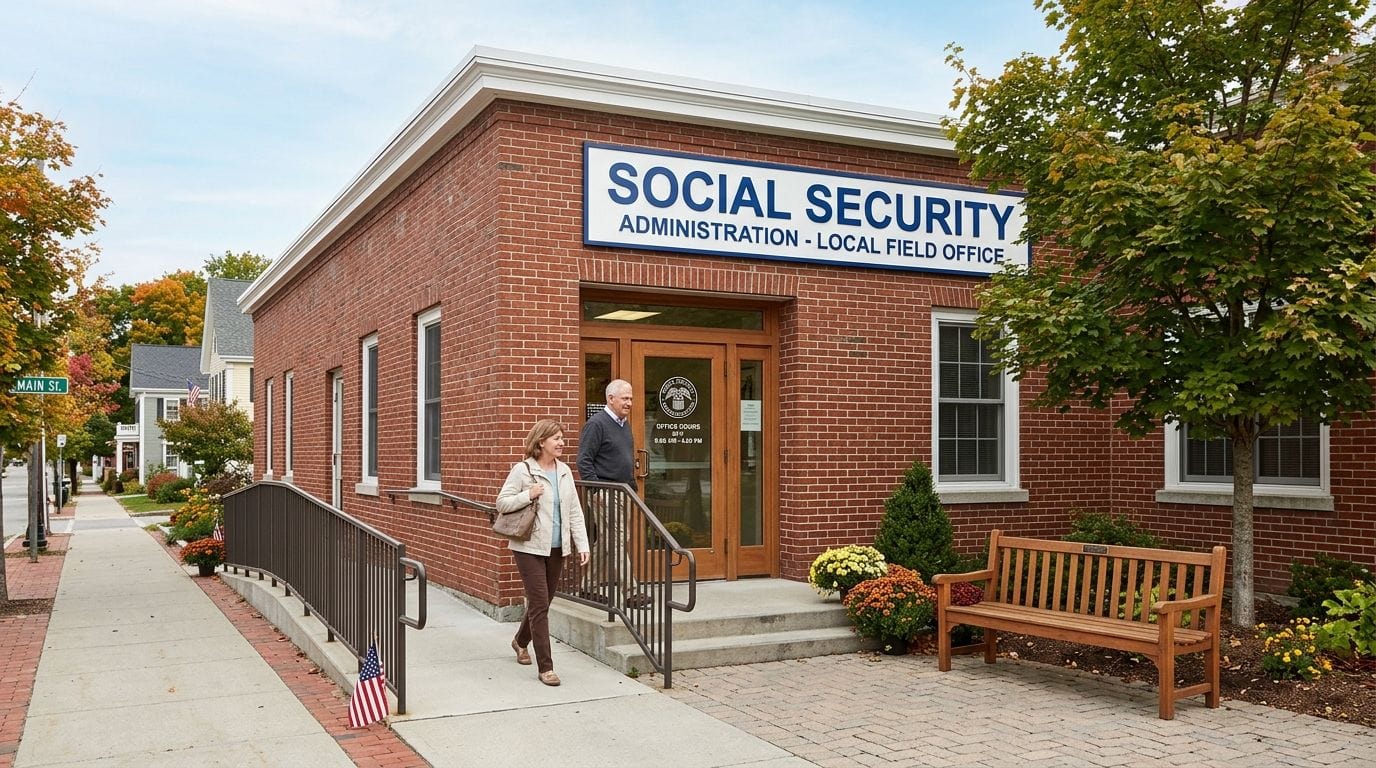
The Social Security office in Woonsocket is the local resource where you can start your claim for Social Security Disability Insurance (SSDI). It's your main point of contact for submitting paperwork, asking questions, and getting the process underway.
Denied? You have only 60 days to appeal.
Talk to a disability attorney now. Free consultation. No fees unless you win.
Call (617) 683-1983Here’s a quick summary of the essential information you'll need before you call or visit.
Woonsocket Social Security Office At-a-Glance
| Information | Details |
|---|---|
| Address | Pavilion Plaza, 2168 Diamond Hill Road, Woonsocket, RI 02895 |
| Days Open | Monday, Tuesday, Wednesday |
| Office Hours | 9:00 AM to 4:00 PM |
| Local Phone | 1-877-229-3542 |
| National Toll-Free | 1-800-772-1213 |
Knowing these details ahead of time can help make a stressful situation just a little bit easier to manage.
This office serves a significant number of people in our community. It’s the hub for a total of 19,225 beneficiaries, which includes 3,360 disabled workers who depend on these benefits to get by. You can find more data on Rhode Island beneficiaries in the Social Security Administration's official reports.
Why Local SSDI Support Is a Lifeline in Woonsocket
Filing for Social Security Disability Insurance (SSDI) isn't just about filling out forms. For claimants aged 50-64, it’s a critical step toward keeping your head above water financially after a physical condition ends your career.
This is especially true in a community like Woonsocket. With a long history of physically demanding jobs, many workers here find themselves facing debilitating health problems—like orthopedic injuries or chronic neck and back pain—that force them to stop working far sooner than they ever planned.
When a worker between 50 and 64 develops a serious medical condition, it often becomes a two-front battle. You’re not just fighting for your health—you’re suddenly facing a financial emergency that can put your entire family’s security at risk.
The Reality for Workers Over 50
Imagine working a tough, physical job for decades. Now, your doctor tells you that degenerative disc disease, a severe orthopedic problem, or a neurological disease means you simply can't do that work anymore. This isn't a hypothetical story; it's the reality for many people in Woonsocket.
That’s why having access to help through the Social Security office in Woonsocket RI isn't just a matter of convenience. It's a lifeline. A successful SSDI application provides that crucial stream of income when your ability to earn a living is stripped away by an illness or injury.
For many older workers battling conditions like cancer, heart disease, or neurological disorders, an approved disability claim is the only thing standing between them and financial ruin. It’s what pays the mortgage, buys groceries, and allows them to maintain a basic quality of life.
The economic situation in Woonsocket makes this need even more urgent. With a poverty rate of 18.7% in recent years, many families have little to no savings to rely on when the main breadwinner can no longer work. This financial pressure makes getting an SSDI application approved—and approved quickly—a matter of survival. You can see more details about Woonsocket's economic profile on Data USA.
At the end of the day, turning a complex, often frustrating bureaucratic process into a real path to survival is why local SSDI support is so important. It’s about helping hardworking people get the benefits they’ve earned and so desperately need.
Proving Your Physical Condition After Age 50
For anyone applying for disability benefits, proving your condition is more than just showing you have a diagnosis. But for claimants over the age of 50, the rules start to shift in your favor. This is especially true if you’re dealing with common physical issues like degenerative disc disease, severe orthopedic problems, or chronic heart conditions.
Not sure if you qualify?
Get a free case review from a New England disability team. You only pay if we win.
Call (617) 683-1983The Social Security Administration (SSA) knows it’s much harder for an older worker to pivot to a completely new line of work. They use special age-based guidelines, often called the “Grid Rules,” to account for this reality. While the SSA might tell a younger person to simply find a desk job, they can’t make that same argument as easily for a 58-year-old with a long history of physical labor. If you can no longer do your past work, the Grid Rules can make it much easier to win your case.
Translating Your Pain into Proof
The secret is to show the SSA your specific, real-world limitations. It’s not enough to tell them you have bad knees; you have to prove those bad knees stop you from actually working. We do this by defining your Residual Functional Capacity (RFC), which is basically a detailed inventory of what you can still do in a workday despite your medical problems.
Think of it this way: your medical records are the ingredients. Your RFC is the recipe that explains to the SSA what those ingredients actually mean for your ability to earn a living.
Here are a few examples:
- Degenerative Disc Disease: A simple diagnosis won't cut it. Your file needs to show that because of severe neck or back pain, you can’t look down at a desk, twist your body, or concentrate for more than 15-20 minutes at a time, making office work impossible.
- Orthopedic Problems: A note that says “knee arthritis” is weak. A strong claim has a doctor’s opinion stating you can only stand for 10 minutes or walk for 50 feet before needing to sit down, which rules out almost any job that isn't purely seated.
- Heart Conditions, Cancer, or Neurological Diseases: The focus should be on things like overwhelming fatigue, weakness, shortness of breath, or the cognitive side effects of treatment (often called “chemo brain”) that make it impossible to keep up with a regular work schedule.
To build a strong case, your records need to be in perfect order. It's a critical step that many people overlook. A fantastic resource for this is this guide on how to organize your medical records.
The goal is to paint a crystal-clear picture for the disability examiner—or the judge at your hearing—that your physical abilities are so limited you simply cannot adapt to any kind of new work. By focusing on how your condition impacts your daily function, and backing it up with detailed notes from your doctor, you can use the age-based rules to your advantage.
Office Visit or Online? What's the Best Choice for Your Claim?
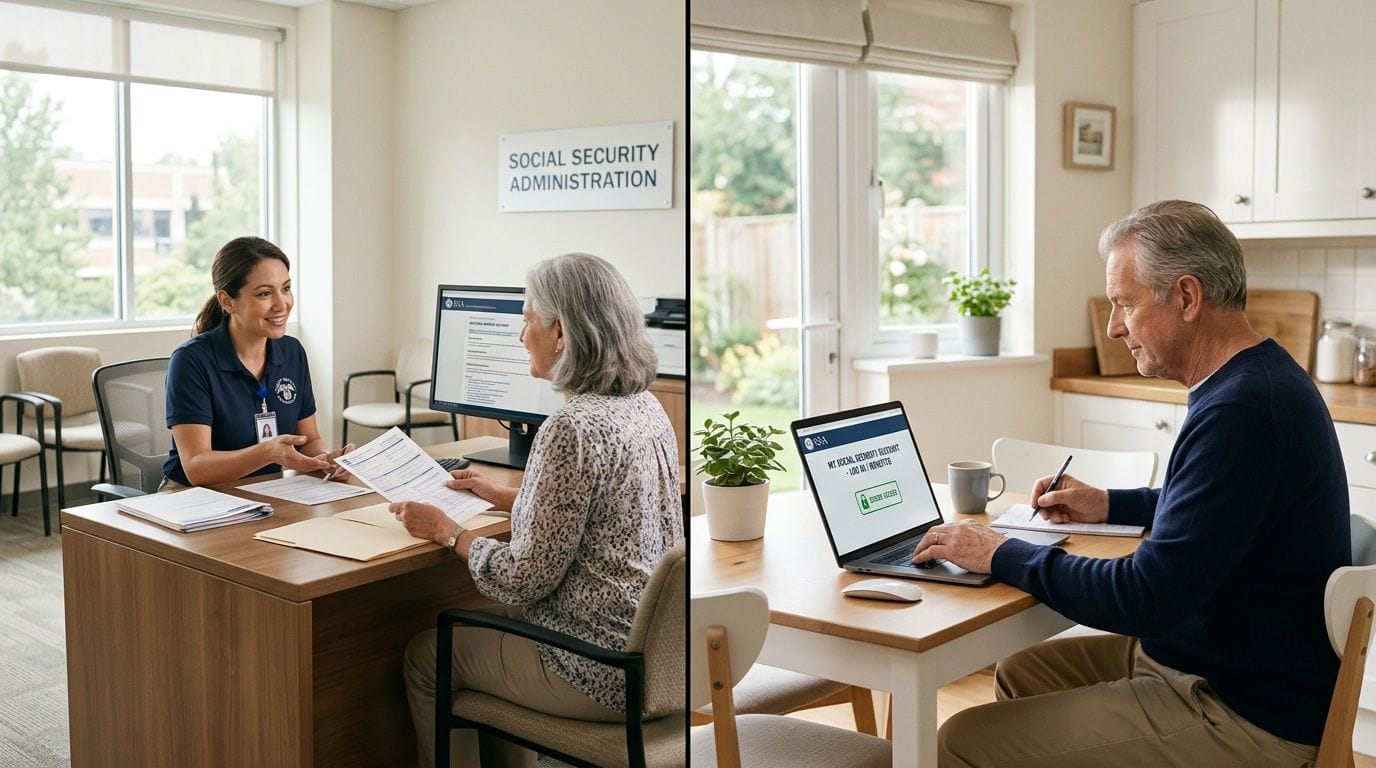
When you're over 50 and dealing with a condition like degenerative disc disease, a severe orthopedic problem, or the side effects of cancer treatment, the simple act of leaving your house can feel like a monumental task. That’s why deciding whether to visit the Social Security office in Woonsocket, RI, or manage your claim online is more than just a matter of convenience—it’s about protecting your health and energy.
The good news? The Social Security Administration (SSA) has made it possible to handle most of your disability claim right from home. Their online portal is a robust tool that lets you start, work on, and submit your initial application without ever needing to make a trip.
When You Absolutely Need to Go in Person
While doing things online is almost always easier, a few situations still require a face-to-face visit. You’ll probably need to head to the Woonsocket office if you have to:
- Verify original documents, like a birth certificate or military discharge papers. An SSA employee needs to physically see and confirm these.
- Get direct, in-person help because you're not comfortable with computers or need someone to walk you through complicated forms.
- Fix a specific account problem that can’t be resolved over the phone or through the website.
For nearly everything else, sticking with the online system is a much more efficient path for a claimant with physical limitations.
The smartest approach is to treat online services as your first choice. Save the office visits for only those tasks that truly demand it. This lets you conserve your limited energy for what really matters—managing your health.
What You Can Get Done Online
The SSA’s online platform is surprisingly powerful and designed to handle the bulk of your needs, saving you a huge amount of time and travel. From your own home, you can:
- File your entire initial application for SSDI benefits.
- Check the status of your application anytime you want.
- File an appeal if your claim gets denied.
- Update your address and phone number.
For anyone with a physical condition that limits mobility, managing your claim online isn’t just a convenience. It's a strategic way to reduce the physical and mental strain of the whole application process.
Worried a misstep could cost you benefits?
A short, free consultation now can prevent an expensive mistake later. No upfront fees.
Call (617) 683-1983What Happens When Your Claim Is Denied in Rhode Island
Getting a denial letter for your disability claim can feel like a punch to the gut, especially when you’re already dealing with a serious physical condition. But here’s something most people don’t know, especially if you’re over 50: a denial is often a predictable, and frankly, expected part of the process. It’s not the end of the road.
When you first file your application, say at the Social Security office in Woonsocket RI, your file isn't actually decided there. Instead, it gets forwarded to a state agency in Providence called Disability Determination Services (DDS). This is where the first decision is made, and the reality is that a huge number of initial claims for conditions like degenerative disc disease, cancer, and heart issues are denied right here.
The Critical Role of the Appeals Process
This is why you can't let that first denial discourage you. The system is built with several layers of appeal, and for many older claimants with serious physical limitations, the hearing is where they finally get approved. A denial simply means it's time to take the next step.
For claimants aged 50-64, the hearing before an Administrative Law Judge (ALJ) is the most important opportunity to win. This is where you can personally explain how your neck pain, knee instability, or chronic fatigue prevents you from working, and an experienced representative can argue how the rules work in your favor.
Where Your Appeal Hearing Happens
Once you appeal, the process moves beyond the local office and DDS. In Rhode Island, these critical hearings take place at a specific office designed just for this purpose: the Office of Hearings Operations (OHO) at 33 Broad Street in Providence.
It’s at this hearing office where a lawyer can present your complete medical evidence directly to a judge. This step can completely change the outcome of your case. You can see more official data on Rhode Island's Social Security hearing process to understand just how important this stage is.
How a Specialized Lawyer Can Strengthen Your Claim

Trying to win a disability claim on your own can feel like building a house without a blueprint. You might have all the right materials—doctor’s visits, test results, and a real physical condition that stops you from working—but you don’t know how to put them together in a way the Social Security Administration (SSA) will actually approve.
This is where hiring a legal team that focuses on disability claims can make all the difference. They don’t just file paperwork for you. They know how to turn a stack of medical records into a powerful, clear argument for why you deserve benefits. This is especially true for claimants over 50 whose physical conditions, like orthopedic or neurological issues, are complex.
Translating Your Medical Reality for the SSA
A lawyer who lives and breathes SSDI knows exactly what the SSA needs to see to approve a claim. They take your doctor’s notes about your degenerative disc disease, heart condition, or cancer and translate them into the specific language of “functional limitations” that a judge understands.
Their job is to make sure every single piece of evidence tells a consistent story about why you can no longer work.
The biggest advantage, though, is their ability to get you ready for a hearing. They know what kinds of questions a judge will ask about your physical limitations, help you practice explaining your daily struggles clearly, and build a case that directly connects your age and physical limits to the SSA’s own rules.
Want a straight answer about your claim?
Free consultation with an experienced SSDI team. No fees unless you win.
Call (617) 683-1983
When you first reach out for legal help, you might speak with a skilled legal intake specialist who will gather all the key details to get your case started on the right foot.
This kind of professional guidance is what turns a frustrating denial from the Social Security office in Woonsocket RI into a clear path forward. Best of all, most disability lawyers only get paid if you win your case, giving you the expert help you need to secure the benefits you’ve earned.
Your Top Questions About Filing for Disability in Woonsocket
Going through the disability process brings up a lot of real-world questions. Here are some straightforward answers to the concerns we hear most often from claimants in the Woonsocket area, especially if you're over 50 and dealing with a physical condition.
What Kind of Medical Evidence Actually Matters?
For physical conditions like degenerative disc disease, bad knees, neck issues, or cancer, just having a diagnosis isn't enough. The most powerful proof comes from two things: objective tests like MRIs and, just as importantly, detailed statements from your doctor about your functional limitations.
What does that mean? It means your doctor needs to put in writing exactly how your condition holds you back. Can you only sit for 30 minutes at a time due to back pain? Can you lift no more than 10 pounds because of a neck or shoulder injury? Does chronic pain from your orthopedic condition make it impossible to concentrate? That's the specific evidence that convinces an examiner or a judge.
Does My Age Really Make a Difference in an SSDI Claim?
Yes, it absolutely does. Once you’re over 50, your age becomes a major factor. The Social Security Administration uses special guidelines called the "Grid Rules," which recognize that it’s much harder for an older worker with a physical impairment to switch careers and learn a completely new, less demanding job.
These rules can be a game-changer for your claim. For someone aged 55 or older who has a history of physical work and can’t go back to it due to a condition like a heart ailment or neurological disease, the Grid Rules can lead directly to a "disabled" finding—even if they could technically do a simple, sit-down job.
My First Claim Was Denied. Should I Bother Appealing?
Absolutely. Getting an initial denial from the Social Security office in Woonsocket RI is incredibly common, and you shouldn’t take it as the final word on your case. The appeals process, especially the hearing in front of a judge, is where you have your best shot at winning.
This is your opportunity to personally explain how your orthopedic issues, heart condition, or neurological problems truly keep you from working. A huge number of claimants over 50 with solid medical evidence for their physical conditions are finally approved at the hearing stage, so appealing is a critical step you don't want to skip.
If you’re feeling buried under a denial letter or just don't know where to start, the team at Melanson Law Group is ready to step in. With the unique insight of a former Social Security judge, our firm understands what it takes to build a case that wins. Contact us for a free consultation to get the benefits you've earned.