
You may be staring at a denial letter, a stack of medical records, and a doctor who supports you in the exam room but hasn’t put that support into writing in a way Social Security can use. That’s a common and painful spot to be in, especially for workers in their 50s and early 60s who know they can’t keep doing the jobs they’ve always done.
In SSDI cases, a short note saying “my patient is disabled” usually won’t carry the claim. Social Security wants medical evidence that explains function. Can you sit long enough to do desk work? Stand long enough for retail or factory work? Use your hands reliably? Stay on task? Attend work regularly? Those are the questions that decide many cases.
That’s why the right sample of disability letter from doctor matters. A strong letter doesn’t just name a diagnosis. It connects the diagnosis to work limits, points to exam findings and testing, and explains why those limits have lasted despite treatment. That’s especially important where physical conditions like degenerative disc disease, knee problems, neck disorders, neurological disease, cancer, or heart disease force someone out of the workforce after age 50.
The problem is that many online examples stop at generic advice. They tell you to ask for a letter, but not what kind of letter, what language helps, or what details make a judge trust it. This guide focuses on seven doctor letter formats that tend to work better in real SSDI practice, with sample wording and practical strategy for older claimants whose past work was physical, skilled, or both.
1. Residual Functional Capacity RFC Assessment Letter
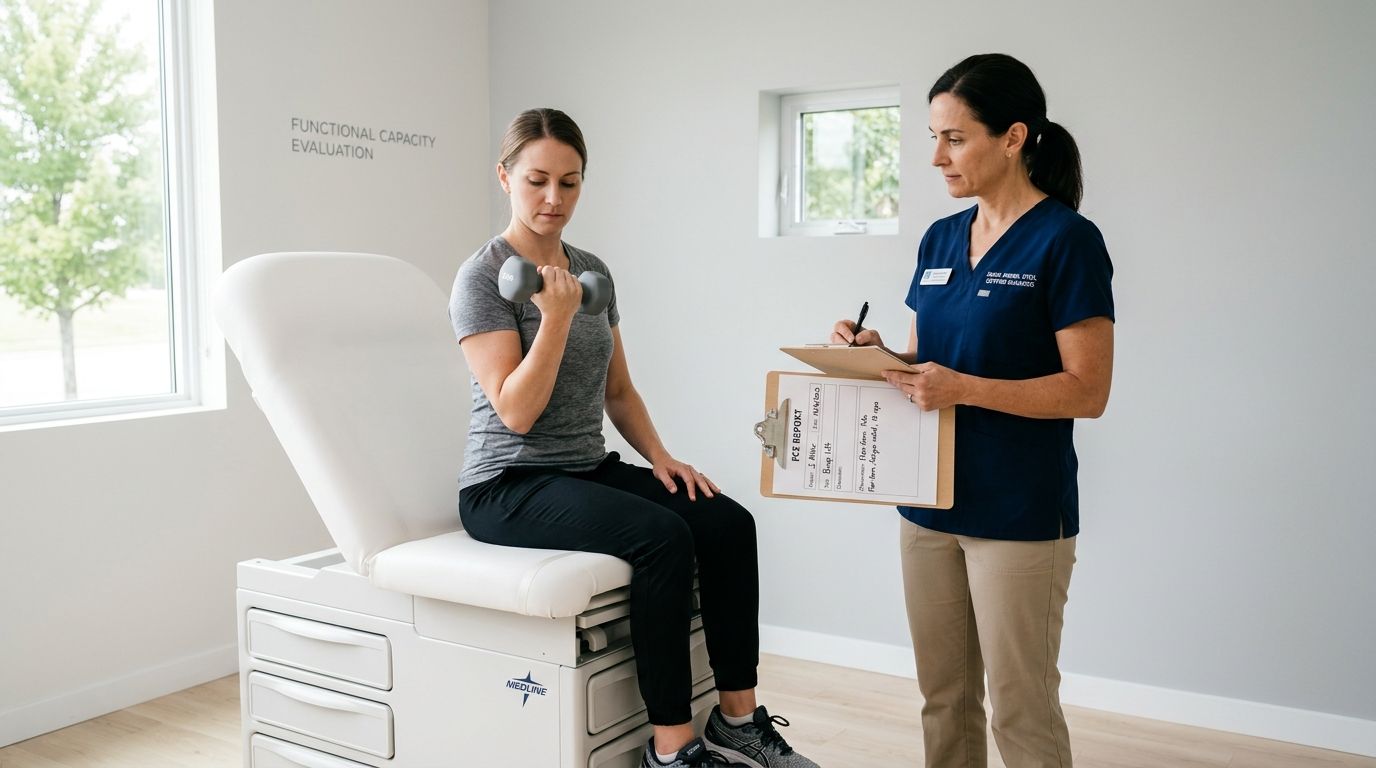
If I had to choose one type of doctor letter for a claimant between 50 and 64 with a serious physical condition, I’d start here. A Residual Functional Capacity letter forces the doctor to answer the question Social Security is most interested in. What can this person still do, consistently, in a work setting?
That matters because broad statements fail where specifics can succeed. In SSDI hearing cases, a detailed treating physician letter that includes an RFC assessment has been associated with a higher approval rate than claims built only on raw records and consultative exams, according to Pilzer Law’s summary of aggregated outcomes from over 6,000 cases reviewed by former SSA judges.
What a persuasive RFC letter sounds like
A good sample of disability letter from doctor in RFC form might say something like this:
“Due to lumbar degenerative disc disease with radiculopathy, the patient can sit for only 20 minutes at one time, stand or walk for only 10 minutes at one time, and would need to recline during the day. He should not lift more than 10 pounds. These limitations are supported by MRI findings, reduced range of motion, positive straight leg raising, and persistent pain despite treatment.”
For a heart patient, the wording should stay just as concrete:
“Following myocardial injury and ongoing fatigue with exertion, the patient should avoid temperature extremes, can lift only very light weight, and requires unscheduled rest breaks during the workday due to shortness of breath and exhaustion.”
What helps and what hurts
- Use work limits, not adjectives: “Can sit 20 minutes” beats “has trouble sitting.”
- Tie each limit to medicine: “Due to severe lumbar stenosis” is stronger than a bare restriction list.
- Address past work directly: A warehouse worker, nurse aide, machinist, truck driver, or bookkeeper all face different demands.
- Bring the doctor a form: SSA-style RFC language often helps a busy doctor respond efficiently.
What doesn’t work is a letter that repeats diagnoses without saying how long you can sit, stand, walk, lift, use your hands, focus, or keep attendance. Judges already know what arthritis, disc disease, or coronary disease are. They need to know what those conditions stop you from doing.
2. Symptoms Severity and Functional Impact Narrative Letter
Some claims need more than boxes checked on a form. Pain, fatigue, numbness, shortness of breath, dizziness, neuropathy, and medication side effects often show up best in a narrative letter that makes daily function understandable.
That’s especially true for claimants whose records contain years of treatment, but the office notes are short and repetitive. A narrative lets the doctor explain what a “bad day” looks like in practical terms.
Sample wording for real-world symptoms
A strong neck or nerve case might read like this:
“The patient has chronic cervical pain with radiation into the dominant arm and hand. He reports frequent numbness and loss of grip. On examination, these complaints are consistent with reduced cervical range of motion and weakness. In practical terms, he would have difficulty typing, handling paperwork, gripping tools, reaching repeatedly, or maintaining head position for sustained periods.”
For cancer treatment aftermath, a doctor might write:
“The patient continues to experience neuropathic pain in both feet after chemotherapy. Standing and walking increase symptoms quickly, and medication causes drowsiness. In my opinion, she would have difficulty maintaining attendance, pace, and persistence in any full-time job.”
Why narrative detail matters
Social Security denies many claims early. In fiscal year 2024, the initial denial rate was 68.5 percent, and inadequate medical opinions were cited in a substantial share of denials, as discussed in Citizens Disability’s review of effective doctors’ letters. That’s one reason vague symptom descriptions create problems.
A judge can work with “numbness causes frequent dropping of objects.” A judge can’t do much with “patient reports symptoms.”
Ask your doctor to include:
- Frequency: How often symptoms flare or interfere.
- Duration: How long recovery takes after activity.
- Reliability: Whether symptoms are predictable or not.
- Medication effects: Drowsiness, slowed thinking, dizziness, nausea.
What fails here is melodrama. The best narrative letters are calm, specific, and rooted in treatment history.
3. Medical Source Statement of Opinion Unable to Work Letter
This is the letter frequently sought first. “Can my doctor say I’m unable to work?” Yes, but the value depends on how the doctor gets there.
A bare conclusion doesn’t carry much weight. A supported medical opinion can. Social Security’s own process still turns heavily on evidence, and initial disability applications face a high denial rate, with roughly 1.5 million denials out of 2.3 million initial determinations processed in 2023, according to the SSDI Disability Access discussion of doctors’ letters and common mistakes.
A useful way to frame the opinion
Here’s the difference.
Weak version:
“My patient is disabled and cannot work.”
Better version:
“Based on my treatment of this patient, review of imaging, examination findings, and ongoing symptoms despite treatment, it is my medical opinion that he cannot sustain full-time competitive work. He has severe multi-level degenerative disc disease with reduced range of motion, pain with movement, and difficulty sitting, standing, and walking for sustained periods.”
For a cardiac claimant:
“Because of persistent fatigue, exertional intolerance, and the need to avoid even modest physical strain, this patient is not capable of maintaining regular full-time work activity.”
What judges usually trust
A persuasive “unable to work” letter should include three parts:
- Medical basis: Imaging, exams, testing, treatment course.
- Functional bridge: Why those findings limit work activity.
- Vocational reality: Why the person can’t do past work or sustain another full-time job.
Practical rule: Ask the doctor to explain the opinion, not just announce it.
This type of letter can help most when paired with an RFC or a treatment-history summary. On its own, it’s often too thin. Used strategically, it can reinforce the treating doctor’s bottom-line judgment in plain language.
4. Specialist Examination and Opinion Letter
A specialist letter often carries more force because it brings focused expertise to a specific condition. An orthopedic surgeon can speak differently about failed back surgery, knee instability, or shoulder loss of function than a primary care note can. The same is true for a cardiologist, neurologist, or oncologist.
For claimants over 50, specialist opinions are often where the record becomes concrete. The specialist can point to the MRI, EMG, stress test, echo, operative report, or oncology treatment records and then spell out what those findings mean in day-to-day function.
Denied? You have only 60 days to appeal.
Talk to a disability attorney now. Free consultation. No fees unless you win.
Call (617) 683-1983
Condition-specific samples
An orthopedic specialist might write:
“The patient has ongoing knee pain and instability despite surgery and rehabilitation. He should avoid climbing, kneeling, crouching, and prolonged standing or walking. These restrictions are permanent unless future intervention produces meaningful improvement.”
A neurologist in a neuropathy case might write:
“The patient’s sensory loss and weakness interfere with safe standing, walking, and fine manipulation. Repetitive hand use would not be reliable throughout a normal workday.”
A cardiologist’s letter can be just as direct:
“Because of exertional symptoms and cardiac limitations, the patient cannot tolerate the demands of sustained full-time work, even at a reduced physical level.”
How to get a better specialist letter
Bring the specialist a short list of your past job duties. Don’t assume they know what your work really required. “Worked in shipping” is vague. “Lifted inventory, stood most of the day, used a handheld scanner, climbed ladders, and loaded pallets” gives the doctor something usable.
Also ask the specialist to answer whether improvement is expected. A letter that says your condition remains severe despite appropriate treatment is usually stronger than one that leaves duration vague.
5. Treatment History and Medical Management Letter
This letter wins credibility. It shows you didn’t stop working because of one bad week or one dramatic scan. It shows a pattern of trying to get better and not getting back to work capacity.
That can be decisive in degenerative disc disease, chronic knee problems, heart disease, cancer recovery, and chronic pain syndromes. Judges often want to see persistence, compliance, and failed efforts before they fully trust the level of limitation being claimed.

What this letter should document
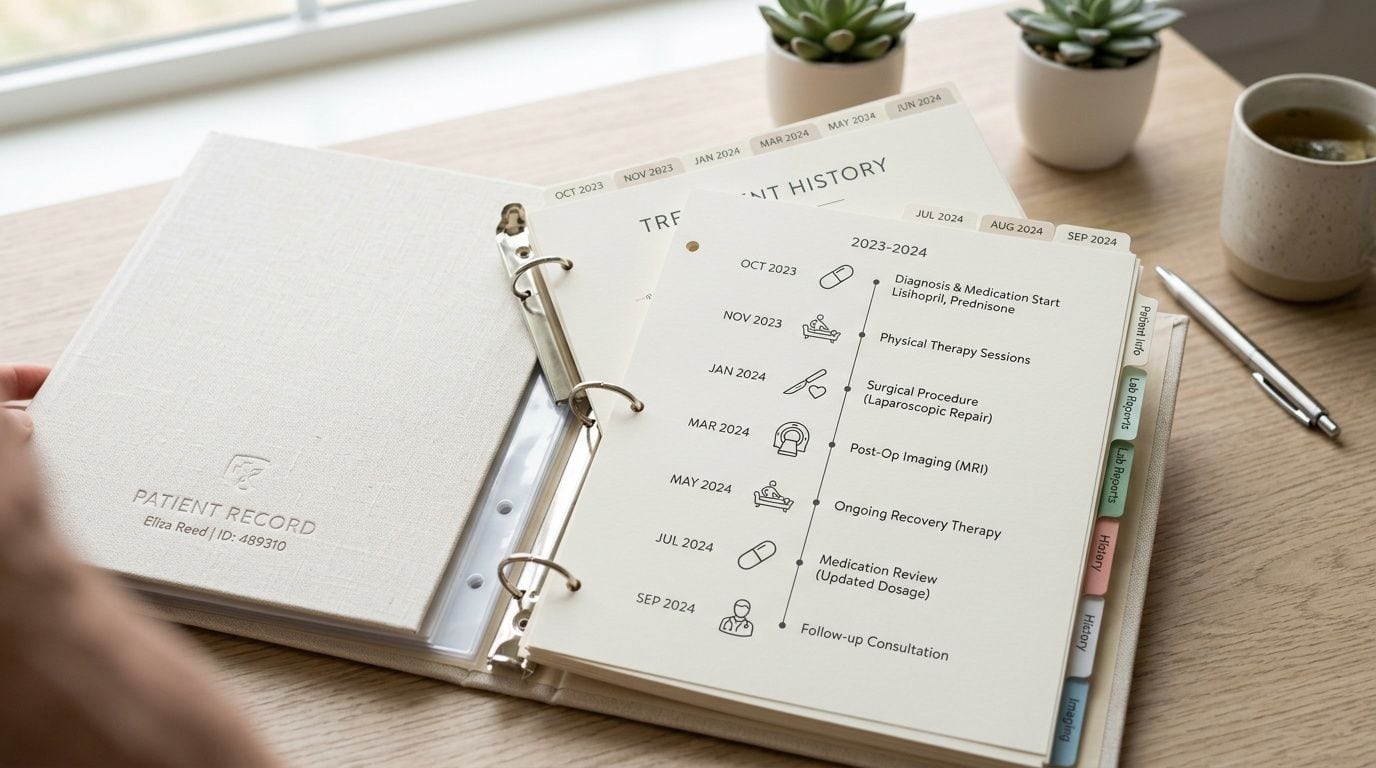
A useful sample of disability letter from doctor for treatment history might include:
- Timeline of care: Office visits, specialist referrals, imaging, surgeries, injections, therapy, medication changes.
- Response to treatment: Temporary relief, no sustained improvement, side effects, recurrence.
- Current status: Ongoing limits despite following medical advice.
For example, a pain doctor might summarize years of lumbar care, conservative treatment that didn’t restore function, and the patient’s continued inability to sit or stand long enough for work. An orthopedist might explain that even after surgery and rehabilitation, knee pain and instability persist.
Why this format helps older workers
Workers in their 50s and early 60s often have long job histories. That can help credibility, but only if the medical evidence matches the story. A treatment-history letter shows the doctor has seen the condition over time, not just once.
The longer the treating relationship, the more important it is for the letter to show that history clearly.
What hurts is selective storytelling. If treatment helped for a while, the doctor should say that. If there were gaps in care because of cost, side effects, or transportation, that should be explained clearly. Credibility matters more than trying to sound perfect.
6. Functional Capacity Evaluation FCE Summary Letter
An FCE can be useful when the dispute is physical capacity. Can you really lift, carry, sit, stand, reach, bend, and tolerate postural demands through a workday? A formal evaluation can give a doctor hard measurements to discuss.
This can be especially helpful when Social Security says you can do light or sedentary work, but your actual tolerance is much lower. In one hearing-level example described in the verified material, a claimant with lumbar degenerative disc disease and radiculopathy moved from a consultant view allowing light work to a physician-supported sedentary RFC after the record included objective support such as MRI and EMG findings, failed treatment history, and work-related restrictions.
When an FCE helps most
An FCE tends to be most useful when:
- The record is close: The medical evidence shows impairment, but work limits aren’t well defined.
- Your past work was physical: Construction, manufacturing, nursing assistance, warehouse work, maintenance, delivery.
- You need objective function testing: Not just diagnosis, but measurable tolerance.
A doctor summary letter should then translate the FCE into plain work language. For example:
“I have reviewed the FCE findings. They are consistent with my treatment records and examination findings. The patient cannot sustain lifting, prolonged sitting, prolonged standing, repeated bending, or overhead activity at a level required for full-time employment.”
The trade-off
FCEs cost money and aren’t right for every case. Some claimants already have enough in the record through imaging, exams, and treating doctor opinions. Others need the added structure.
If you’re considering one, talk through the timing first. A strong FCE is usually most valuable when your lawyer can place it into the broader theory of the case, instead of dropping it into the file without explanation.
7. Serialized Progress Note Compilation
Sometimes the best “letter” isn’t a letter at all. It’s a clean timeline built from your own doctors’ notes, showing that the same limits appear month after month.
This approach works well when your physicians are reluctant to draft detailed letters or when the office notes are stronger than the doctor’s custom statement would likely be. It’s also powerful in chronic pain, orthopedic, neurological, and cancer-related fatigue cases where the consistency of complaints tells the story.

How to use the records strategically
Pull the treatment notes in order and identify repeated references to things like:
- inability to sit or stand for long
- worsening pain with activity
- numbness or weakness
- unstable gait
- fatigue after minimal exertion
- medication side effects
- failure to improve after treatment
Then create a short summary document that tracks those entries by date. The summary shouldn’t argue medicine. It should show pattern and persistence.
Why this can be more persuasive than a rushed letter
Some doctors agree with disability but write poor letters because they’re rushed or unfamiliar with SSA language. Their routine notes may be better evidence because they were written during treatment, not for litigation.
The hearing level is where that consistency often matters most. Appealed cases before an administrative law judge succeed at a higher rate than initial claims, according to the verified material, and detailed treating-source evidence can make the difference once the case reaches that stage. A clean progress-note compilation helps the judge see the longitudinal picture without hunting through hundreds of pages.
Comparison of 7 Doctor Disability Letters
| Document Type | Implementation Complexity 🔄 | Resource Requirements ⚡ | Expected Outcomes ⭐ / 📊 | Ideal Use Cases 📊 | Key Advantages 💡 |
|---|---|---|---|---|---|
| Residual Functional Capacity (RFC) Assessment Letter | 🔄 Moderate, requires SSA-format familiarity and physician judgment | ⚡ Low–Moderate: treating physician time + access to records | ⭐ High / 📊 Directly answers capacity-to-work questions; strong at hearings | 📊 Best for claimants 50–64 and when RFC eliminates past/sedentary jobs | 💡 Provides specific numeric/time limits tied to medical findings |
| Symptoms, Severity, and Functional Impact Narrative Letter | 🔄 Moderate, needs detailed clinician narrative and examples | ⚡ Low–Moderate: physician time to document symptoms and ADLs | ⭐ Medium–High / 📊 Makes invisible symptoms relatable; persuasive if corroborated | 📊 Ideal for chronic pain, fatigue, neurological or chemo-related impairments | 💡 Humanizes daily impact; explains "good/bad" days and medication effects |
| Medical Source Statement of Opinion ("Unable to Work" Letter) | 🔄 High, definitive legal-style opinion requires careful support | ⚡ Moderate: treating specialist input + objective test references | ⭐ Very High / 📊 Most direct answer to SSDI core question when well-supported | 📊 Best when objective evidence clearly supports total disability | 💡 Decisive if grounded in objective findings and long-term treatment |
| Specialist Examination and Opinion Letter | 🔄 Moderate–High, specialist evaluation plus focused opinion letter | ⚡ High: specialist visits, tests (MRI/EMG/stress) and possible costs | ⭐ High / 📊 Specialist credibility strongly persuasive, rebuts generalists | 📊 Crucial for complex orthopedic, neurologic, or cardiac cases | 💡 Specialist expertise + objective tests add considerable weight |
| Treatment History and Medical Management Letter | 🔄 Moderate, requires synthesis of longitudinal records | ⚡ Moderate: time for record review and physician summary | ⭐ High / 📊 Demonstrates chronicity and failed treatments over time | 📊 Best to show persistent, treatment-resistant conditions | 💡 Shows compliance and that treatments were exhausted or ineffective |
| Functional Capacity Evaluation (FCE) Summary Letter | 🔄 Moderate, coordination of standardized testing and interpretation | ⚡ High: expensive FCE, certified evaluator, and processing time | ⭐ Very High / 📊 Produces objective, quantifiable limits that are hard to refute | 📊 Ideal at hearing level for orthopedic/back injury and physical disputes | 💡 Maps test results directly to job demands with measurable data |
| Serialized Progress Note Compilation | 🔄 High, intensive collection, organization, and highlighting of records | ⚡ Moderate–High: record retrieval, summarization, often attorney/paralegal time | ⭐ High / 📊 Extremely credible timeline showing consistent limitations | 📊 Best to prove long-term pattern and contemporaneous documentation | 💡 Uses original visit notes as real-time evidence; hard for SSA to dispute |
From Letters to a Winning Claim Your Next Steps
The right doctor letter can change the direction of a case, but only if it does more than repeat your diagnosis. Social Security wants proof of work-related limits. That means your evidence has to answer practical questions. How long can you sit? How often do you need to rest? Can you use your hands reliably? Would pain, fatigue, dizziness, neuropathy, or cardiac symptoms keep you from maintaining attendance and pace?
That’s where many claimants get stuck. Their doctors support them in general, but the chart doesn’t clearly explain function. Or the doctor writes a short note that sounds compassionate but doesn’t help much legally. Or the claimant has strong records spread across multiple providers, with no one tying them together.
For workers between 50 and 64, that gap is especially frustrating. Many have long employment histories and want to be taken seriously. They’re not trying to game the system. They simply can’t keep doing the lifting, standing, walking, reaching, driving, concentrating, or attendance demands their jobs require. The evidence has to show that in a way Social Security can’t brush aside as vague.
The best next step is usually not “get any letter you can.” It’s “get the right kind of letter from the right doctor, supported by the right records.” In some cases, that means an RFC letter from a treating physician. In others, it means a specialist opinion, a treatment-history summary, or a carefully organized set of progress notes. Sometimes the strongest approach is a combination.
Doctors are busy, and many don’t know what SSA decision-makers need to see. That’s one reason legal guidance matters. A skilled SSDI lawyer doesn’t just file forms. They identify gaps in proof, request the right statements, prepare clients for hearings, and present the medical evidence in a way that matches how judges evaluate disability.
Melanson Law Group is built for that work. The firm includes a retired Social Security judge who has handled more than 6,000 disability claims, along with a team focused on hearing preparation, medical evidence review, and detailed case development. If you’ve been denied, if your doctor’s support feels too vague, or if you’re trying to turn a pile of records into a winning SSDI claim, getting experienced help can save time and strengthen your case substantially.
If you need help turning a sample of disability letter from doctor into evidence that supports approval, contact Melanson Law Group. The firm helps SSDI claimants, especially those over 50 with serious physical conditions, build stronger records from the start through hearing. Consultations are free, and you pay nothing upfront. You only pay if you win.


