

The letter arrives after weeks or months of waiting. You open it at the kitchen table, scan for the word “approved,” and instead find the familiar language of a denial. If you’re between 50 and 64, dealing with a bad back, failing knees, neck pain, heart disease, cancer treatment, neuropathy, or another physical condition, that moment can feel less like paperwork and more like a verdict on your future.
Wondering what your claim could be worth? Try our free SSDI benefits calculator.
It isn’t.
For many workers in this age group, an SSDI denial is the point where the substantive case begins. Social Security disability decisions often turn less on whether you have a diagnosis and more on whether the file clearly shows what you can no longer do, how often your symptoms interrupt a normal workday, and whether your age, education, and work history fit the rules Social Security uses to decide disability. That last point matters more than is generally understood. Once you are over 50, the grid rules can become a major advantage, especially for workers whose careers involved physical labor and whose bodies no longer tolerate standing, lifting, walking, bending, or repeated use of the hands.
The system is technical, but it is not random. Some things help. Some things hurt. Strong records from the right doctors help. Reapplying too soon instead of appealing can hurt. Telling Social Security you have “back pain” helps far less than showing you can’t sit through a work shift, can’t turn your neck safely, or need to keep a leg raised after a knee replacement.
This is the practical guide I’d want a denied claimant to have on day one. It is written for people in the age range where work history is long, health problems often stack up, and the law can become more favorable if the case is developed properly.
A Denial Is Not the Final Answer
You open the letter, see the word “denied,” and assume Social Security has already decided you can still work.
That is often the wrong reading.

A denial is not the end of your claim.
Talk to a disability attorney now. Free consultation. No fees unless you win.
Call (617) 683-1983At the initial stage, many claims are denied because the file does not yet show the right facts in the right way. The record may confirm degenerative disc disease, heart disease, bad knees, neuropathy, or shoulder damage, yet still fail to explain what usually decides the case: how long you can stand, how much you can lift, whether you can use your hands repeatedly, how far you can walk, whether pain breaks your concentration, and whether you can keep doing that five days a week.
For workers between 50 and 64, that distinction matters more than many denial letters suggest. Social Security is not only asking whether you have a diagnosis. It is asking what work, if any, you can still do on a sustained basis, and whether your age, education, and work history leave any realistic path to other work.
That is where many older claimants have more room to win than they realize.
Why age 50 to 64 can change the case
I have seen denied claims become strong claims once the case was framed correctly for the claimant’s age group. A 55-year-old warehouse worker with lumbar stenosis is not judged the same way a 35-year-old office worker is. A 60-year-old nurse’s aide with cervical radiculopathy, bilateral shoulder problems, and limited overhead use does not face the same expectations about retraining that a much younger claimant does.
The medical-vocational rules, usually called the grid rules, can help claimants in this age range, especially when the past work was physical and the current limitations reduce them to light or sedentary work. That can be the difference between a weak-looking case and a winnable one.
The main factors are straightforward:
- Age category: Turning 50, 55, or older can materially change the analysis.
- Past work: Heavy or medium jobs often do not translate well into lighter work.
- Transferable skills: Many physical jobs do not provide skills that carry into seated, less demanding jobs.
- Education: Limited education can make adjustment to new work less realistic under the rules.
- Residual functional capacity: The case often turns on whether the evidence supports light, sedentary, or less-than-sedentary limits.
A denial letter rarely explains this well. It often reads like a general rejection when the actual issue is that the record has not yet pinned down your functional limits with enough detail.
What a denial usually means in practice
A first denial does not tell me a claimant has no case. It usually tells me the file is incomplete, poorly developed, or missing the right medical opinions.
That is common with physical conditions. Orthopedic records may describe MRI findings but say little about how long you can sit. Cardiology records may document chest pain or shortness of breath but not how often exertion forces you to stop. Pain management records may list procedures and medications without stating how often symptoms would interrupt a normal workday.
Those gaps can be fixed.
Claimants in their 50s and early 60s often have another advantage if the case is handled carefully. They usually have a long work history, and that history can support credibility when the medical records line up with what they are saying. The trade-off is that many also try to minimize symptoms out of habit, or they describe the problem too generally. “My back hurts” is weak evidence. “I can stand ten minutes, then I need to sit down, and after twenty minutes sitting I have to change position again” is the kind of detail that helps decide cases.
Practical rule: Treat the denial as a warning that the evidence was not strong enough yet, not as proof that you should give up.
The appeal path in plain English
Most claimants move through the same sequence after a denial:
- Reconsideration (Form SSA-561)
- ALJ hearing (Form HA-501)
- Appeals Council (Form HA-520)
- Federal court
The hearing level is often where an older claimant’s case gets a fairer review, especially when the judge examines past physical work, current exertional limits, and whether the grid rules point toward disability. By that stage, a well-prepared file can look very different from the one that was denied at the start.
Your First 60 Days: The Reconsideration Appeal
The denial letter arrives on a Tuesday. Your back still gives out when you stand too long, your cardiologist has added another medication, and the last thing you want is more paperwork. Yet this short window matters. A claimant who misses the reconsideration deadline can lose the original filing date, and with it months of possible backpay.
Social Security generally gives you 60 days to appeal, and the agency explains that the appeal period generally starts after the date on the notice. If your benefits are currently being paid and you want them to continue during the appeal, that deadline is much shorter — you may have only 10 days, plus 5 mailing days, to request continued benefits, separate from the standard 60-day window to appeal the decision itself. SSA also allows disability appeals to be filed online, and it recognizes four levels of appeal in the system, as explained in SSA’s disability appeal FAQ.
What reconsideration actually does
A Request for Reconsideration is a formal appeal of the initial denial. A different examiner reviews the file.
That does not mean a full reset. In many cases, the same weak record produces the same result. The practical value of reconsideration is that it keeps the claim alive while you add the records, treatment updates, and function details that were missing the first time.
Not sure if you qualify?
Get a free case review from a New England disability team. You only pay if we win.
Call (617) 683-1983For claimants between 50 and 64, that timing matters more than many realize. If the medical proof begins to show you cannot return to your past physical work, the file can be positioned for a stronger hearing argument later under the grid rules. Reconsideration is often the stage where that foundation starts.
File the appeal first. Then improve the file.
Many denied claimants are recovering from surgery, managing heart symptoms, dealing with neuropathy, or taking medications that slow concentration. Waiting until everything feels organized is a common mistake.
File the appeal on time, even if the medical packet is not perfect yet. You can usually submit more records after the form is filed. If illness, hospitalization, or cognitive problems caused a delay, Social Security can consider whether there was good cause for late filing. Say that clearly and back it up with records if you need to ask for extra time.
First-week checklist
- Write down the deadline the day the notice arrives: Put it on paper and in your phone.
- File before you polish: A timely appeal with missing records can be fixed. A missed deadline is harder to fix.
- Keep the full denial notice: Save every page and the envelope if you still have it.
- Update your treatment list: Add every doctor, clinic, ER visit, imaging study, therapy appointment, and medication change since the original application.
- Ask for help early: A spouse, adult child, caseworker, or attorney can keep the appeal from stalling.
What to send with the reconsideration appeal
Do not assume Social Security will connect every piece of the case for you. Many files are denied because the treatment exists but the functional impact is not spelled out.
Send material that shows what changed, what was missed, or what now limits work activity:
- Recent treatment records: orthopedics, cardiology, neurology, pain management, physical therapy, primary care
- New testing: MRIs, CT scans, EMGs, stress tests, operative reports, catheterization records
- Medication side effects: fatigue, dizziness, slowed thinking, nausea, frequent restroom use
- Specific functional limits: how long you can sit, stand, walk, reach, lift, carry, grip, bend, or stay focused
- Failed work attempts: if you tried to return to work and could not sustain it, give dates and explain why
Specifics carry weight. “Severe pain” is too general. “I can stand for 10 minutes, then I need to sit for 15, and I drop objects with my right hand twice a day” gives the reviewer something concrete.
For workers in their 50s and early 60s, job history should be described carefully as well. If your past work was heavy, medium, or highly physical, that can become a serious advantage later if the medical record shows you are now limited to less demanding work. I have seen cases turn on that point.
Common mistakes in the first 60 days
Several errors show up again and again after an initial denial.
- Refiling instead of appealing: A new application can create avoidable problems and may put the earlier protective filing date at risk.
- Sending only the form: The appeal form preserves the case. The supporting records give it a chance.
- Using vague descriptions: “I hurt all the time” does not help much. Measured limits do.
- Assuming age alone wins the case: Age can help under the rules, especially from 50 onward, but only if the medical and work evidence supports the argument.
- Waiting because the denial felt final: It was not final. It was the start of the appeal record.
Reconsideration is often frustrating because many good cases are denied again here. Even so, a timely and well-supported reconsideration appeal does important work. It preserves the claim, sharpens the medical proof, and sets up the stronger arguments that often matter most for denied workers ages 50 to 64 with physical limitations.
Preparing to Win Your ALJ Hearing
The hearing level is where many solid cases are finally understood. It is also the stage where vague claims fall apart.
SSA-based discussions and practitioner guidance consistently point in the same direction. A successful SSDI appeal is built on the quality of evidence, not just persistence, and the hearing stage is where thorough medical records and clear documentation of functional limits matter most. One SSA-backed benchmark discussed by Social Security Disability’s explanation of appeal success rates states that the final award rate for disabled-worker applicants from 2008 through 2017 averaged 33%. That tells you something important. Many winners do not win at the beginning. They win after the record is properly developed.

Pillar one builds the medical record around function
A diagnosis gets the case into the conversation. Functional proof wins it.
If you have degenerative disc disease, the judge already knows many adults have MRI findings. What matters is whether the record shows the consequences. Can you sit long enough for desk work? Can you stand long enough for light work? Can you turn your neck enough to drive or scan a work area safely? Do you need unscheduled breaks? Do pain flares force you to lie down?
For common physical conditions in the 50 to 64 age range, the file should answer practical work questions.
Examples of useful function evidence
| Condition | Useful functional proof |
|---|---|
| Degenerative disc disease | Sitting tolerance, standing tolerance, need to alternate positions, lifting limits, effect of radicular pain |
| Knee or hip degeneration | Walking distance, use of cane, stair difficulty, need to elevate leg, instability |
| Neck disorders | Limits on turning the head, reaching overhead, arm numbness, grip weakness |
| Neurological disease | Balance problems, hand coordination loss, fatigue pattern, fall risk |
| Heart disease | Shortness of breath with exertion, chest pain episodes, activity intolerance, recovery time |
| Cancer and treatment effects | Fatigue, neuropathy, nausea, absenteeism, weakness, concentration limits from treatment |
The strongest records usually come from treating sources who describe restrictions in work terms. “Patient has pain” is weak. “Patient can stand no more than brief periods and would need to change position frequently during a workday” is useful.
The hearing is not a contest over whether you are ill. It is a decision about whether your illness prevents full-time work on a sustained basis.
Pillar two gets supporting opinions and witness statements
Medical records alone often describe treatment, not capacity. That is why opinion evidence matters.
Worried a misstep could cost you benefits?
A short, free consultation now can prevent an expensive mistake later. No upfront fees.
Call (617) 683-1983A good Residual Functional Capacity, often called an RFC, should come from a doctor who knows your condition over time. Orthopedists, neurologists, cardiologists, oncologists, and primary care doctors can all be helpful if they are specific and honest. The best RFC forms do not exaggerate. They explain.
A persuasive doctor statement often addresses:
- Postural limits: bending, stooping, kneeling, crouching, climbing
- Positional tolerance: sitting, standing, walking
- Use of hands and arms: reaching, handling, fingering, pushing, pulling
- Attendance problems: flare days, treatment days, recovery days
- Need for breaks: extra rest periods, leg elevation, changing positions
- Expected persistence: whether limitations have lasted or are expected to last
Lay witness statements can also help when they add detail the records do not capture. A spouse may describe how long it takes you to get dressed after lumbar surgery. An adult child may explain how heart symptoms force repeated rest breaks. A former co-worker may describe why you could no longer keep up safely.
Keep those statements grounded in observation. Judges tend to value concrete daily details over emotional generalities.
Pillar three prepares you for the vocational expert and the grid rules
Many claimants walk into a hearing thinking the only issue is medical proof. It isn't. The vocational side of the case matters, especially for workers over 50.
At many hearings, a Vocational Expert, usually called a VE, gives testimony about past work and whether someone with certain limitations could do other jobs. The judge may ask the VE hypothetical questions based on different functional restrictions. Your testimony and the medical file should support the limitations that accurately reflect your real capacity.
For claimants aged 50 to 64, the grid rules can become particularly powerful. If your prior work was physically demanding and you no longer have the ability to do that work, Social Security also looks at whether you can realistically move into other work. Age matters here. So do education and transferable skills.
A few practical examples show how this plays out:
- A worker in his late 50s who spent decades in heavy construction may not transition easily to seated clerical work, especially if he lacks transferable skills and can't sit consistently because of lumbar and leg pain.
- A woman in her early 60s with a history of medium nursing support work may face a strong grid argument if heart disease and knee damage limit her below the level needed for that work and her skills don't transfer cleanly.
- A warehouse employee over 50 with cervical spine disease, shoulder problems, and hand numbness may look employable in the abstract, but not in a real labor market once reaching and handling limits are accurately documented.
How to testify well
Good testimony is plain, specific, and restrained. Judges hear exaggerated answers every day. What stands out is credible detail.
Say what happens over a normal week:
- How long you can sit before shifting or standing
- How far you walk before pain or shortness of breath forces a stop
- Whether you use a cane, brace, or raise a limb
- What chores you can start but not finish
- How treatment side effects affect concentration and stamina
- Why you stopped working, and why you couldn't keep going
Avoid two traps. First, don't minimize because you are proud. Second, don't overstate because you are scared. The judge is listening for consistency between your testimony, the records, and your work history.
What usually works and what usually fails
What tends to work
- Consistent treatment history
- Objective testing that matches symptoms
- Doctor opinions tied to work-related limits
- Testimony with concrete examples
- A clear work history showing why past work can't be done now
- A developed grid-rule argument for claimants over 50
What often fails
- Records that show diagnosis only
- Long treatment gaps with no explanation
- Doctor notes that say “doing well” without context
- Statements that focus on pain but not function
- Assuming age alone wins the case
- Waiting until the week before the hearing to gather evidence
The Role of an Attorney in Your SSDI Appeal
By the time a case reaches the hearing level, the job is no longer clerical. The issue is whether the record proves specific work limits and whether those limits fit the Social Security rules that decide the case.

A good attorney or qualified representative builds the case around the point that will matter most to the judge. Sometimes that means getting missing orthopedic records, cardiac testing, or pain-management notes into the file. Sometimes it means correcting how Social Security described past work. For claimants ages 50 to 64, it often means making a clear grid-rule argument based on age, education, skill level, and reduced physical capacity. That is a strategic issue, not paperwork.
I saw this often from the bench. Claimants with real physical problems would focus on diagnosis alone, while the winning cases usually showed how the condition limited standing, walking, lifting, reaching, or hand use over a full workday. A representative helps turn scattered records into a case theory the judge can follow.
What a good representative actually does
Strong representation usually includes several practical tasks:
- Protects deadlines: filing appeal papers on time and tracking SSA notices
- Builds the medical record: obtaining missing office notes, imaging, hospital records, and specialist files
- Gets functional proof: asking doctors for opinions that describe work-related limits, not just diagnoses
- Analyzes past work: showing how your jobs were performed, especially if they were heavier than SSA classified them
- Prepares hearing testimony: helping you answer clearly, with specifics, and without exaggeration
- Questions vocational evidence: testing whether the jobs identified by the vocational expert match your limits, age category, and work background
For workers in their 50s and early 60s, that work can change the whole direction of the appeal. The difference between light and sedentary capacity, or between skilled and unskilled past work, may decide whether the grid rules help or not.
Why representation often matters most for people over 50
An attorney cannot make a weak case strong by force of argument. What counsel can do is identify the trade-offs that matter.
Want a straight answer about your claim?
Free consultation with an experienced SSDI team. No fees unless you win.
Call (617) 683-1983Here is one common example. A 58-year-old claimant with a long history of medium or heavy work may look stronger on paper than he really is. If the file shows degenerative disc disease, knee arthritis, or heart disease but never spells out that he can no longer stand and walk enough for light work, Social Security may still deny the claim. If the record supports a sedentary limit instead, the grid rules may become favorable. That is where careful legal framing matters.
Representation also helps avoid avoidable damage. Doctors often write brief notes such as "stable" or "doing better." Those notes do not always mean a person can work eight hours a day, five days a week. A representative can put those records in context and ask for an opinion that addresses stamina, postural limits, lifting, and attendance.
Cost concerns are real
Many claimants hesitate because money is short. That concern is reasonable. SSDI representatives are commonly paid on contingency, meaning the fee is paid only if benefits are awarded, subject to Social Security's fee rules and approval process.
That arrangement does not mean every representative does the same quality of work. Ask direct questions before signing:
- Will you review my work history job by job?
- Will you look at whether the grid rules may apply to my age group?
- Will you request opinions from my treating doctors about functional limits?
- Will you prepare me for the hearing instead of meeting me for the first time that morning?
- Will you handle the case if it goes past the hearing level?
Melanson Law Group states that it handles SSDI reconsideration appeals, hearings, Appeals Council review, and federal district court work. That is the type of scope to ask about with any firm. The value is in how the case is prepared, how well the medical proof is developed, and whether the representative understands the pressure points for claimants between 50 and 64 with physical limitations.
Navigating Later Appeal Stages Appeals Council and Federal Court
An unfavorable hearing decision can feel like the door just closed. For claimants in their 50s and early 60s, especially those with back problems, joint damage, cardiac disease, or other physical limits, that is often the point where the case shifts from proving symptoms to identifying legal error.
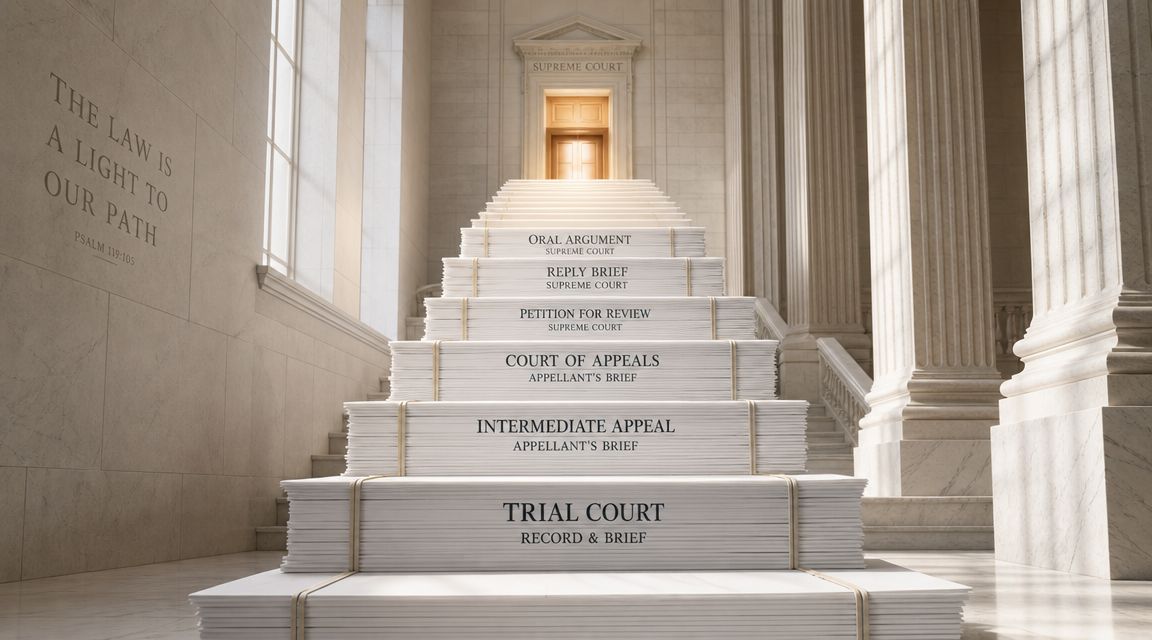
At the Appeals Council, there is no new testimony and no second chance to restate that pain is severe. The Council reviews the ALJ decision for mistakes in applying the law, handling the evidence, or explaining the findings. It can deny review, issue its own ruling, or send the case back for another hearing.
That difference matters.
A strong Appeals Council argument usually points to something concrete. The judge may have misstated past work, ignored a treating specialist's restrictions, failed to address imaging that supports standing or walking limits, or overlooked how age category and vocational rules affect a claimant between 50 and 64. In this age group, grid rule analysis can become especially important. If the hearing decision treated a claimant like a younger worker and skipped the vocational impact of limited transferable skills or reduced exertional capacity, that can be a serious point on appeal.
The issue gets narrower after the hearing
The hearing level is where the factual record should be built. Later appeals focus on whether the decision can stand under Social Security law.
SSA historical reporting shows hearing outcomes have often been more favorable than reconsideration outcomes, which is one reason experienced representatives put so much effort into the ALJ stage. By the time a case reaches the Appeals Council or federal court, the task is more exact. The argument has to show where the ruling went wrong, not just why the claimant disagrees with it.
That is why broad statements rarely help here. Specific errors do.
Federal court reviews the record and the legal reasoning
Federal court is not a new disability hearing. No judge is taking live testimony about how long you can stand at the kitchen counter or whether you need to lie down in the afternoon. The court reviews the administrative file, the written decision, and the legal briefs.
Even so, federal court can still give a claimant another real opportunity. As noted earlier in the article's source review, remands are far more common than outright benefit awards at that stage. A remand sends the case back to Social Security for further proceedings. That does not guarantee benefits, but it can correct a bad hearing decision and force a fresh review of the medical and vocational evidence.
For claimants aged 50 to 64, that fresh review can matter a great deal. If the record already supports light or sedentary limits, and the prior decision mishandled past work or transferable skills, a remand may put the grid rules back into play in a way the first decision did not.
Later appeals depend less on retelling your medical story and more on showing exactly how the prior decision failed to follow the rules.
The trade-off is straightforward. These stages are slower, more technical, and harder to win outright. But when the ALJ decision contains a clear legal or evidentiary problem, they can keep a viable SSDI case alive.
Your SSDI Appeal Checklist and Common Mistakes
A denied claimant in his late fifties often has more going for him than he realizes. He may have a long work history, credible treatment records, and physical limits that fit the grid rules if the record is built correctly. Cases are lost because the file stays thin, the work history is described poorly, or the appeal stalls out before the strongest stage.
Use this checklist to keep the case pointed in the right direction.
Practical appeal checklist
- Calendar every deadline the day the denial arrives: Do not rely on memory while dealing with pain, medication, appointments, or family stress.
- Request records from every treating source: Include orthopedic doctors, cardiologists, primary care, physical therapy, pain management, imaging centers, hospitals, and urgent care visits.
- Track functional limits week by week: Note how long you can sit, stand, walk, lift, reach, use your hands, drive, and stay on task before symptoms force a break.
- Document medication side effects: Fatigue, dizziness, slowed thinking, nausea, and sedation matter if they would interfere with steady work.
- Review past jobs by duties, not titles: Social Security needs to know how much lifting, standing, climbing, bending, and machine use the job required.
- Ask doctors for functional opinions: A useful statement explains limits such as lifting, standing, walking, postural restrictions, and absences. A bare note saying "disabled" carries little weight.
- Check whether the grid rules may help: For claimants ages 50 to 64, the difference between medium, light, and sedentary capacity can decide the case.
- Prepare before the hearing is scheduled: Waiting until a notice arrives often leaves too little time to fix gaps in the medical record or job history.
Common mistakes to avoid
The first mistake is giving up after the first denial. As noted earlier, approvals are often harder to get at reconsideration than at the hearing level. Many good cases are won later, after the medical proof is stronger and the work history is explained with more precision.
Another common mistake is filing a new application without understanding what may be lost. An appeal often protects the earlier filing date and potential backpay. For a 52-year-old former warehouse worker with severe back problems, that choice can affect both strategy and money.
Other errors are less obvious, but I saw them repeatedly:
- Missing a deadline and not asking for good-cause relief
- Assuming MRI or X-ray findings prove work limits by themselves
- Describing pain without explaining what it stops you from doing at a job
- Leaving treatment gaps unexplained
- Giving an incomplete job history that makes past work sound easier than it was
- Assuming age alone wins the case
- Treating the hearing as routine instead of preparing testimony carefully
For claimants between 50 and 64, strong appeals usually come down to four things. Consistent medical treatment. Specific physical restrictions. Accurate descriptions of past work. Careful use of the grid rules where they apply.
That combination gives the judge something solid to rule on.
Frequently Asked Questions About SSDI Appeals
How do the grid rules help people ages 50 to 64
The grid rules are medical-vocational rules that consider age, education, prior work, and transferable skills along with your functional capacity. They matter most when a claimant cannot return to past physical work and would have trouble adjusting to other work. For older workers with orthopedic, neurological, heart, or cancer-related limits, the grids can turn a marginal case into a stronger one. They don't replace medical proof, but they can make the vocational analysis more favorable.
Should I file a new application instead of appealing
Usually, you should be cautious about doing that. In many cases, appealing preserves the earlier filing date and keeps the existing claim alive. Reapplying too quickly can create needless problems and may reduce potential backpay. Before making that choice, get advice based on your dates, your medical evidence, and where the current claim stands.
What if my doctor won't fill out a form
That happens often. Some doctors dislike paperwork, some are too busy, and some will only respond to a narrowly framed request. Ask for a shorter, targeted statement focused on function. If a specialist won't help, a well-informed primary care physician may still be useful if they understand your limitations over time.
Can I work part-time during an appeal ssdi case
Sometimes, but it can complicate the claim. The issue is not just whether you work, but what the work shows about your functional capacity. If you are attempting part-time work, keep careful records of hours, duties, accommodations, missed days, and why the effort may not be sustainable. A failed work attempt can support a case if it is documented properly. Unexplained ongoing work can undermine it.
What if I'm too sick to keep up with the appeal
Use help. A family member, caregiver, or representative can often coordinate records, watch deadlines, and handle filing steps. If your condition caused a late filing, tell Social Security promptly and provide the reason. The system allows for late filing requests based on good cause in appropriate situations.
If you've been denied SSDI and need help building the appeal the right way, Melanson Law Group helps claimants through reconsideration, hearings, Appeals Council review, and federal court. For workers ages 50 to 64 with serious physical conditions, the key is not just continuing the case. It's presenting it with the medical detail, vocational accuracy, and hearing preparation that the system requires.
