

You open the envelope, scan the first few lines, and land on the word denied.
If you're in your late 50s or early 60s, that letter can feel like a punch to the chest. Maybe you've worked for decades in construction, trucking, nursing, warehouse work, maintenance, or another physical job. Maybe your knee gives out on stairs now. Maybe your back pain shoots down your leg. Maybe heart symptoms, cancer treatment, or a neurological condition have made a full workday unrealistic. And after all that, Social Security says no.
That no is serious. But it is not always the end of the road.
The ssdi appeal process exists because many claims aren't fully resolved after the first decision. For people ages 50 to 64, especially those with physical conditions and long work histories, the appeal stage is often where the full case gets developed.
Your SSDI Claim Was Denied Now What
A denial letter often reads like your life got reduced to a few cold sentences. Social Security may say your condition isn't severe enough, or that you can still do some kind of work. If you've spent years pushing through pain before finally applying, that can feel insulting.
For many people, the first helpful shift is this one: a denial is not the same thing as a final answer. The SSDI system uses multiple review levels, and many applicants have to keep going before the strongest version of their case is heard.
Think about a 58-year-old mechanic with a bad knee. He can't kneel, crouch, climb, or stay on his feet long enough to do the work he's done for most of his life. His first application may still get denied if the record doesn't clearly show those limits in work terms. That doesn't mean he isn't disabled. It often means the file didn't tell the full story yet.
First step: Put the denial letter somewhere safe, note the date on it, and don't assume you need to start over from scratch.
What matters now is acting quickly, understanding where your case stands, and building the next step with care. If you're between 50 and 64, your age, work history, and physical limitations may matter more than you realize. But those factors only help if they're presented the right way.
Why SSDI Claims Are Denied for Applicants Over 50
You can be 55, have a knee that swells after twenty minutes on your feet, and still get a denial that says you can adjust to other work. That result feels detached from real life, but it usually happens for a few predictable reasons. Social Security is not only asking, "Do you have a medical condition?" It is also asking, "What can you still do, how often can you do it, and does your age and work background change the answer?"
Denied? You have only 60 days to appeal.
Talk to a disability attorney now. Free consultation. No fees unless you win.
Call (617) 683-1983
For applicants between 50 and 64, that last part matters more than many people realize. Social Security has medical vocational rules, often called the Grid Rules, that can help older workers with physical limitations. But those rules do not apply automatically just because you are over 50. Your file has to show your limits in a way that fits the rules.
They say you can do other work
This is a common reason for denial in physical-condition cases.
A 57-year-old warehouse worker with knee arthritis may be found unable to return to his past job, yet still denied because the agency believes he can do seated or light work. On paper, that sounds tidy. In practice, it can miss the full picture: trouble sitting for long periods, needing to raise the leg, pain medication that affects focus, or a work history built around hands-on labor rather than desk tasks.
For claimants over 50, the case often turns on a very specific question. Can you make a realistic vocational adjustment to different work now, not in theory, but in the actual labor market and with your real physical limits? That is where age, job history, and exertional limits start to matter together.
The records show the diagnosis, but not the function
This is the quiet problem in many denied claims.
Your records may prove the knee damage is real. An MRI can show meniscus tears, arthritis, or joint narrowing. Office notes may document injections, bracing, limping, or reduced range of motion. Yet a claims examiner still needs another layer of information: how those findings affect basic work activities over a full schedule.
That usually means details such as:
- How long you can stand before pain increases
- How long you can sit before you need to shift positions
- Whether you can crouch, kneel, climb, or stoop
- How much weight you can lift and carry safely
- How often you would need unscheduled breaks or leg elevation
- Whether pain, swelling, fatigue, or medication side effects interfere with steady work
Without those work-focused details, Social Security may assume a higher level of function than your body allows. For someone over 50, that can be the difference between fitting a favorable Grid Rule and being told to do some other job.
Age helps only if the case is framed correctly
Applicants over 50 often assume Social Security will automatically understand how hard it is to switch careers after decades of physical work. The system does not work that way.
Age can help. So can a long history of medium, heavy, or skilled physical work that does not transfer neatly to easier jobs. But those facts have to be matched with medical evidence showing the right level of limitation. If the file leaves room for Social Security to classify you as able to do light or sedentary work on a sustained basis, the age advantage may never fully come into play.
A simple way to view it is this: the Grid Rules work like a chart with narrow entry points. Your medical records, job history, and functional limits all have to line up for that chart to help you.
Deadlines create avoidable setbacks
Denials are not only about medical proof. Procedure matters too.
Social Security generally gives claimants 60 days to appeal, and legal-aid guidance notes that some benefit-continuation requests involve a much shorter deadline, often 10 days from the notice, as explained in Michigan Legal Help's overview of Social Security program appeals.
That timing can confuse anyone, especially someone juggling pain, treatment, and bills. A person may wonder whether the clock started on the date printed on the letter, the date it arrived, or the date they finally opened it. Missing the deadline can interrupt the appeal path and force a new application, which can cost time and, in some cases, back pay.
Early denials are common
A first denial is frustrating, but it is not unusual. The Social Security Administration reports annual disability determination data in its Annual Statistical Report on the Social Security Disability Insurance Program, and the broader pattern is clear. Many claims are denied at the initial level.
For workers between 50 and 64 with knee problems, back conditions, shoulder injuries, heart disease, or other physical impairments, that reality points to a practical conclusion. The first application often does not present the case in the detailed vocational terms needed to show why full-time work is no longer realistic.
The Four Levels of the SSDI Appeal Process
The SSDI appeal system works like a four-rung ladder. Each rung has a different purpose. If you understand what each level is for, the process gets less mysterious and more manageable.

Social Security uses four levels of review: reconsideration, an Administrative Law Judge hearing, Appeals Council review, and federal court. Appeals are generally due within 60 days of an adverse decision, which makes deadline control a core part of the process, as described in this step-by-step explanation of the Social Security disability appeals system.
A quick map of the process
| Appeal Level | What It Is | Key Feature | Typical Wait Time (2026 est.) |
|---|---|---|---|
| Reconsideration | A fresh review by someone who did not make the first decision | New records can be added | Varies |
| ALJ hearing | A hearing before an Administrative Law Judge | You can testify and present the case directly | Varies |
| Appeals Council review | Review of the ALJ decision | Focus is usually on legal or procedural error | Varies |
| Federal court | Civil action in federal court | Court reviews the administrative decision | Varies |
Reconsideration
This is the first appeal after an initial denial. Social Security describes it as a complete review by someone who did not take part in the first decision.
That matters because it gives you a chance to correct weaknesses early. If your first file was missing orthopedic notes, updated imaging, cardiology follow-up, or a clearer description of your physical limits, reconsideration is where those records can start to fill the gap.
For a 57-year-old warehouse worker with serious knee pain, this stage may involve adding recent treatment records, physical therapy notes, or a doctor statement explaining why prolonged standing, bending, or walking isn't realistic. It is still largely a paper review. No judge hears you in person at this point.
The ALJ hearing
This is the second appeal stage, and for many claimants it is the most important one.
At the hearing level, an Administrative Law Judge reviews the case independently. You can appear, answer questions, explain your symptoms, and submit new evidence. This is often the first time a real decision-maker hears how your condition affects daily function and your ability to work.
Not sure if you qualify?
Get a free case review from a New England disability team. You only pay if we win.
Call (617) 683-1983For older workers, that can be a major shift. A file may make a knee problem look manageable. Testimony can show what the records mean in practice. You can't squat. You can't get up from a chair without using your hands. You need to raise your leg. You can't stay in one position very long. You miss days after flare-ups.
Many people feel more understood at the hearing stage because the case stops being just forms and starts becoming a real work-capacity question.
Appeals Council review
If the judge denies the claim, the next rung is the Appeals Council. This level is different from the hearing. The Council usually does not retry the whole disability case from scratch.
Instead, it typically reviews whether the judge made a legal, factual, or procedural error. If the Council finds a problem, it can send the case back for another hearing or take other action. It generally does not function like a second full hearing where everything gets reweighed from the beginning.
This stage often frustrates claimants because they want another chance to tell their story directly. But that usually isn't what this level is designed for. The practical lesson is simple: the strongest evidence usually has the most value before and at the hearing stage.
Federal court
Federal court is the last step in the standard SSDI appeal process.
At this point, the matter becomes a civil case in court. The judge reviews the administrative record and the legal issues. This is not a new disability hearing where you walk in and start over with fresh testimony about your pain.
For most claimants, federal court is less about proving symptoms in a personal way and more about whether Social Security followed the law and supported its decision properly.
What claimants often misunderstand
A lot of confusion comes from assuming every appeal stage does the same thing. They don't.
- Reconsideration is another administrative review of the claim.
- The hearing is where facts, symptoms, and credibility often get tested most directly.
- The Appeals Council usually focuses on errors in the judge's decision.
- Federal court is legal review, not another fact-finding hearing.
That difference changes strategy. If your back, knee, neck, heart, or neurological condition isn't fully documented yet, waiting too long to build the record can hurt you later.
The ALJ Hearing Your Most Critical Opportunity
You open the denial letter, sit at the kitchen table, and wonder whether the next step is just more paperwork. For many people between 50 and 64, especially those dealing with a knee, back, hip, or shoulder condition, the hearing before an Administrative Law Judge is the first point where the case can be understood as more than boxes on a form.
Social Security's own hearing office data has long shown that approval rates at the hearing level are materially higher than at the earlier stages, which is one reason lawyers and claimant advocates treat this step as the turning point in many cases. The hearing gives the judge a fresh chance to evaluate your file, your work background, and the functional limitations caused by your condition.
Why the hearing can change the outcome
Paper review has limits.
A file might show knee degeneration, swelling, injections, physical therapy, and an MRI. What it may not show clearly is what happens after 15 minutes on your feet, why stairs have become a two-handed job, or why a job that once seemed manageable now leaves you limping the next day.
That matters even more if you are in your 50s or early 60s. Social Security does not look at a 58-year-old warehouse worker with severe knee problems the same way it looks at a 28-year-old office trainee. Age, past work, education, and physical limits can interact in ways that make the hearing especially important. In some cases, the Grid Rules can favor older claimants whose work history was physically demanding and whose skills do not transfer easily to lighter jobs.
A judge cannot apply those rules well unless the record and testimony show the right details.
What actually happens at the hearing
The setting is formal, but it is usually calmer than people expect. Many hearings are held by video or phone, and the people involved each have a specific job.
You may hear from:
- The Administrative Law Judge, who reviews the evidence and makes the decision
- A hearing reporter or recording system, which creates the official record
- Your representative, if you have one
- A vocational expert, who may testify about past work and other jobs
- Sometimes a medical expert, if the judge wants help interpreting the medical record
The judge often asks about your past jobs, treatment, pain, daily activities, and what happens when you try to keep going despite symptoms. If your claim involves a knee condition, the judge may focus on standing, walking, climbing, kneeling, balance, use of a cane, and how often pain or swelling interrupts a normal day.
Your job at the hearing is to answer specifically about what you can and cannot do on a reliable basis.
That phrase, "on a reliable basis," is where many claimants get tripped up. Social Security is not asking whether you can push through for ten minutes on a good morning. It is asking whether you can do work tasks day after day, week after week, in a way an employer would accept.
What strong testimony sounds like
Good testimony is concrete and functional.
A 55-year-old former machine operator with knee arthritis usually helps the case more by saying, "After about 10 minutes of standing, I need to sit down. If I walk through a grocery store, I lean on the cart. I avoid stairs unless I have a railing, and my knee swells later in the day," than by saying, "My knee hurts all the time."
The difference is small on the surface, but huge in a hearing. One statement gives the judge work-related limits. The other gives a general complaint.
Worried a misstep could cost you benefits?
A short, free consultation now can prevent an expensive mistake later. No upfront fees.
Call (617) 683-1983The same is true for past work. A job title alone does not tell the whole story. "Shipping clerk" might sound light on paper, yet the actual job may have involved lifting, carrying, standing all day, or climbing in and out of trucks. At the hearing, that distinction can affect whether Social Security sees you as able to return to past work or shift into other work.
Why this stage matters so much for claimants over 50
For older workers with physical conditions, the hearing is often where the case becomes strategic.
If you spent 25 years doing medium or heavy work and now your knee, back, or heart condition limits you to much less, the legal question is not solely, "Are you sick?" The question becomes whether Social Security's vocational rules direct a finding of disabled based on your age, residual functional capacity, education, and work history. That is why the hearing can be the point where a denied case becomes a winnable case.
Three parts usually need to line up:
- Medical records that support specific physical limits
- Testimony that matches those records and explains day-to-day function
- A careful work history analysis that shows whether your past skills transfer to other jobs
That third piece is easy to underestimate. It is also where experienced representation often makes the biggest difference. A representative who understands how the Grid Rules apply to people over 50 can question the vocational expert, clarify what your past jobs required in practice, and frame your limitations in the language Social Security uses to decide cases.
At this stage, details are not small things. They are often the difference between another denial and a fully developed record the judge can approve.
Building Your Winning Appeal with Strong Evidence
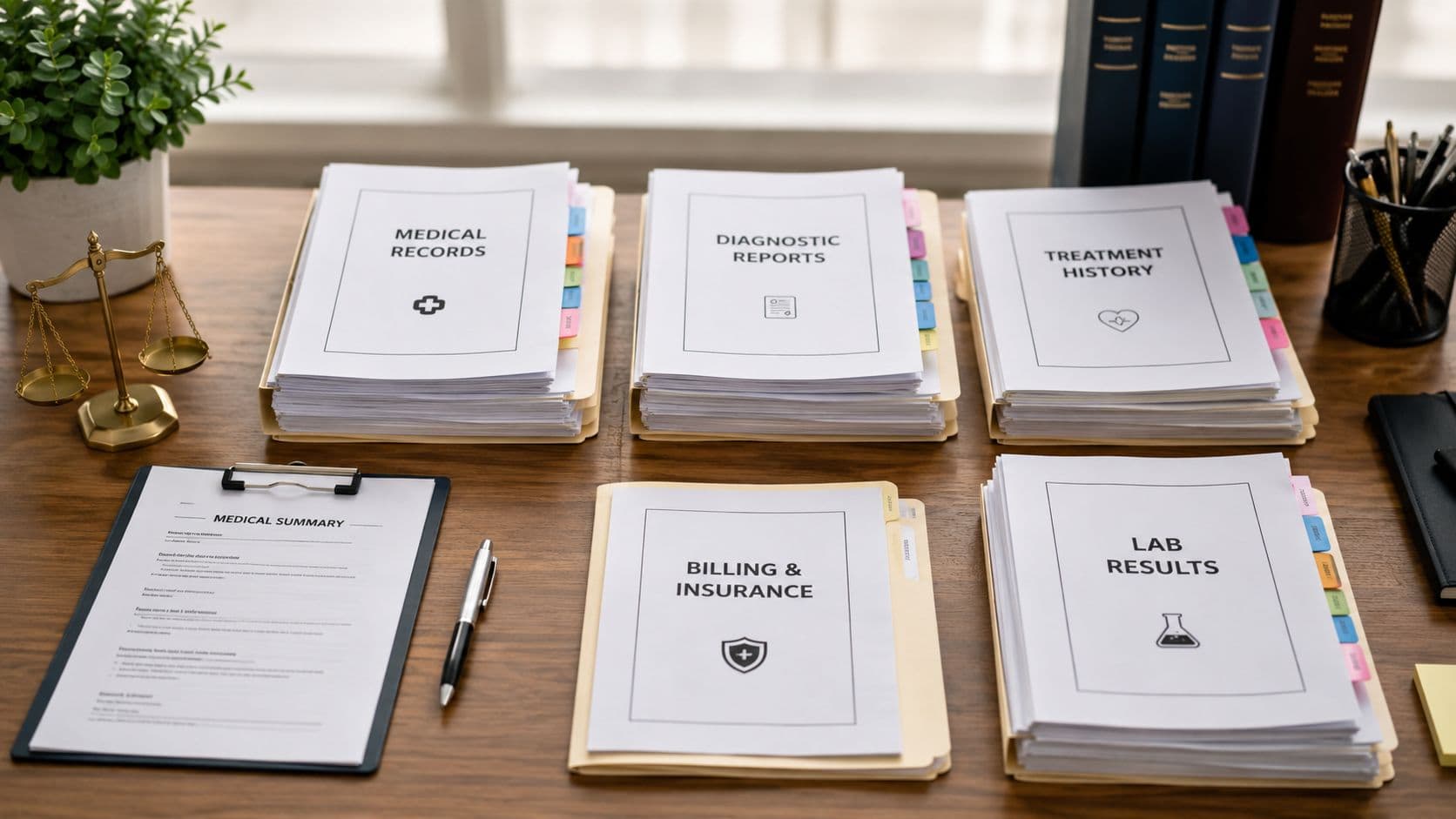
Strong appeals are built on function, not just diagnosis. If your denial letter mentions a knee condition but says you can still work, your job on appeal is to show, in clear detail, what your knee keeps you from doing day after day, hour after hour.

At the hearing level, the review is de novo, which means the judge looks at the case fresh rather than automatically rubber-stamping the earlier denial. That gives you a real chance to improve the record with updated treatment notes, new test results, and medical opinions that explain your limits in work terms, as explained in this guide to how SSA appeal evidence works.
For claimants between 50 and 64, that point matters even more. Social Security is often deciding whether you can still do past work or adjust to different work. Evidence that clearly shows limits in standing, walking, lifting, climbing, kneeling, or sitting can affect how the vocational rules apply to you. That is especially important if you spent years in physical jobs and your body no longer matches the demands of that work.
What evidence helps most for physical conditions
The strongest medical file does two jobs at once. It proves the condition exists, and it shows how the condition reduces your ability to work on a regular schedule.
For a knee case, that usually means records such as:
- Orthopedic treatment notes describing pain, swelling, instability, reduced range of motion, or gait problems
- Imaging reports such as X-rays or MRIs that support the diagnosis your doctors are treating
- Physical therapy records showing what movements trigger pain, what you can no longer do, and whether treatment helped
- Procedure history such as injections, surgery recommendations, bracing, or other efforts to relieve symptoms
- Medication records that show ongoing pain management and any side effects like drowsiness or slowed focus
- Medical opinions that estimate how long you can sit, stand, or walk, how much you can lift, and whether you would need breaks or miss work
A judge usually learns more from “patient can stand 10 to 15 minutes before needing to sit” than from “patient has knee pain.” One statement describes a symptom. The other describes a work limitation.
What many denied claimants miss
More records are not always better. Better records are better.
If your file contains 200 pages that repeat “knee pain” but never explain how far you can walk, whether you need a cane, or why stairs are difficult, the judge may still be left guessing. A shorter file with precise functional detail can be more persuasive than a thick stack of vague records.
That is one reason chronology matters. A single bad visit can look temporary. Records that show persistent problems over months, despite treatment, tell a different story. They show your limits are ongoing, not a short flare-up.
A practical checklist before the hearing
Use this list like a pre-hearing tune-up.
- Make sure every current provider record is in the file
- Check whether recent imaging, therapy notes, or surgical consults are missing
- Ask your doctor to describe specific limits, such as standing time, walking distance, lifting ability, and need to raise a leg
- Review gaps in treatment and be ready to explain them, especially if cost, insurance, or surgery delays played a role
- Compare your medical records to your own testimony so the timeline of symptoms, treatment, and decline is consistent
- Look closely at your past work demands because the strength of an appeal for someone over 50 often depends on how prior jobs are classified
That last point is easy to miss.
If you are 55 and your records support light or sedentary limits, your appeal may depend not only on your medical condition but also on whether Social Security correctly understands the physical demands and skill level of your past work. That is where evidence and strategy meet. The records need to support the functional level. Your work history needs to fit the legal framework, especially if the Grid Rules may favor you.
Organized case preparation helps here. Some claimants collect records on their own. Others work with firms such as Melanson Law Group, which represents claimants through SSDI appeals and hearings and helps assemble medical and vocational evidence in a form the judge can use.
Why Representation Is Key for Claimants Over 50
People over 50 often have a stronger disability case than they realize. The challenge is that the argument must be made in the right legal and vocational language.

For older claimants, one reason representation matters is the set of vocational rules people often call the Grid Rules. In plain English, those rules can help some applicants over 50 when age, work history, education, and physical limitations make a transition to different work less realistic. But the rules don't apply themselves. Someone has to frame the facts correctly.
The Grid Rules matter more than most people think
Consider two workers with similar back or knee limits. One has spent decades in heavy labor with no easy path to desk work. Another has a background that may transfer more readily to lighter work. Age and vocational history can affect how Social Security evaluates those cases.
Want a straight answer about your claim?
Free consultation with an experienced SSDI team. No fees unless you win.
Call (617) 683-1983That's why older workers are often poorly served by generic advice like "just send in more records." More records help only if they support the right functional and vocational theory.
A representative does more than file forms
Good representation can help with several parts of the appeal that claimants often underestimate:
- Deadline control so a valid appeal doesn't die on timing
- Medical record review to spot what is missing, stale, or too vague
- Theory of the case so the evidence supports one coherent argument
- Hearing preparation so testimony is specific and consistent
- Vocational cross-examination when an expert suggests jobs that don't fit your actual limits
Many cases aren't resolved until the hearing stage, making evidence development and hearing preparation essential. One legal source notes that claims are approved at the ALJ stage about 50% of the time, which underscores the practical value of focused preparation before that level, as discussed in Galfand Berger's explanation of the SSDI appeals process.
Why this matters for physical conditions
Physical cases often look simpler than they are.
A judge may need help understanding why a person with knee arthritis can't sustain even light work, why a worker with cervical problems can't keep the head and arms in functional positions, or why someone with heart disease or cancer-related fatigue can't maintain regular attendance. Representation helps connect the medicine, the work history, and the legal framework.
Some representatives also work on a contingency basis, which means there is no upfront fee and payment depends on winning. For many families dealing with lost income, that makes pursuing the appeal more realistic.
Your Path Forward After a Denial
You open the denial letter, read a few lines about your knee, and feel like the system has already decided what you can still do. That reaction is normal. It is also often premature.
A denial usually means Social Security was not persuaded by the file it had at that point. For workers between 50 and 64 with physical conditions, the case can look very different later, especially at the hearing level. That is where a judge can hear how your limits affect real work, not just read checkboxes in a paper file. Age, past job demands, and whether you can realistically shift into other work can matter a great deal there under the Grid Rules.
So the path after a denial is often less about starting over and more about changing the way the case is presented.
Treat the appeal like rebuilding a house inspection after the first inspector missed what matters. The goal is to show, in plain and specific terms, why your condition keeps you from sustaining work day after day. For a bad knee, that may mean standing, walking, climbing, kneeling, and pace. For someone in their late 50s or early 60s, it may also mean showing why a switch to lighter work is not realistic given the person's background and limitations.
If you are helping a spouse, brother, sister, or parent, focus on the practical basics. Keep the denial letter. Note every deadline. Continue medical care if possible. Pay attention to whether the record describes what happens after 10 minutes on your feet, after a trip to the store, or after a normal day at home. Those details often explain more than a diagnosis alone.
One letter is not the final word.
If you want help understanding the next step, Melanson Law Group reviews SSDI denials, prepares appeals, and represents claimants through hearings and later stages. A consultation can help clarify the deadline, the likely pressure points in the file, and whether your case may fit the rules that can favor workers over 50.
Frequently Asked Questions
Can I work part time while my SSDI appeal is pending?
Sometimes, but it can complicate the claim. What matters is whether the work shows you can sustain regular, competitive employment. Keep careful records of hours, duties, accommodations, and missed days; a well-documented failed work attempt can actually support your case.
Wondering what your claim could be worth? Try our free SSDI benefits calculator.
Should I file a new application instead of appealing?
Usually be cautious. Appealing preserves your original filing date and protects potential back pay, while reapplying too quickly can cost you both. Get advice based on your dates and evidence before starting over.
How do the grid rules help claimants ages 50 to 64?
They weigh age, education, past work, and transferable skills against your functional capacity. When you cannot return to past physical work and cannot realistically adjust to easier work, the grids can turn a marginal case into a strong one. They do not replace medical proof.
What if my doctor will not fill out a form?
This is common. Ask for a shorter statement focused on your functional limits. If a specialist will not help, a primary care doctor who knows your history over time can still be valuable.
What happens if the Appeals Council will not overturn the denial?
You may be able to file in federal district court, where a judge reviews whether Social Security applied the law correctly to your record.