A notice from Social Security arrives, and the wording is enough to make anyone tense. If you're in your late 50s or early 60s, out of work, dealing with a bad back, failing knees, heart trouble, cancer treatment, or a neurological condition, you usually want one answer first. Is this good news, bad news, or just another delay?
That question comes up all the time with statistics approvals with SSDI quality review. A quality review sounds personal. It isn't. It's an internal check inside a system that already feels slow and hard to read. For many claimants, especially workers ages 50 to 64 who spent years in physical jobs, the primary problem isn't only the notice itself. It's not knowing what the notice means for approval odds, waiting time, and the next move.
A typical example is a 58-year-old laborer with degenerative disc disease and chronic neck pain who can no longer lift, bend, or stay on his feet through a workday. He files, waits, then receives a letter that doesn't say "approved" or "denied" in plain language. It mentions review. He assumes someone found a problem. Sometimes that's true. Sometimes it isn't. Sometimes Social Security pulled the file for a second look.
What matters is responding strategically, not emotionally. The approval numbers in disability cases tell an important story. So do the rules that apply more favorably to claimants over 50. If you understand where quality review fits, what delays it can cause, and how age and medical evidence shape outcomes for physical conditions, the process becomes a lot less mysterious.
Introduction You Received a Notice What Now
A quality review notice tends to land at the worst possible time. Bills are stacking up. Doctors keep documenting the same limitations. You're wondering how anyone expects a person with spine problems, knee damage, heart disease, or cancer-related fatigue to go back to work.
For claimants between 50 and 64, that fear is often mixed with frustration. Many spent decades doing demanding work. Then the body stopped cooperating before retirement age. Social Security's paperwork doesn't explain that reality very well, and it certainly doesn't explain what a "quality review" means in ordinary language.
The first thing to know is simple. A quality review isn't a final judgment about your honesty or your worth. It's part of Social Security's internal review system.
Practical rule: Don't treat a quality review notice as a verdict. Treat it as a signal that your file may take longer and that every medical detail now matters more.
That distinction matters. If you're over 50 and your case involves degenerative disc disease, knee problems, orthopedic injuries, neck disorders, neurological disease, cancer, or heart conditions, your claim often rises or falls on how clearly the file shows functional loss. Social Security doesn't just ask whether you have a diagnosis. It asks what that diagnosis keeps you from doing, reliably, day after day.
Here is the mindset that helps most:
- Read the notice carefully: Find out whether Social Security is reviewing a prior determination or asking for more development.
- Keep treatment consistent: Gaps in care can create avoidable doubts, especially in physical impairment cases.
- Track actual limitations: Standing, walking, lifting, reaching, sitting, using your hands, and needing rest breaks matter.
- Think beyond the initial decision: A denial doesn't end the case. In many claims, it starts the more important stage.
People often feel powerless when the mail from Social Security gets more technical. They aren't powerless. They just need a map.
What is an SSDI Quality Review Behind the Scenes
A quality review is best understood as quality control. Think of a manufacturer checking a small sample of finished products before they leave the line. The review isn't about one worker being singled out for punishment. It's about checking whether the process produced a correct result.
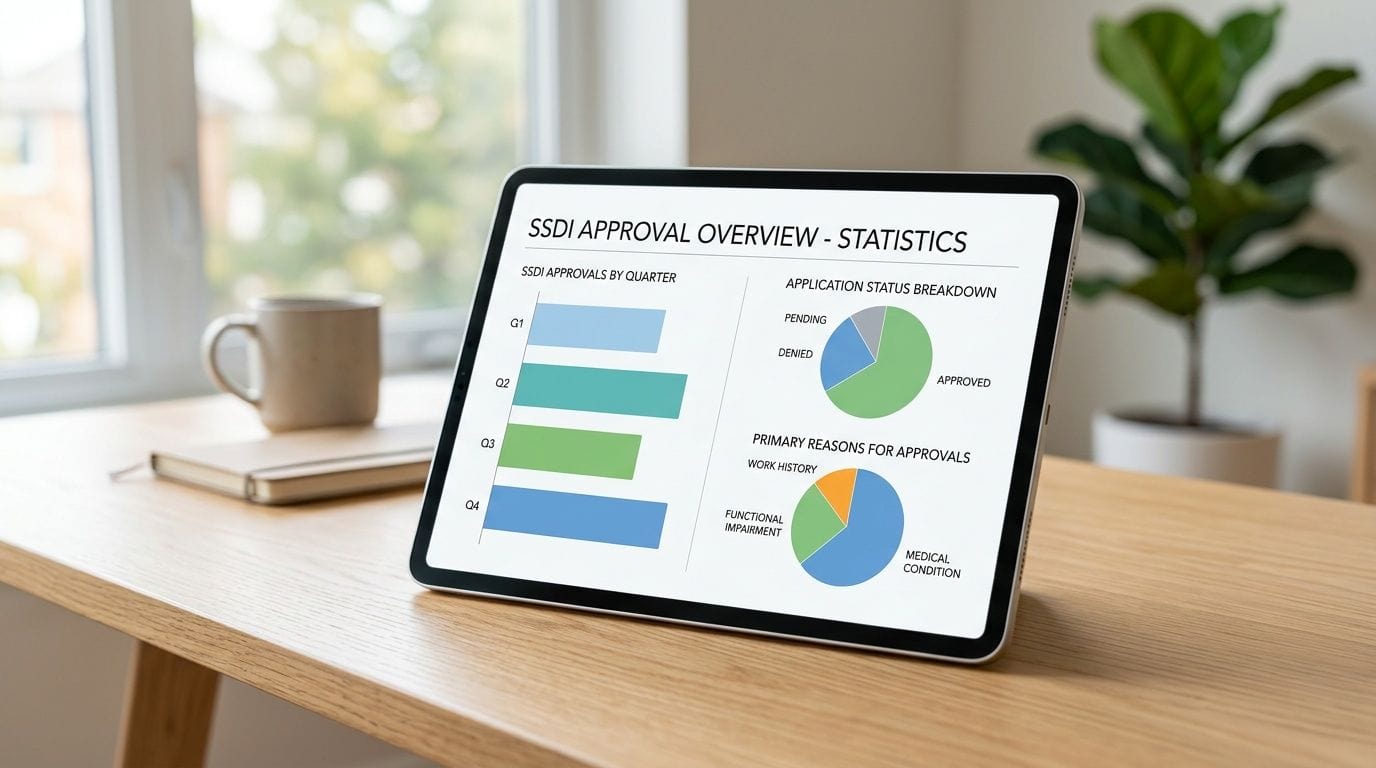
Social Security disability decisions at the early level are usually made through state Disability Determination Services. A quality review is a federal check on that work. According to Impact Disability Law's discussion of SSDI quality review selection, only approximately 1% of all SSDI claims are randomly selected for quality review by the Social Security Administration, which means most claims never go through this second examination.
Why Social Security does this
The agency wants consistency. A claimant in one state should be judged under the same disability rules as a claimant elsewhere. Quality review is one tool for checking that the file, medical evidence, and written rationale line up with the final decision.
That means the review can touch either kind of outcome:
| Decision under review | What the review is checking |
|---|---|
| Approval | Whether the medical and vocational evidence supports granting benefits |
| Denial | Whether the file was developed properly and whether the denial follows SSA rules |
This surprises many people. They assume quality review happens only when Social Security doubts an approval. It can also involve denied claims.
What reviewers look for
A reviewer isn't supposed to substitute guesswork for evidence. The reviewer checks whether the record supports the determination and whether required steps were followed.
In practical terms, the review often centers on issues like these:
- Medical support: Are the treating records complete enough to support the decision?
- Functional findings: Does the file explain limits on lifting, standing, walking, sitting, reaching, or using the hands?
- Consultant input: Did the case require medical or psychological consultant review?
- Consistency: Do the treatment notes, imaging, test results, and reported symptoms fit together?
A quality review is not a new application. It's a second look at whether the first decision was made correctly.
For claimants ages 50 to 64 with physical conditions, this matters because many files sit in a gray zone. A person may have real spinal degeneration, severe knee arthritis, post-surgical limitations, or heart disease, yet the written record may still fail to connect those diagnoses to work-related limits. Quality review tends to expose that gap.
What this means for you
If your claim was selected, the main takeaway is not panic. It is patience and precision. Keep attending appointments. Keep describing your physical limits in concrete terms. If Social Security requests records or forms, answer promptly and consistently.
A strong case doesn't rely on the hope that a reviewer will infer how much pain or fatigue you're dealing with. It shows it through the records.
Approval Statistics The Numbers You Need to Know
The most useful disability statistics are not the ones people trade in waiting rooms. The useful numbers are the ones that show where approvals happen in the actual process.
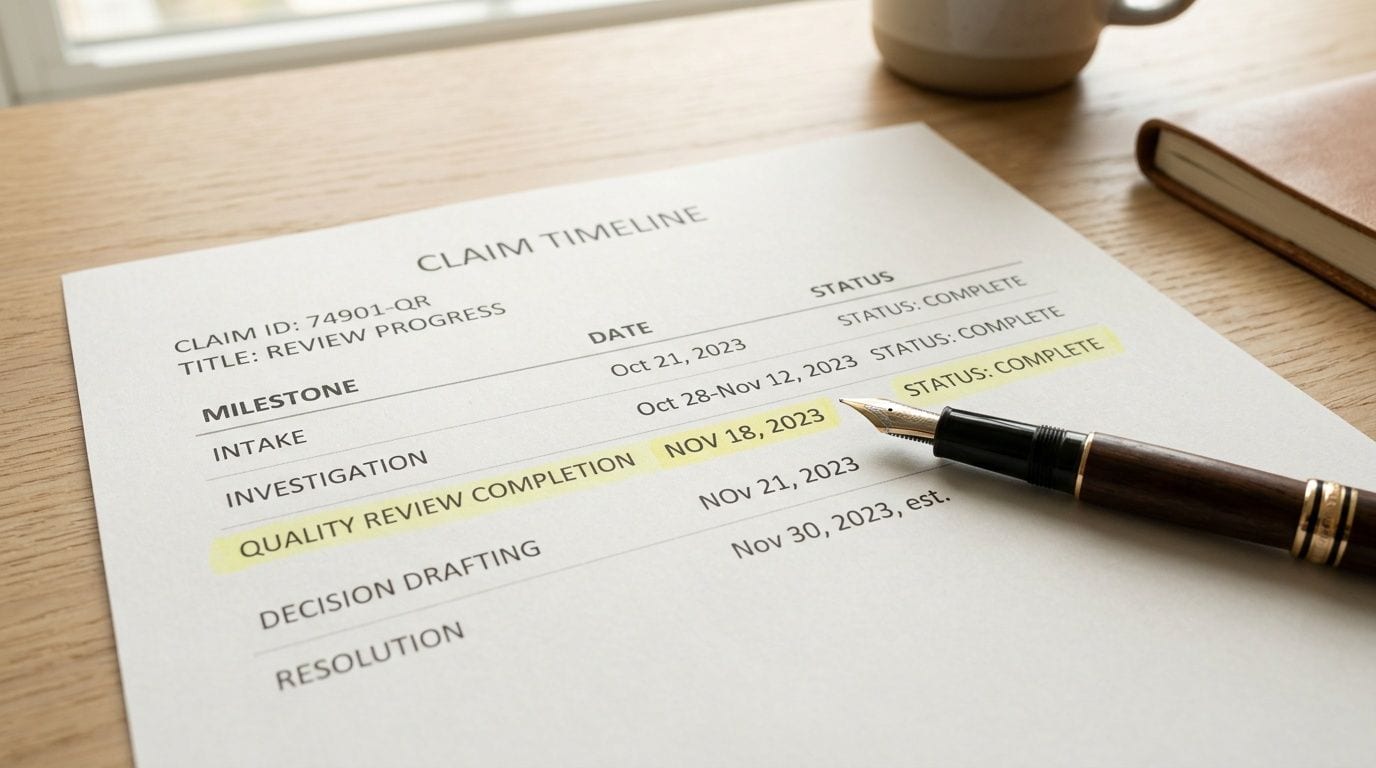
According to Atticus's state-by-state SSDI approval rate analysis, initial applications are approved at about 35% to 38% nationally, reconsideration approvals are only about 13%, and approval rates at the Administrative Law Judge hearing stage rise to about 50% to 54% nationally. That is the pattern worried claimants need to understand.
The numbers in plain English
The early stages are hard. The hearing stage is often where a claim finally gets the full attention it needs.
Here is the basic approval pattern:
| SSDI stage | Reported approval rate |
|---|---|
| Initial application | 35% to 38% |
| Reconsideration | About 13% |
| Administrative Law Judge hearing | About 50% to 54% |
Those numbers should change how you interpret a denial. A denial at the beginning is common. It does not mean your condition isn't serious. It often means the file wasn't developed enough, the limitations weren't framed correctly, or the case needs hearing-level review.
Why the hearing stage changes the picture
The hearing stage is different because the record gets examined more closely. That is especially important in physical cases involving:
- Degenerative disc disease
- Cervical or lumbar spine problems
- Knee degeneration or replacement complications
- Other orthopedic disorders
- Neurological disease
- Cancer and treatment effects
- Heart conditions
At this stage, the focus often becomes more practical. Can you stand long enough? Sit long enough? Lift safely? Use your arms overhead? Climb, crouch, kneel, or maintain pace? Can you sustain work activity on a predictable schedule?
Those are better questions than the broad, unhelpful one many claimants ask themselves after a denial: "Do they believe me?" The system isn't always evaluating credibility in the everyday sense. It is evaluating whether the evidence proves a legally disabling level of limitation.
The approval data sends one clear message. Persistence is not wishful thinking in SSDI cases. It is often the strategy.
What does not work
People hurt their own claims when they respond to these numbers the wrong way. Three mistakes show up again and again.
- Giving up after the first denial: The hearing stage has stronger approval rates than the earlier stages, so stopping early can mean walking away before the most favorable review point.
- Filing an appeal without improving the evidence: Repeating the same record often produces the same result.
- Focusing only on diagnosis labels: "Back problem" or "bad knees" is not enough by itself. The file has to show functional impact.
What works better
The claim becomes stronger when the evidence answers work-related questions directly. In physical cases for people over 50, useful evidence usually includes treatment notes that document limits with movement, endurance, posture, strength, gait, range of motion, and side effects from treatment.
A more effective record usually does these things:
- It ties the diagnosis to specific restrictions.
- It shows that the restrictions persist despite treatment.
- It explains why past work can't be done safely or reliably.
- It addresses whether any easier work is realistic, given age, history, and physical limits.
How to use statistics approvals with SSDI quality review intelligently
The phrase statistics approvals with SSDI quality review can sound like a search for a secret shortcut. There isn't one. The useful lesson from the numbers is more grounded than that.
Quality review is rare. The broader approval pattern matters more for most claimants than the fact of review alone. If your case was reviewed and the outcome wasn't what you hoped for, the stage of the case still matters. A claim denied early can still become a strong hearing case, especially for workers in their 50s and early 60s whose conditions prevent a return to physical labor.
The smartest reading of the statistics is this. Early decisions are often rough screens. Hearing decisions are where a well-prepared case has its best chance to be understood.
Denied? You have only 60 days to appeal.
Talk to a disability attorney now. Free consultation. No fees unless you win.
Call (617) 683-1983How a Quality Review Impacts Your Claim and Timeline
The hardest part of quality review is often not the legal standard. It's the waiting. According to Levine Benjamin's explanation of SSD quality reviews, when an SSDI claim is selected for quality review, the processing timeline extends significantly, with documented delays of weeks to months becoming standard.

That delay is real, and for someone out of work, it can feel brutal. But it helps to know what may be happening behind the curtain.
What usually happens during review
A quality review can involve several checks in sequence. The case file may be examined for evidence completeness, internal consistency, consultant review, and whether any identified error affects the disability determination period.
In practical terms, the review may lead to one of several outcomes:
- Decision stands: The reviewer agrees with the original determination.
- Decision changes: The reviewer concludes the evidence doesn't support the original outcome.
- More development is needed: The file may need additional work before a final decision can be issued.
Why delays matter so much for older physical claimants
For people ages 50 to 64, a delayed file is not just an inconvenience. It can affect treatment continuity, finances, and the quality of the evidence. A person with worsening back pain, unstable gait, post-surgical knee limits, cardiac symptoms, or cancer-related weakness may have trouble keeping appointments, paying for care, or obtaining updated records during a long pause.
That is why consistency matters during this period.
Keep building the medical record while Social Security is waiting. The agency's delay should not become your evidentiary gap.
What you should do while the case is pending
This is not the time to go quiet. It is the time to make sure the record reflects your current condition.
| Helpful step | Why it matters |
|---|---|
| Continue treatment | Ongoing records show the condition is persistent, not temporary |
| Report changed symptoms | Updated limitations can affect how your file is viewed |
| Follow through on testing and referrals | Objective findings often carry weight in physical claims |
| Save all notices | Small procedural details can matter later on appeal |
What doesn't help is calling the process unfair every week while the file sits. That feeling may be justified, but it doesn't move the evidence. The practical goal is to make sure the record is stronger at the end of the delay than it was at the beginning.
Special Considerations for Claimants Aged 50-64
Age changes disability analysis. For many claimants, this is the most important part of the case and the least understood. Social Security does not evaluate a 28-year-old and a 62-year-old in exactly the same practical way.
For workers between 50 and 64, age can interact with education, work history, and physical limitations in ways that matter a great deal. According to Cottrell Law Office's review of SSDI approval rates by age and condition, approval rates rise to 62% for applicants aged 60 to 65. The same source reports that approval rates vary by condition, including 34% for back problems, 40% for osteoarthritis or joint diseases, 47% for respiratory disorders, 37% for mood and anxiety disorders, 64% for cancers, 65% to 78% for heart problems, and 80% for multiple sclerosis.

Why age matters in real cases
When a claimant is over 50, Social Security becomes more attentive to whether that person can realistically shift into other work. That matters most for people whose careers involved physical labor, skilled trades, warehouse work, driving, manufacturing, nursing assistance, maintenance, construction, or similar jobs.
A 57-year-old who spent decades lifting, carrying, climbing, bending, and standing is not judged in the same practical context as a younger worker with a more flexible vocational profile. That does not guarantee approval. It does mean the argument should be built around the full vocational picture, not just the diagnosis.
Physical conditions often rise or fall on function
For claimants in this age range, physical cases often turn on specifics that doctors know well but records do not always spell out clearly.
The strongest files usually address issues like:
- Degenerative disc disease: limits with lifting, bending, prolonged sitting, position changes, and radicular pain
- Knee and orthopedic problems: reduced walking, standing, stair climbing, kneeling, crouching, and balance
- Neck conditions: restrictions in turning the head, looking up or down, and reaching
- Neurological diseases: weakness, coordination loss, sensory changes, gait instability, and endurance problems
- Cancer: fatigue, treatment side effects, weakness, pain, and interruptions in normal function
- Heart conditions: exertional limits, shortness of breath, reduced stamina, and restrictions on sustained activity
A diagnosis by itself rarely wins the case. A diagnosis tied to concrete work restrictions often does.
A 60-year-old with a serious physical impairment does not need to prove that nothing hurts less on some days. The case is whether full-time work remains realistic on a sustained basis.
A simple way to think about the age advantage
People often hear about the medical-vocational rules, sometimes called the Grid Rules, and assume they are automatic. They aren't. They become useful only when the evidence is specific enough.
Here is a practical comparison:
| Claimant profile | Common problem in the file | Better approach |
|---|---|---|
| Former construction worker with lumbar disc disease | Records list pain but not sitting, standing, or lifting limits | Obtain treatment notes or opinions that describe functional restrictions in work terms |
| Warehouse worker with knee degeneration | File mentions arthritis but not gait, stairs, or need for position changes | Show how walking and standing tolerance affects both past work and other jobs |
| Driver with heart disease | Cardiac diagnosis appears, but endurance limits are vague | Document exertional limits, shortness of breath, and inability to sustain regular work activity |
| Worker in cancer treatment | Records confirm treatment but not day-to-day fatigue and reliability issues | Tie treatment effects to attendance, stamina, and need for rest |
Common mistakes for the 50-64 age group
This age group often has stronger arguments than they realize, but those arguments can get buried.
- Underselling the physical history of your work: If your past jobs were heavy or medium in physical demand, that needs to be described accurately.
- Letting the record stay too general: "Back pain" is much weaker than a record showing limited sitting, lifting, and repeated bending.
- Ignoring side effects and fatigue: Heart treatment, cancer treatment, pain medication, and neurological symptoms can affect stamina and reliability.
For claimants ages 50 to 64, the system can work more fairly when the case is framed the right way. The file has to show not only that you are injured or ill, but that your age, physical history, and medical restrictions leave no realistic path back to sustained work.
Your Next Steps After a Quality Review Decision
If the quality review leads to a denial, many people read that denial as the end of the road. It isn't. In practice, it is often the point where the case needs to become more focused, more detailed, and more realistic about what Social Security still doesn't understand.

One problem in this area is that the public data has limits. According to the SSA statistical compilation discussed in this policy reference, there is a critical gap in public data on how quality reviews are distributed across decision stages or how reversal rates vary by age or medical condition. That matters because claimants want to know whether older workers with orthopedic or cardiac conditions are more likely to be affected in one way or another. The public numbers don't answer that.
What that data gap means in practice
When the published data runs out, strategy matters more. You cannot build a case around assumptions about how often quality review changes a denial for someone with a back disorder, knee problems, or heart disease in your age bracket. You have to build around the record that exists.
That means asking better questions:
- What did Social Security say was missing or unpersuasive?
- Which medical records describe functional limits?
- Did the file explain your past work accurately?
- Is your current treatment record stronger now than it was at the time of the reviewed decision?
The best next move is usually appeal, not retreat
For many denied claimants, the hearing level offers the best chance to put the whole vocational and medical picture in front of a decision-maker. This is especially true for workers over 50 whose bodies no longer tolerate the jobs they did for years.
A smart appeal is not just a new form. It is a rebuilt case.
- Tighten the medical evidence: Make sure the records show limitations, not just diagnoses.
- Clarify your work history: Past jobs must be described by what you did, not by short job titles.
- Update the timeline: New treatment, worsening symptoms, surgeries, therapy, and testing can change the strength of the claim.
- Prepare for the hearing standard: The hearing stage often demands a more complete explanation of why sustained work is no longer realistic.
The most damaging mistake after a reviewed denial is passive waiting. The strongest cases use the denial as a blueprint for what to fix.
What experienced counsel actually adds
This is where experienced representation becomes useful in a concrete way, not a marketing way. A good disability lawyer should be doing far more than forwarding paperwork.
Effective counsel should be able to:
| Task | Why it matters |
|---|---|
| Read the denial carefully | The denial often signals the exact theory Social Security accepted or rejected |
| Spot evidentiary holes | Missing functional proof can be more important than missing diagnoses |
| Reframe the case for age 50-64 rules | Older claimants with physical work histories often need a vocational argument, not just a medical summary |
| Prepare hearing testimony | Claimants need to explain limits clearly, consistently, and in work-related terms |
For a 55-year-old with degenerative disc disease, a 59-year-old with serious knee and neck issues, or a 62-year-old with heart disease, the legal task is not to make the condition sound dramatic. It is to make the work restrictions unmistakable.
What to do this week
If you have just received a quality review outcome and it didn't go your way, keep your next steps simple and disciplined.
- Calendar the appeal deadline: Missing it creates a new problem you don't need.
- Request and review the file if possible: The reasoning matters.
- Keep treating: Current records can strengthen the appeal.
- Write down your daily limits: Include walking, standing, sitting, lifting, reaching, and fatigue.
- Get help early: Hearing-level preparation is better when it starts before the deadline pressure becomes severe.
The SSDI system often rewards persistence backed by precision. Denials feel personal. Most of the time, they are procedural. Your response should be strategic.
Conclusion Your Path to Approval
A quality review can rattle anyone, especially when you're over 50 and already struggling with a serious physical condition. But the process is not random chaos. It has patterns. The approval statistics show that early denials are common and that later stages can be far more favorable. Age matters. Work history matters. Medical detail matters.
If you're in the 50 to 64 range with back, knee, neck, orthopedic, neurological, cancer, or heart-related limitations, your case may be stronger than the first decision suggests. The key is not guessing what Social Security means. The key is building the record and pursuing the next step with purpose.
If you're dealing with a denial or a confusing quality review notice, Melanson Law Group can help you understand what happened and what to do next. The firm focuses on SSDI claims, including appeals and hearings, and brings the perspective of a retired Social Security judge who has handled thousands of disability cases. If you want experienced guidance without upfront fees, reach out to discuss your options.